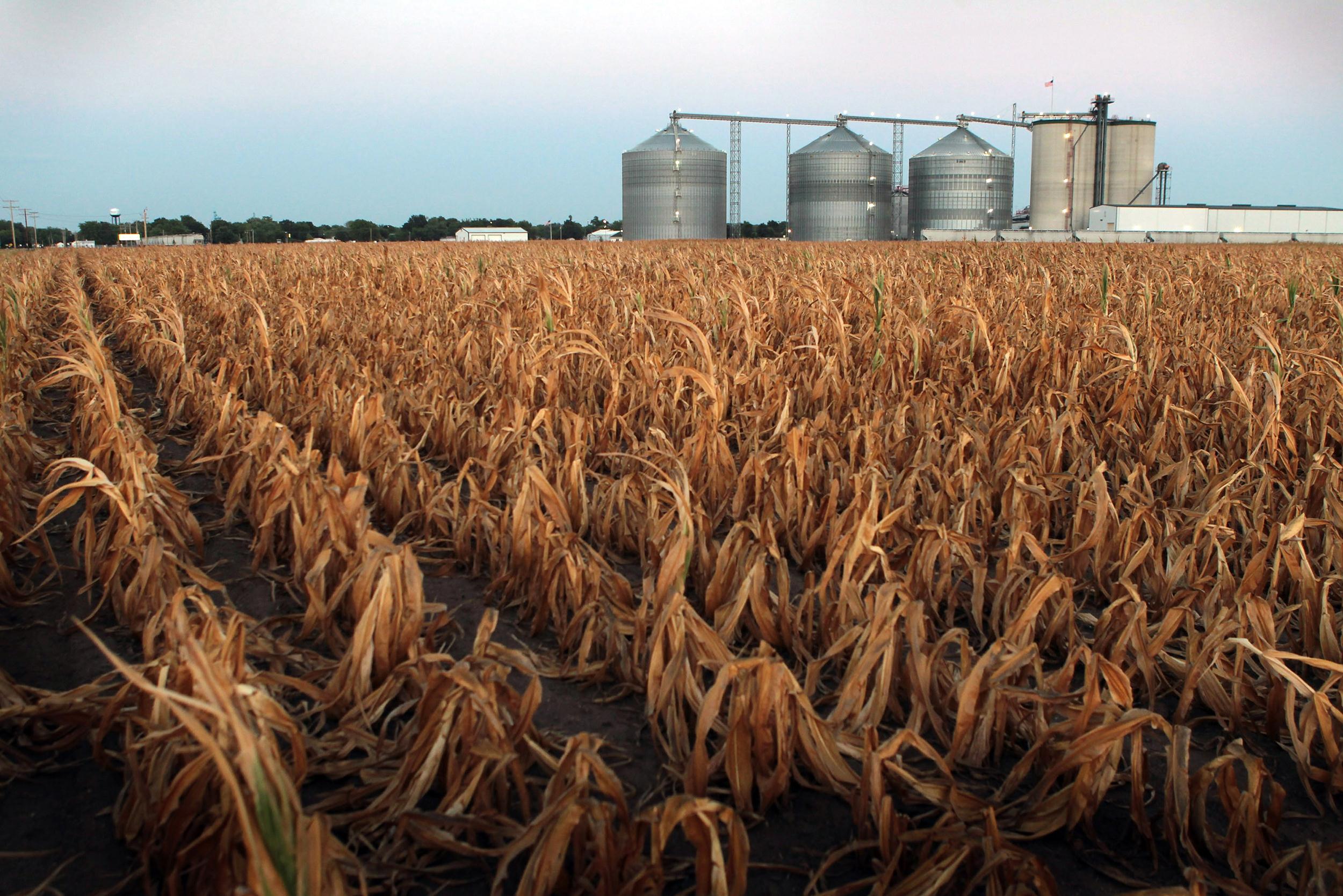
Prairie producers have become used to dealing with drought over the last decade.
In Manitoba, 2021 will be remembered as the year when consecutive years of poor rain came to a head, dwindling most crop yields and, in the Interlake and parts of the Parkland, causing many cattle herds to contract due to lack of grass and lack of feed.
The province has since gotten relief — with last spring even drawing complaints of excess water, before things dried out near the end of the season. Other Prairie regions, though, are still locked in a dry trend.
Drought recovery, meanwhile, can last long after the rain has begun to fall again.
Why it matters: Recent drought years on the Prairies have seen several rounds of governement aid as cattle producers struggled to find grass and winter feed for their herds. The Canadian cattle herd has shrunk to its smallest in decades.
In southern Saskatchewan, producers have been fighting drought for nearly a decade now. It’s led some farmers to look outside the box for solutions.
“Drought is the impartial management consultant that nobody wants, but everyone has access to,” said Mark Hoimyr, a cattle producer from Gladmar, Sask., who has adopted holistic management practices.
“And it tells you what works when conditions are really harsh, and it points out absolutely every flaw in anything that you thought you knew.”
Hoimyr was one of the panellists dissecting drought management during February’s Holistic Management Conference in Assiniboia, Sask.
Drought hurts farmer mental health
It’s not just about the financial burden of dealing with drought. The panel’s discussion also dove into the mental toll, and the importance of community and mental health when fostering resilience against tough times.
“Don’t give up, you just have to keep going,” said David Flundra, a cattle producer from Maple Creek, Sask., who took his holistic management course in 2021.
“There’s people to contact, people you can work with in regards to helping design (grazing and management) programs … don’t just quit. And whatever you do isn’t wrong. It’s all heading in the right direction.”
Calvin Gavelin, a cattle producer from McCord, Sask., has followed holistic practices for the last six of the seven years he’s been in a drought. He said he has tried to be a support for many in his community, and has also been supported by them.
“Some of my best friends got me through that drought because we talked every day,” he said.
“And without that talk, I think some of them would have been, like, suicidal at the time, because it was so bad and multiple years in a row.”
“Don’t give up, you just have to keep going,” said David Flundra, a cattle producer from Maple Creek, Sask., who took his holistic management course in 2021.
“There’s people to contact, people you can work with in regards to helping design (grazing and management) programs … don’t just quit. And whatever you do isn’t wrong. It’s all heading in the right direction.”
Calvin Gavelin, a cattle producer from McCord, Sask., has followed holistic practices for the last six of the seven years he’s been in a drought. He said he has tried to be a support for many in his community, and has also been supported by them.
“Some of my best friends got me through that drought because we talked every day,” he said.
“And without that talk, I think some of them would have been, like, suicidal at the time, because it was so bad and multiple years in a row.”
Farmer mental health has been a greater conversation in recent years, backed up by recent studies that flagged much greater rates of stress, anxiety, depression and suicide ideation among farmers than the general public.
Panellists said keeping communication open and honest is essential to supporting each other and focusing on surviving the hard times together. Without honesty, they said, peers can’t properly help support the farmer or offer solutions.
Producers are advised to check in with one another but also to attend regional meetings and conferences, which can build community and lift the mental burden by knowing others are also experiencing the tough times.
Surviving a drought
While panellists each relayed ongoing experience with drought, they have taken different approaches to the situation. Operations are dependent on the environment, region and goals, attendees heard.
Gavelin didn’t destock his herd, while Flundra and Hoimyr did. Gavelin instead opted to convert about three-quarters of his crop land to grazing or bale production, cut back on fertilizer for his remaining crop land and buy extra feed ahead of the curve.
“My dad always said ‘you’re better ahead than behind,’ and in that situation, buying feed early saved us half the cost to purchase,” he said.
Flundra reduced his herd and found “new” pasture that wasn’t being used near his son’s land to reduce the impact to his home pastures. He also bought feed, but has been able to reduce costs over the years by tapping the used market whenever possible for farm purchases.
“I don’t buy new equipment. If my equipment’s not 20 years old, it’s too new,” he said, earning a chuckle from the crowd.
“I keep it, but I’m able to keep it in good shape.”
Flundra’s wife, Ladi Flundra, added that the holistic management course taught them to view and discuss their finances differently by identifying their weakest link and asking themselves if they’re limiting or contributing to it.
“I think it had really made a change for us financially in our operation,” she said.
“Because we spent our money differently, and we put money in places that we really needed it, whereas we didn’t identify that earlier.”
The Hoimyrs destocked “quite heavily” when the drought hit them in 2017, selling nearly a third of their herd.
“We didn’t think we had the grass for them, and we didn’t want to buy feed,” said Laura Hoimyr.
“And we’re kind of thinking in hindsight, that we were kind of overstocked anyways.”
At the time, they were already rotationally grazing. Since then, they’ve adjusted their practices to a more severe graze, followed by a long rest that’s allowed them to maintain their size and slowly grow, even in the hard years.
This means leaving the cows on the pasture until there is minimal standing material — but not grazed to the ground — and then moving the herd from that pasture and not returning for a year if on tame forages and two years if on native prairie.
“I wish I could say that was too long and that it didn’t need longer, but when it’s dry, it seems to want (more time),” Mark Hoimyr said.
Preparation is key
Other lessons shared by the panel were about preparing for drought instead of responding. Have a plan, know what works in the local area and get an operating loan (if one is needed) before trouble arrives to provide a cushion, listeners were advised.
Gavelin has been practising shoulder season grazing and using winter annuals as a cover crop. He gets an extra month of grazing and active roots that pull in moisture. He also takes advantage of his hay fields by leaving a strip of grass every 16 feet to catch snow. He has also developed water infastructure to each parcel of this sectioned out pasture.
Each panellist also shared elements of a destocking or risk management plan, which was based on animal priority, land observations and forage math. Tiering was a common theme, with the seperation of dry cows, heifers and immediate sells.
Past that, the Flundras look for pasture alternatives to have on standby, while the Hoimyrs stressed how knowing their animal-to-forage ratio helps hone their calculations.
“The math gets played out in your head daily,” Mark Hoimyr said.
“And we get so see, long before we run out of grass, that we’re not going to have enough or we make a plan to adjust for that.”
Laura Hoimyr said they’ve tried to use set destock dates, but all it really does is give them a range to aim for. Instead, they rely on observations and math, to make their final decisions.
Source - https://www.manitobacooperator.ca