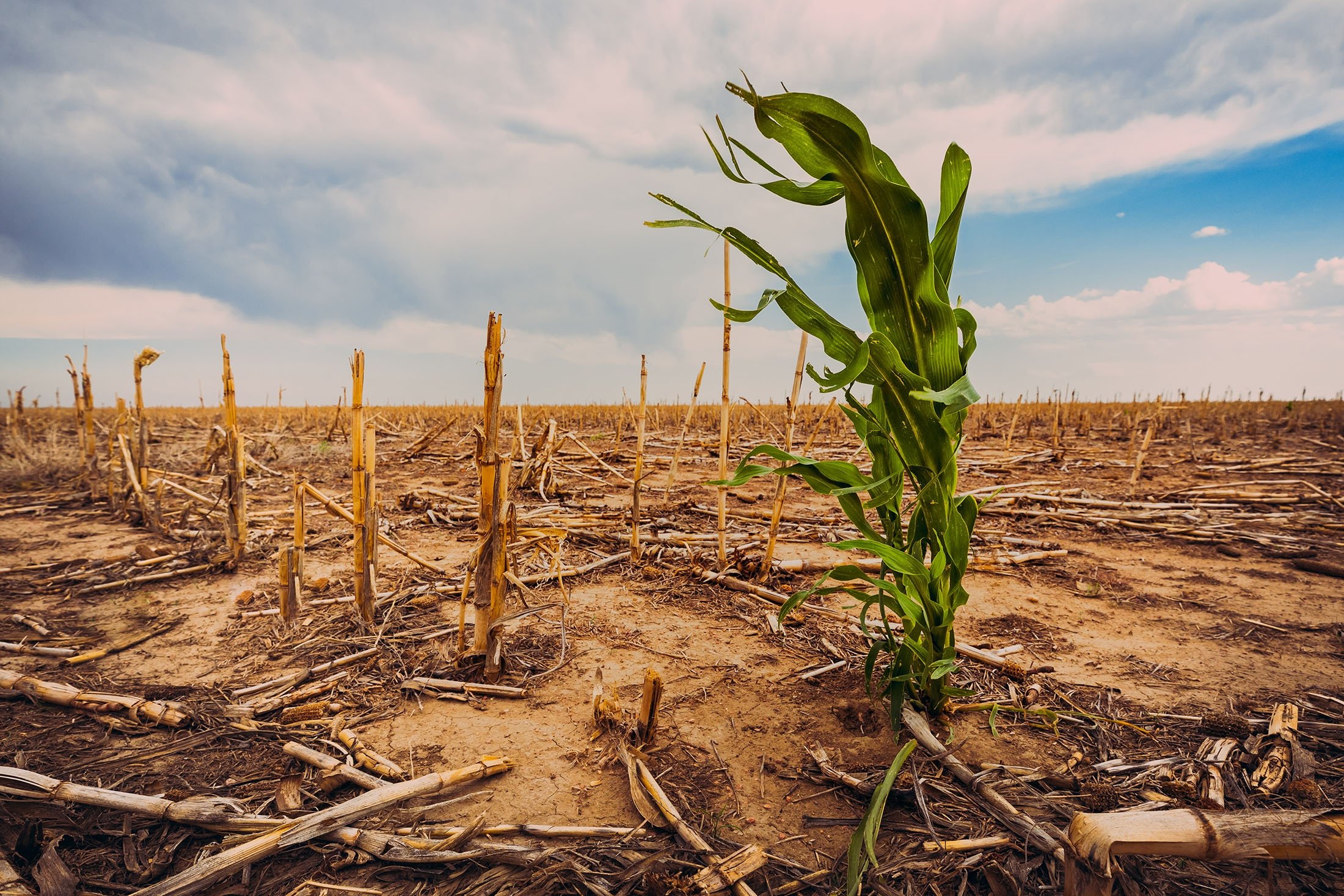
Dry conditions in the Lac La Biche region have prompted Lac La Biche County council to declare a state of agricultural disaster due to drought.
Members of council voted unanimously to make the declaration during a special council meeting on July 29.
According to Brennan Scott, the agricultural fieldman for Lac La Biche County, even though the municipality has declared a state of agricultural emergency, producers in the area, for the time being, aren’t able to access provincially or federally run assistance programs.
“It’s basically just used as an awareness tool, so people are aware that we’re in a drought, but it doesn’t translate to financial assistance due to drought,” Scott explained.
For producers to be able to receive help, the Alberta government must first declare a drought in the province. As stated in information from Lac La Biche County, municipal officials will be sending letters to Alberta Agriculture and Irrigation, and federally to Agriculture and Agri-Food Canada, “to emphasize the urgency of the situation and advocate for support for our agricultural community.”
Available programs, according to Scott, include the AgriStability and AgriRecovery programs, which are administered through the Agriculture Financial Services Corporation (AFSC). Through the AFSC, producers can receive drought relief and insurance and purchase crop and livestock insurance.
When these programs are rolled out, they are done provincially.
Provincial officials will examine data gathered from weather stations, which monitor how much precipitation an area has received.
Based on that data, he explained, they will determine which municipalities are applicable for drought assistance and relief. One factor that comes into play when providing assistance is the amount of rain a county has received.
“They kind of go through their list, and they decide who’s applicable and who’s not based on those numbers,” he said.
Drought conditions have caused agricultural states of emergency to be declared in Lac La Biche County in recent years. The Alberta government declared a drought in 2024.
While producers in Athabasca County and Smoky Lake County qualified to receive relief through assistance programs last year, Lac La Biche County was not applicable due to weather stations in the municipality recording that the region had received enough precipitation.
Scott has spoken with agricultural producers in the Lac La Biche region whose operations are being impacted by the drought conditions that have been prevalent since spring.
Many of these producers, he explained, have reported experiencing a dramatic reduction in their hay crop during this farming season.
“We sent out surveys. We were getting anywhere from that 25 per cent to 50 per cent less bales than what they were pulling off in previous years,” Scott said.
Cattle farmers across Lac La Biche County are being challenged by the prolonged extremely dry conditions.
“I have a few guys that I’ve talked to . . . They said they’re not going to have enough feed to actually pasture their cattle for the whole year, so they’re thinking of downsizing, and actually selling off some of their herd just to be able to maintain the herd on the pastures that they have,” he stated.
While Lac La Biche County officials wait to see if the Alberta government will declare a drought in the province, right now producers can access a Water Pumping Program, which is offered through the Alberta government.
Through this program, the province provides water pumps and pipe for farmers to fill up dugouts.
“A producer or group of producers can rent pipe and pumping equipment from the department to fill dugouts from nearby water sources,” according to information from the Government of Alberta. “Equipment and pipe are delivered from dispatch locations across the province to the pumping site. Rental rates are for April 1 to Oct. 31 and include one day of setup, one day of pumping and one day to dismantle the equipment.”
Source - https://www.lakelandtoday.ca