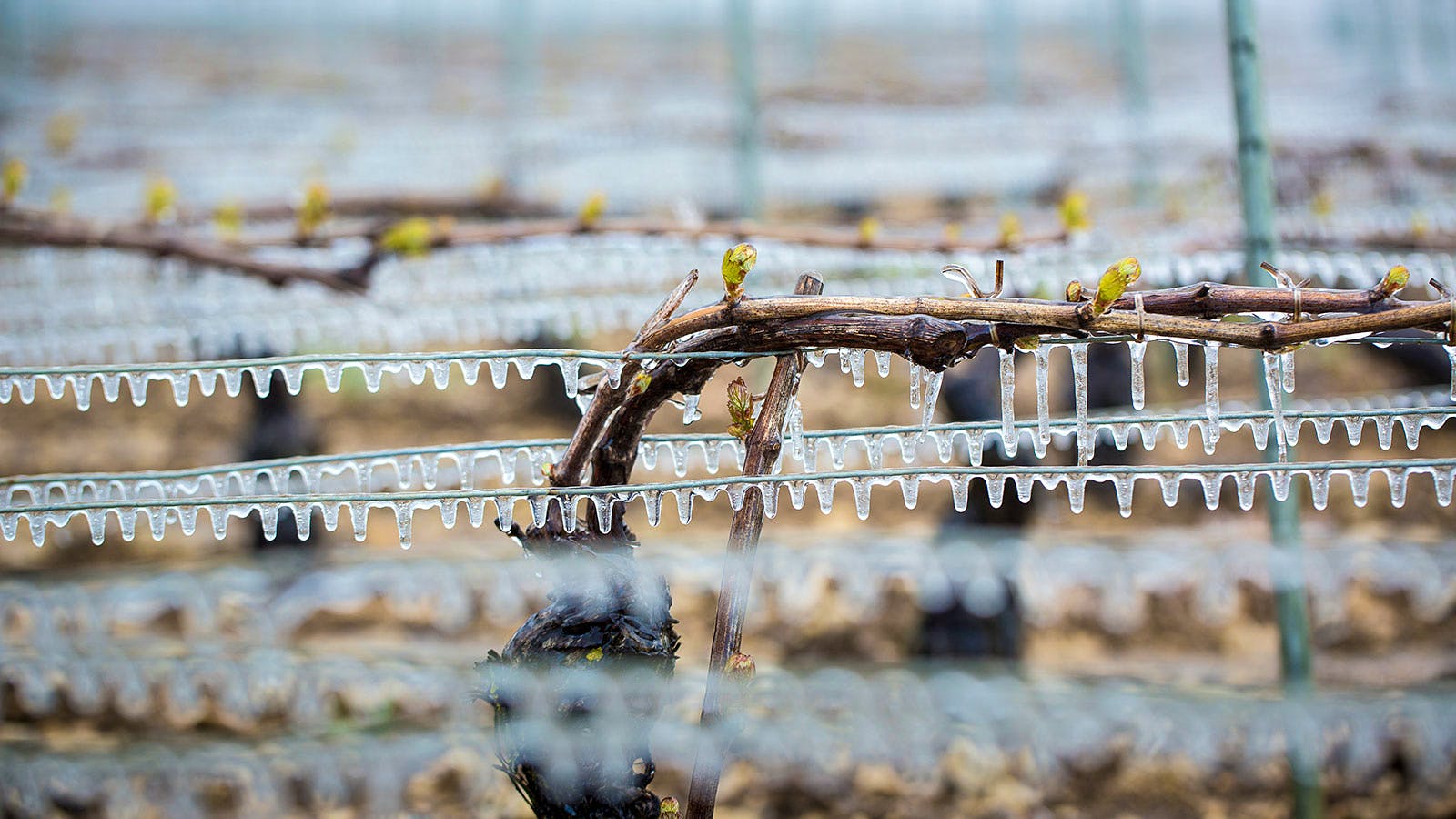
Nova Scotia grape growers are facing a potentially catastrophic loss of crops after an unseasonably warm winter followed by a sudden cold snap didn’t give plants a chance to acclimatize to wild temperature swings.
“It’s a devastating blow to the industry,” said Steve Ells, president of the Grape Growers Association of Nova Scotia.
Mr. Ells said half the industry is made up of independent growers that aren’t wineries, so they could be in the worst shape.
“For those growers, it’s really devastating since they potentially have no income or very little income depending on their mix of varieties,” he said.
Nova Scotia is the fourth-largest fruit producer in the country, contributing up to 7.8 per cent of Canada’s total production. While Nova Scotia is largely known for producing apples, grapes and wine are a growing industry with more than 100 members in the grape growers’ association.
As reported in The Globe and Mail last fall, the growth is largely thanks to warming temperatures. The average summertime temperature in the Annapolis Valley, the predominant fruit-growing region in the province, was 17.9 C in the 1980s. Now it averages around 19 C. The average winter temperature has also increased by a degree and a half since the 1980s.
This year, the Annapolis Valley had one of its warmest winters on record, with December and January averaging above O C. This was then followed by one of the coldest February nights on record since 2009, hitting minus 25 C on Feb. 4. A week earlier, temperatures were as high as 6 C.
Based on samples examined by farmers shortly after the February freeze, there is an anticipated complete loss of vinifera grapes, which are the traditional European varieties such as chardonnay, riesling, geisenheim. Hybrids are expected to fair better with an anticipated loss of around 30 to 70 per cent.
John Eikelenboom, owner of 1365 Church Street Vineyard and Winery in Port Williams, said he is anticipating a loss of 60 to 70 per cent of his grape crop this year.
“It isn’t quite a disaster, but it is very serious,” he said.
Mr. Eikelenboom, a farmer for 60 years, described himself as a risk-taker and planted many vinifera grapes.
Karl Coutinho, owner of Avondale Sky Winery, estimated his crop is down about 40 per cent, but isn’t sure of the extent of the damage yet. If he has to replant all the vines, he’s looking at three to five years to recover.
“If it’s just this year, then no worries. The scary part is that this could happen next year,” Mr. Coutinho said.
The provincial government has said it will provide $15-million toward programs to help recovery, but no specifics are in place yet. The province said in a news release the funding will go toward losses not covered by crop insurance and toward replanting and climate change mitigation programs.
Nova Scotia Agriculture Minister Greg Morrow said the true extent of damage will be known this month, and he is expecting support programs to be rolled out in late summer.
“Our producers have been through a lot,” he said referring to post-tropical storm Fiona last fall and this winter’s polar vortex. “The $15-million is to support them and is a show of good faith.”
Harrison Wright, a plant physiologist with the Kentville Research and Development Centre, said the cold snap preceded by warm weather was “probably the most damaging event in my estimation.”
Dr. Wright explained that the plants were unable to acclimate and harden, which usually takes weeks of cold weather. Since temperatures largely stayed above freezing throughout December and January, plants couldn’t properly prepare for the sudden cold.
“Plants don’t like sudden change. That combination of being really warm and plunging to really cold is what caused this,” he said.
Dr. Wright isn’t sure if the warming weather can be seen as an overall risk since while plants acclimatizing to the cold is getting worse, less extreme cold weather is also beneficial. However, he said there is a need to start looking at plants that harden even in warmer winter temperatures to prevent this from happening again.
“We need to start paying attention to how different cultivars are impacted by that warm weather. Something that can become hardy, even on a warm winter is going to have less risk involved with it.”
Source - https://www.theglobeandmail.com