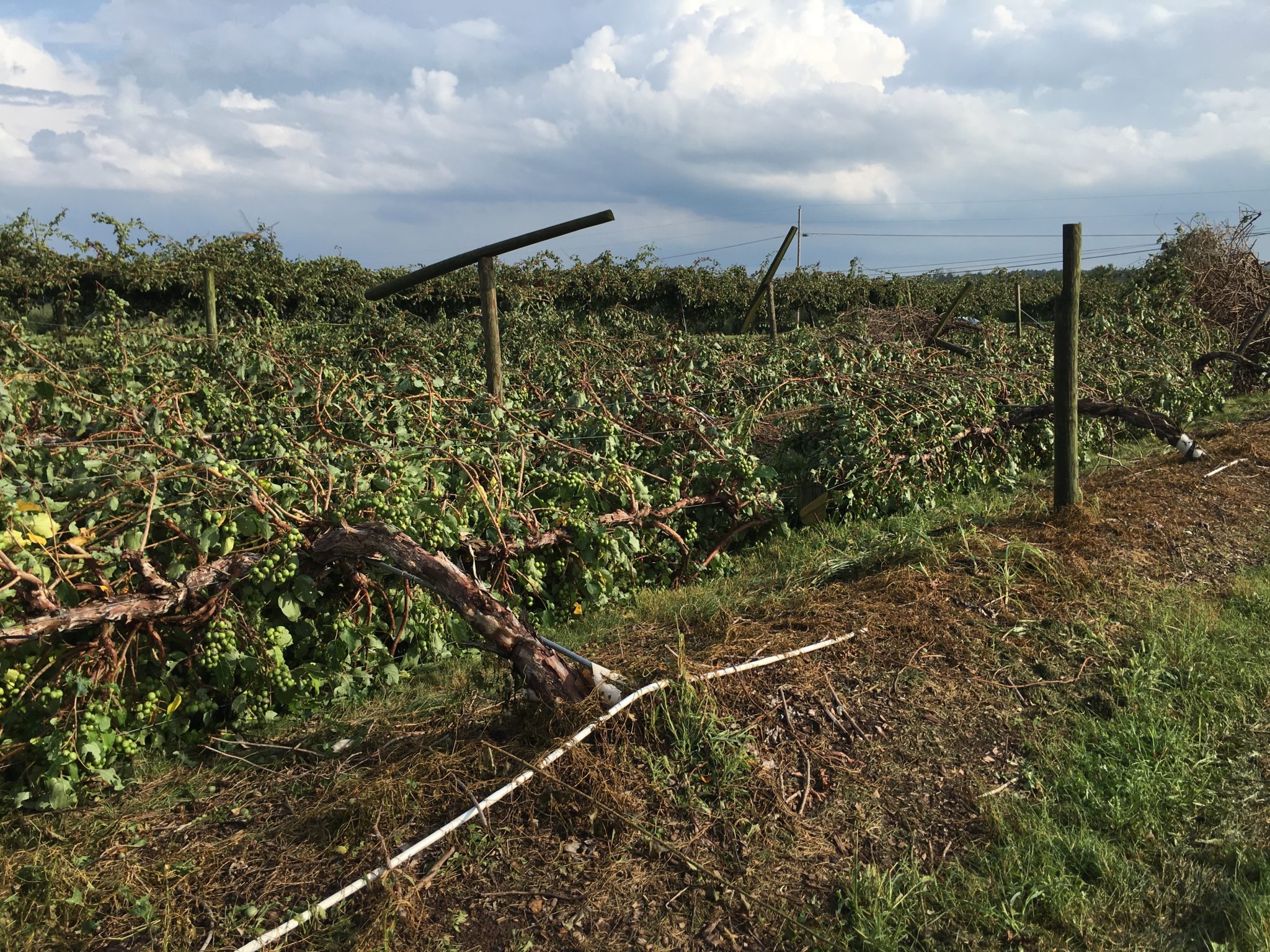
With B.C.’s wine industry facing ‘catastrophic’ crop damage from January’s freeze, Alberta liquor branch’s threats to restrict wine could not be worse timing, say B.C. wine growers and local elected officials.
On Jan. 22, the Alberta Gaming and Liquor Commission issued a letter to numerous B.C. wineries informing them that, if they did not immediately stop shipping wines direct-to-consumers in Alberta, they would stop allowing those wines in their retail stores.
Wines of British Columbia estimates direct-to-consumer counts for less than three per cent of sales, with most involving high-end bottles that aren’t even available through government channels.
The action by Alberta are baffling, said MLA Roly Russell, and the provincial government is working on this problem. He said B.C. officials have been in touch with Alberta counterparts and urged them to stop what they are doing.
“This move doesn’t only affect Albertans’ freedom to choose what wine they can enjoy, it has serious repercussions on grape growers and winemakers where I live and throughout our province,” said Russell.
“I know that this action couldn’t come at a worse time for our growers, given recent climatic events, and it’s baffling that Alberta would decide to do this now.”
Summerland’s district council is sending a letter to the Alberta liquor branch to cease and desist.
Central Okanagan-Similkameen-Nicola MP Dan Albas said the timing of Alberta’s letter is ‘hard-hearted’ considering the duress B.C. wineries have been under over the past few years getting through COVID, wildfires, and unprecedented crop damage due to freezing.
“It’s Alberta’s big liquor monopoly picking on the little B.C. wineries,” said Albas. “We allow Alberta breweries and distilleries to ship to B.C. but Alberta will not give the same reciprocity for our wines.”
B.C., Manitoba and Nova Scotia have free trade but Alberta said No
In 2011, Albas put forward a private members bill dubbed ‘free my grapes’ that would have allowed free trade of wine from Coast to Coast. But the Trudeau government ‘punted it,’ he said.
“It’s easier to ship cannabis than it is wine in Canada,” he added.
Along with B.C. wines suffering catastrophic vine damage, wildfires and loss of tourism, come April 1, 2024, the federal government is increasing the excise tax of domestic wine by 4.7 per cent.
“It’s hard for the smaller family-run businesses to survive. I talked to one winery this week and they told me they’ve lost over 90 per cent of their crop,” said Albas.
There are government supports in place for crop recovery but by the time funds reach a winery, it may be too late, he added.
B.C. wineries willing to pay tax to Alberta
Carl Boucher, founder of Carl’s Wine Club in the South Okanagan said Alberta’s timing is ‘disgusting.’ Boucher spent 17 years living in Calgary and has hundreds of wine members there.
“Last year’s crop damage from the freeze was dramatic. This year could be catastrophic with some worrying they will have zero crops for this year’s harvest,” said Boucher.
Damage from the December 2022 freeze was estimated at around 50 per cent of vines that needed replacing mainly in the Similkameen and South Okanagan. The freeze in January, 2023 caused widespread bud damage across the region, said Boucher.
Coupled with Alberta’s new threats, it could cause some wineries to close.
“B.C. wineries are willing to pay a tax to ship directly to consumers but Alberta didn’t even give that a chance,” he said. “It’s easier to ship wine to the U.S. and Tokyo than it is to ship to Alberta.”
“It’s pure insanity,” he added.
Alberta club members not happy
Nancy Teghtmeyer, who lives in Calgary and regularly tours Okanagan wineries, is a wine club member at a few Okanagan wineries. She gets her wine shipped directly and doesn’t understand the motivation behind her government’s move.
“If B.C. wines shipping directly are only three per cent of sales, that’s a drop in the bucket for Alberta liquor branch. The only ones getting hurt here are the little B.C. wineries,” she asks. “If they want to go after someone, go after big guys like Amazon.”
Teghtmeyer is a club member at Wine Maker’s Cut and is a big fan of Fairview’s Pinot Noir.
“These are wines that aren’t sold in our stores.”
Teghtmeyer says she loves visiting the smaller tasting rooms in the Okanagan and hearing the winery’s story, often getting to meet the owners directly.
“These wineries offer a unique experience,” said Teghtmeyer. “I want to support them and I do that by becoming a club member and buying their wine.”
Alberta retailers offer very little selection of Canadian wines in their liquor stores as it is, said Boucher. And what Canadian wines they do offer are marked way up.
Not the first time Alberta has banned B.C. wine
Penticton’s TIME Winery general manager Christa-Lee McWatters, daughter of the late Harry McWatters, said the B.C. government is very aware of the issue and as board chair of the BC Wine Growers Association she is headed to Vancouver to meet with the Minister of Agriculture and Minister of Tourism on the issue.
“The last time this happened with Alberta [in 2018] it has nothing to do with wine, it was about pipelines. It’s hard to say what it’s about this time around. We’ve talked to a lot of people in Alberta and they think this is ridiculous,” said McWatters.
TIME Winery was one of the wineries that received the cease and desist letter from Alberta.
Alberta is the second biggest consumer of B.C. wines.
“B.C. is a big supporter of B.C. wines and in these trying times the best way to support us is to buy direct from the wineries, online or become a club member. Your support does make all the difference.”
“It’s a pretty scary time for wineries. I’ve been doing this for 30 years and I’ve never seen anything like this. Some will weather this, but not all will,” she said, speaking to the difficult last few years B.C. wineries have endured.
Al Hudec is a Kelowna-based lawyer hired by winemakers to push back against the Alberta move.
Hudec said Alberta’s letter could be a case for judicial review.
In 2018, the Alberta government stopped allowing B.C. wine after a spat over the Trans Mountain pipeline.
“While we are still unclear of the political motivation behind the recent AGLC letter, it is disheartening for our local growers and producers, who have already suffered great financial hardships over this past year. We are concerned about being targeted once again for political gain that has nothing to do with our industry,” said BC Wine Growers.
Source - https://www.vernonmorningstar.com