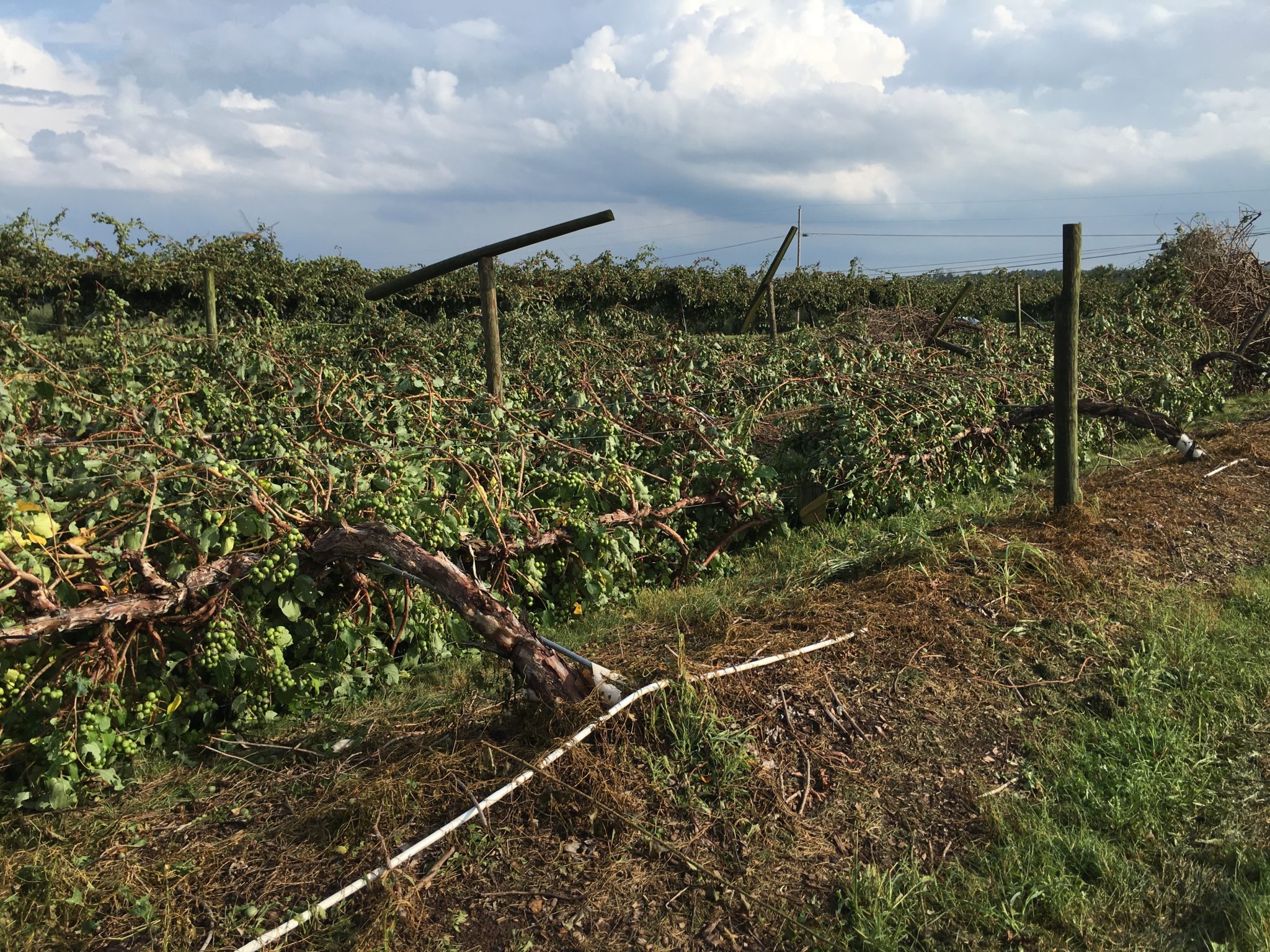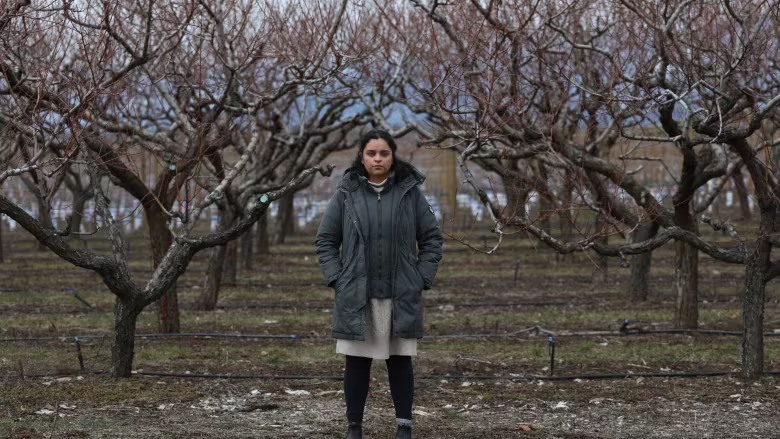
One of the first indicators of how bountiful a fruit harvest will be in British Columbia comes months before any peaches, apricots or nectarines start fattening on trees.
Like many other farmers, Jennifer Deol of There and Back Again Farms in Kelowna, B.C., cuts off some peach branches and brings them into a warm greenhouse to see how well the buds bloom.
The farm has a history of producing massive peaches, softball-sized giants that it has documented on social media. Another farmer on the same land grew an 810-gram peach in 2016, and submitted it for a Guinness World Record, although the mark has since been surpassed.
But this year, not a single flower opened on the greenhouse branches. The trees had fallen victim to a devastating January cold snap.
"We'll know [for sure] closer to May or June, because [with] different varieties, different trees, sometimes you'll get a little bit of crop," Deol said.
"But it'll be 90 per cent, if not more, lost, based off of what we're seeing on the peaches, on the apricots, on plums."
For smaller, often family-run farms in B.C., where even a successful harvest brings only a slim margin for profits, one lost season of fruit can be devastating. The president of the B.C. Fruit Growers' Association, Peter Simonsen, says the government needs to act as many smaller farms turn to crop diversification to stay afloat.
Simonsen said he expects harvests for peaches, apricots, nectarines and plums to be down at least 90 per cent, and the B.C. Cherry Association has already warned crops could be "dramatically" reduced.
"It's just kind of a depressing thing to go out and do all this work that you need to do, water the trees and care for the trees, [and] do that when there's no fruit on them," Simonsen said.
Deol said the region saw a warmer-than-usual start to winter that meant fruit trees never went completely dormant and buds were seen swelling with activity in early January.
Then came the cold.
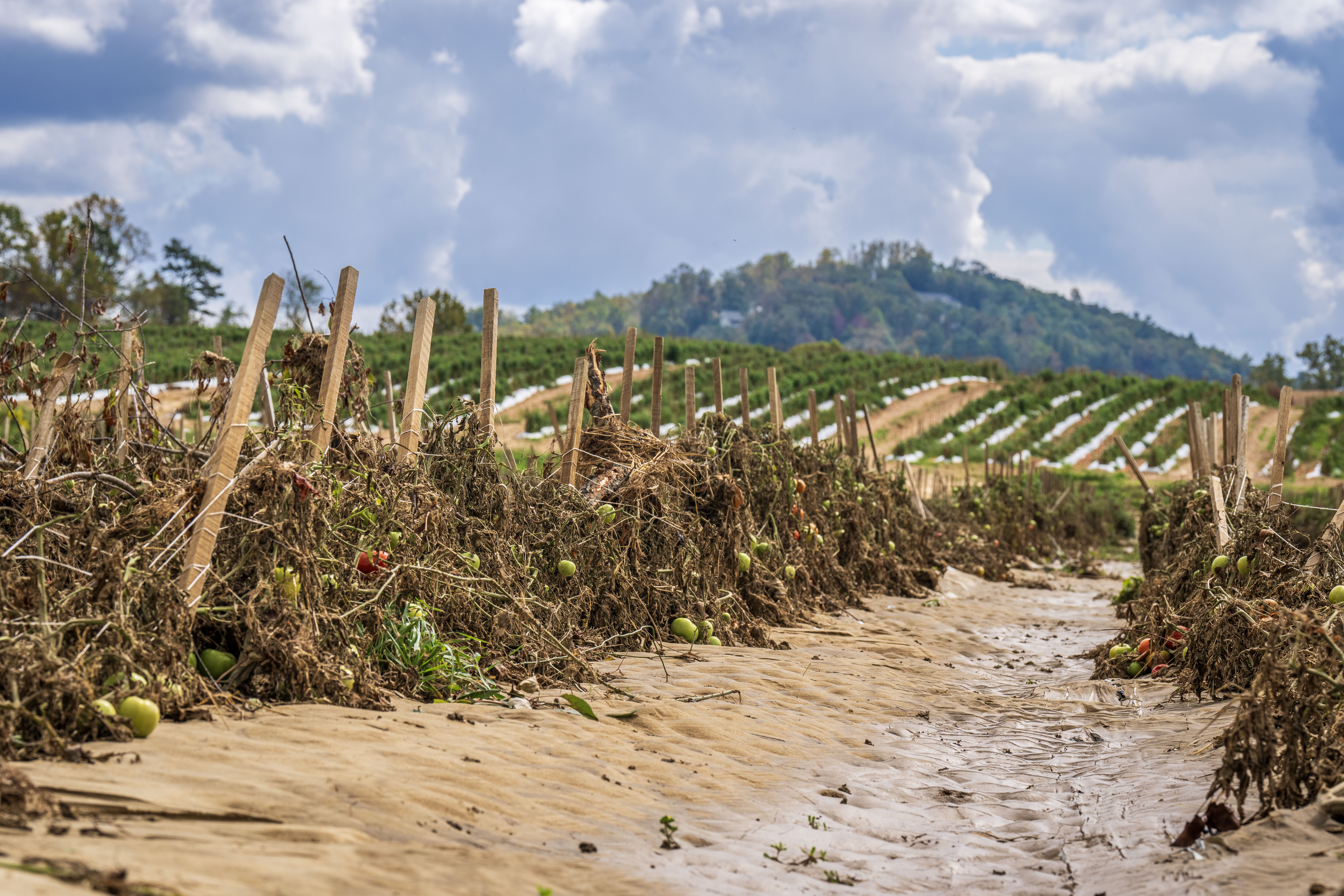
In mid-January, the B.C. Interior saw several days of frigid temperatures that dropped to -27 C in Kelowna, killing off those active buds that had only just begun to recover from the 2021 heat dome and harsh winter that destroyed many buds in 2022.
"These compounding impacts are making it not only difficult to grow this fruit and supply it, but also make any money off of this land that we're investing a lot into, to keep growing," Doel said.
In a good year, the farm's four acres of peaches bring in about $80,000 and stone fruits combined represent about 20 per cent of the income from the 30-acre farm Deol and her husband run.
She said they'll be kept afloat this year in part thanks to their decision to diversify their crops with a range of vegetables and apples to sell from their stand, and income from Deol's second job in communications.
"There is absolutely no way you can farm in the Okanagan, and be small scale, and sell 100 per cent local, without bringing in additional income," she said.
She said they expect things to be "very, very tight."
Farmers an 'endangered species'
Simonsen said British Columbia protects agricultural land but has "forgotten" about farms and farmers.
"We're an endangered species," he said.
"You know, if there were 200 marmots left on Vancouver Island … all kinds of effort would go into keeping them alive."
He said in years where fruit is sold at a low price, crop insurance programs funded by the provincial and federal governments only insures at a low value, making potential payouts less and less helpful.
"We're not protected adequately during the bad years and we don't make enough money in the good years to let us get through these bad years," he said, causing "a big erosion" of the number of farmers in the region.
The number of tree fruit farms in B.C. has been in decline since data started being collected more than 60 years ago, from 4,381 farms in 1961 to 2,091 in 2021, according to the most recent Statistics Canada census of agriculture.
Simonsen said the fruit growers' association is pushing for changes to some of the complicated rules that dictate insurance payouts, including basing deductibles on income from earlier, stronger years rather than current challenging ones.
"We'd like some of these rules changed, even just for this one year," he said.
When asked whether she thought the current crop insurance program was adequate to support farmers, Pam Alexis, B.C.'s minister of agriculture and food, said she had discussed the issue with federal Agriculture Minister Lawrence MacAulay and it would be part of a meeting of provincial and territorial ministers in July.
"I don't think that these [crop insurance] programs were intended for an almost a yearly investment or buy-in and [MacAulay] agrees that it needs to be looked at," she said in an interview.
"It's not necessarily the best thing when we are slammed so many times with different weather extremes where farmers need to have that kind of support."
Alexis said the province is considering expanding research into finding hardier grapes that can survive in extreme weather to include stone fruit, and said there has been "significant" uptake in a $15-million replanting program announced last year aimed at helping farmers adapt to the changing environment and diversify their crops.
She said officials with her ministry are in the process of assessing the damage done to fruit this season and promoting "business risk management" programs available to farmers, like AgriStability funding and crop insurance, to help in the short term.
Source - https://www.cbc.ca