Canola industry leaders have been worried about verticillium stripe and its impact on crop yields for several years.
Reports out of Europe suggest the fungal disease could cause losses of 10 to 50 percent on oilseed rape. However, extreme losses are usually confined to a small number of fields in England and northern Europe.
University of Alberta scientists will soon publish a Canadian estimate to nail down what verticillium means for yield.
“We were the ones who gave the blackleg yield loss model … and the clubroot yield loss model,” said Sheau-Fang Hwang, a plant pathologist with the U of A. “So, everyone expects we will … (provide) the verticillium yield loss model.”
Hwang and her colleagues hoped to release their results this year, but publication will be delayed until 2024.
Verticillium stripe is a relatively new disease for canola growers in Western Canada. It was first discovered in 2014 near Winnipeg.
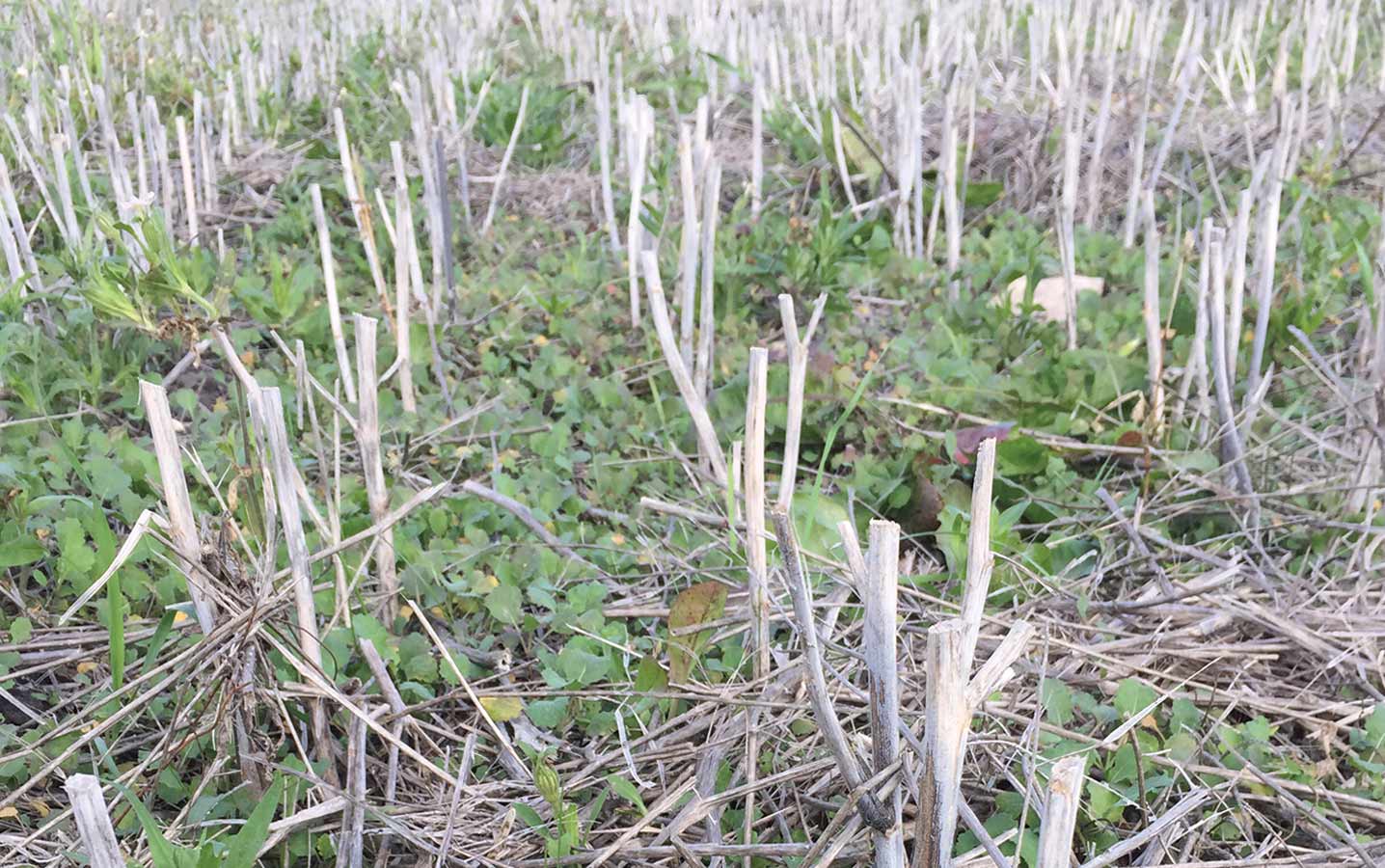
The fungus, Verticillium longisporum, infects canola and produces tiny, pepper-like sclerotia on or inside the stem of the plant. The sclerotia fall on the soil and into crop stubble after harvest. The small particles move with wind and water to other locations. Farmers can also pick up the fungus on their equipment and boots and transport it to other fields.
The infection interferes with the uptake of water and nutrients. Symptoms include early ripening, plant stunting and leaf chlorosis and shredding or striping of the stem tissue. The symptoms usually appear later in the growing season.
“Looking for verticillium, you have to slough off that outer stem wall … to reveal the micro-sclerotia. That’s a really key (part) of diagnosis,” said Justine Cornelsen, agronomic and regulatory services manager with BrettYoung Seeds and a former agronomist with the Canola Council of Canada.
On the Prairies, verticillium is most common in Manitoba, where it appeared in 40 percent of canola fields in 2022.
“In Manitoba, we don’t talk much about clubroot. We talk about verticillium,” said Cornelsen, who lives near Virden, Man.
The disease is also spreading across Saskatchewan. It was detected in dozens of eastern Saskatchewan fields in 2022 and in other regions this summer.
Earlier this year, Hwang authored a paper saying verticillium is a significant threat to canola production in Canada. When verticillium and blackleg are present in the same field, the two fungal diseases seem to join forces.
“(When) inoculated together in field and greenhouse experiments, blackleg severity and yield losses increased relative to when (the blackleg pathogen) was applied on its own. The severity of verticillium stripe also tended to increase,” says the 2023 paper, published in Plants.
“The results suggest that the interaction between (blackleg and verticillium) may cause more severe losses in canola.”
Cornelsen has been keeping a close eye on verticillium since it first appeared in Manitoba a decade ago.
She’s learned that some of the normal rules for crop diseases don’t apply to verticillium.
For one, verticillium thrives in hot and dry conditions. Most diseases prefer hot and humid.
“Once it gets into the plant (under) those hot and dry conditions … that pathogen is growing up through the vascular system,” she said.
“When you don’t have a bunch of rainfall, it’s able to move (through the plant) and make the symptoms more severe.”
Rain and excess moisture seem to prevent verticillium damage to canola plants.
It’s possible that crop scouts have failed to detect verticillium in the past because its symptoms are more noticeable just before or after harvest.
“That 60 per cent seed colour change, (the) typical timing for disease survey, isn’t the right timing to look for verticillium,” Cornelsen said. “It’s likely, for years, been misdiagnosed as something like blackleg.”
However, it appears that some canola varieties do have resistance to the disease.
University of Manitoba researchers have found that hybrids — in the market or in the development pipeline — are resistant or moderately resistant.
Some seed companies now promote certain hybrids in their lineup as having some degree of resistance to verticillium.
Genetic resistance in commercial canola hybrids could be preventing “drastic” yield losses at the field level in Western Canada, Cornelsen said.
Source - https://www.albertafarmexpress.ca