“There are many different ways the government can be stepping in to assist, but one thing's for sure is they can't afford to do nothing.”
Facing its second year of drastic vineyard loss, a Similkameen Winery is calling on all levels of the government to assist the industry before it’s too late.
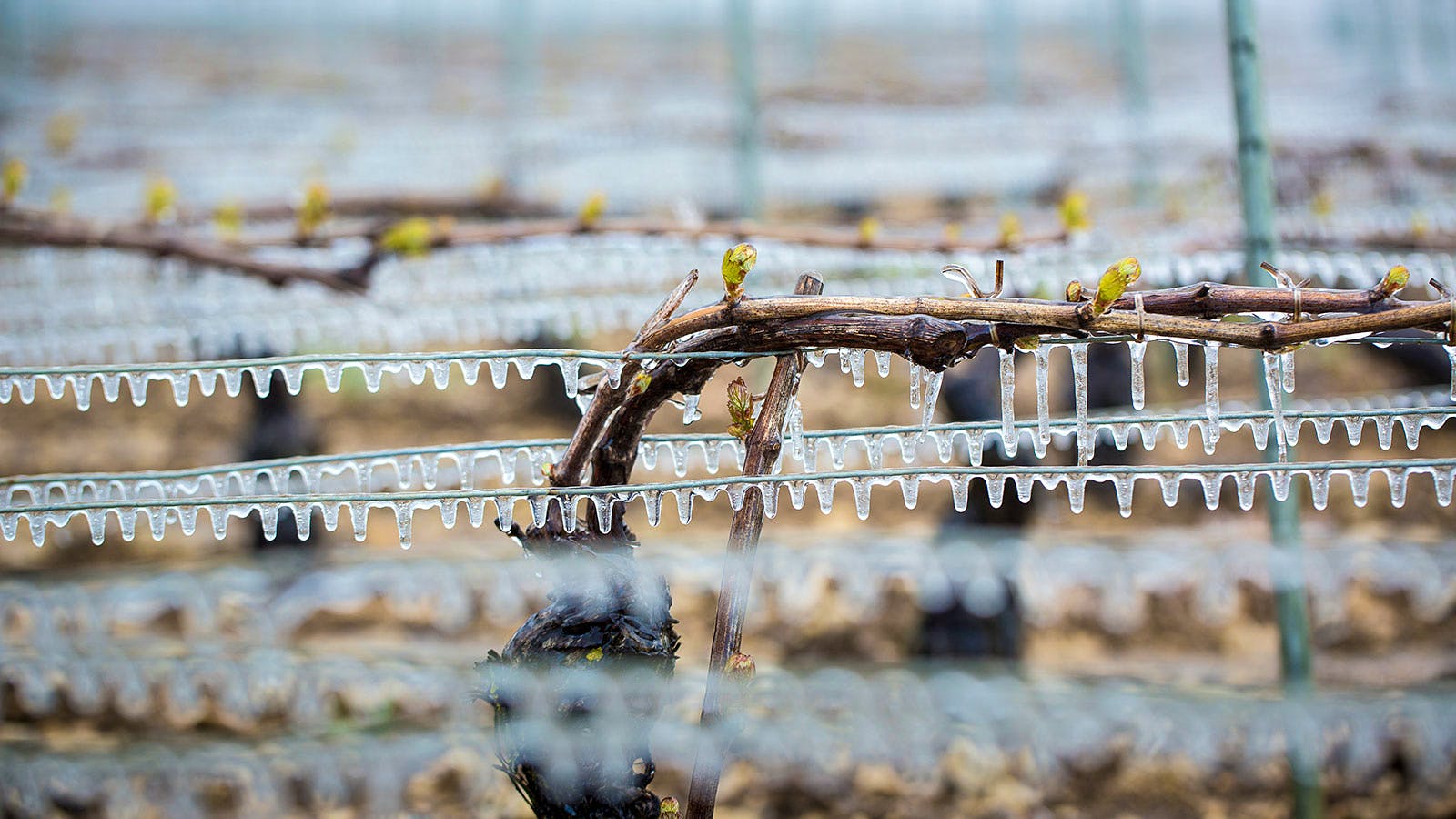
Corcelettes Estate Winery in Keremeos reached temperatures of -27.8 C at their coldest weather station, during mid-January’s cold snap.
“At those temperatures, we receive without a doubt complete crop loss, with severe long-term vine injury still being questioned, but certainly significant,” Charlie Baessler, Corcelettes’ managing partner and viticulturist said.
“These impacts are really compounding. Last year, we were in a situation where we had already pulled a lot of vineyards in anticipation of replanting this spring.”
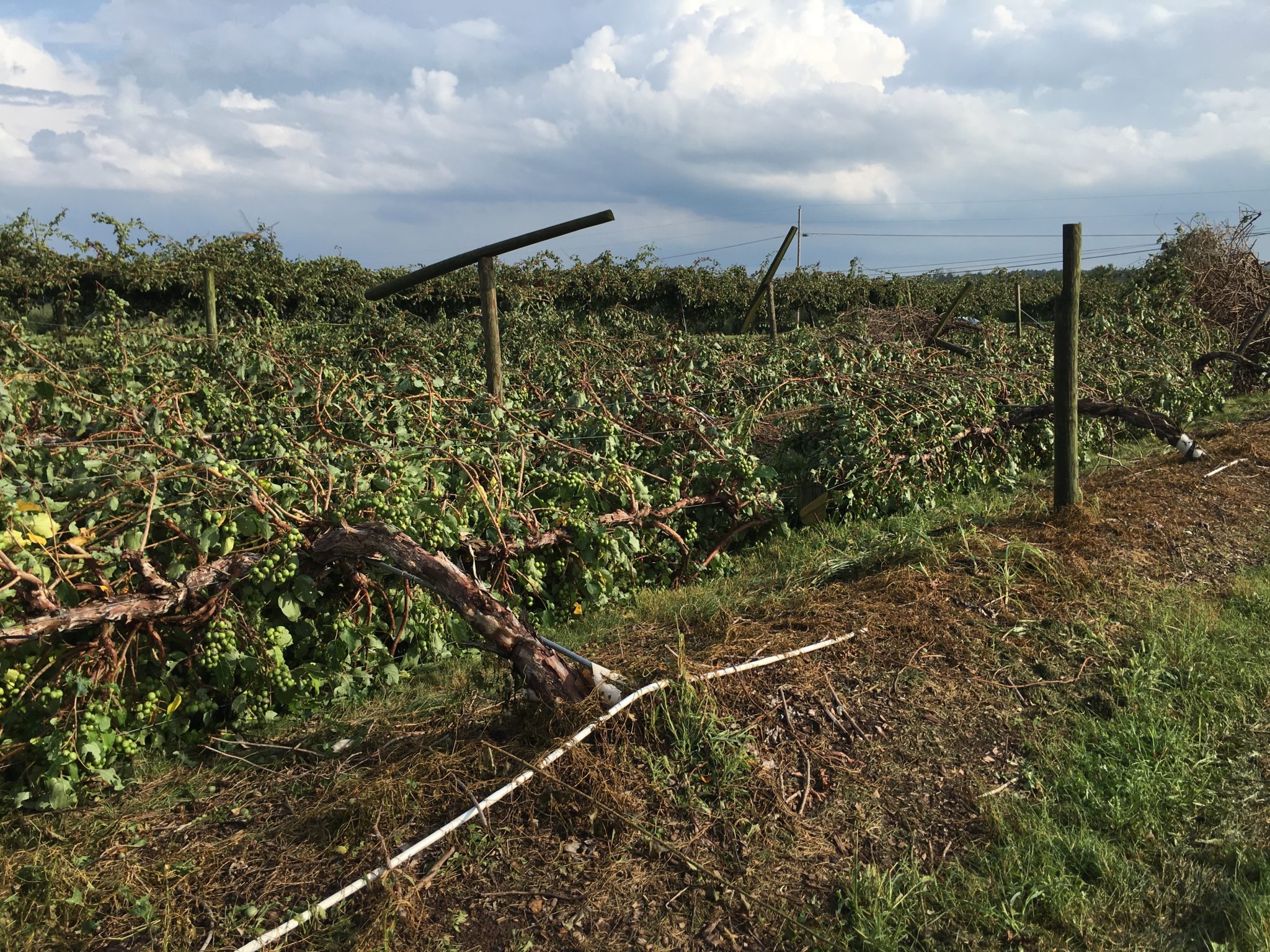
Meeting Castanet in their main vineyard in front of the wineshop on Wednesday, dead vine trimmings are scattered on the ground and the devastation of loss is shown in the chopped down trunks.
A report conducted by the wine industry projected wine grapes and production to be 97-99 per cent lower than usual in 2024. The cold may have killed off almost all the buds.
The report said the financial damage for wineries and vineyards could be $346 million or as much as $445 million when costs from industry suppliers, logistics providers and distributors are included.
Ben-Min Chang, a scientist at the Summerland Research and Development Centre, said the lowest damage rate on vineyard he’s heard so far was 88 per cent of total buds destroyed.
“That's just the bud damage. I'm also worried about the trunk damage,” he added. “Based on that damage level, they have to determine which kind of renewal procedure they want to do.”
If the winery grows a cold-hardy varietal of grapes, Chang said there's a chance that they won't see any fruit this year but production could come back in a year or two, though at a much lighter yield.
“But if the specific variety is really susceptible to the cold damage, and they may have to do a more aggressive trunk removal. So basically retrain the whole vines and that will take a slightly longer time, maybe a year or more,” he added.
“If the vines are dead, they probably have to consider, for example, field grafting or either just pulling out the vine completely and doing that replanting. Of course that will cost them a lot and [will] also [take a] longer time to be recovered.”
Corcelettes is already looking at replanting over a dozen acres of their vines and rearranging varietals.
“We're really back to the drawing board on how we're going to grow vines in the future. To think that we're back up to any significant production in year two on a rehabilitated vine is also very optimistic. The reality is the replant program, although it bears more upfront cost, will likely get us into a similar production around year three and four as a vine that's being rehabilitated,” Baessler said.
“When we get an opportunity to rebuild, there are a lot of new, more sustainable materials that we can use, more water-efficient irrigation systems we can install and so it does come with a general sense that we can improve.”
He added that the focus will be on wine varietal consideration, soil types, irrigation infrastructure, and vine training methods.
“Our approach here is going to be insulating vines, we've got lots of different mulching techniques that we're going to implement. We farm very stony soils, so hilling and burying within the earth is not a likely solution for us, so we're looking at different organic mediums to cover and insulate the vines.”
Chang said insulation techniques have been utilized in Ontario vineyards already and many are reaching out to growers there for help.
“To see if we can introduce a technology called geotextile, so putting some insulators on the vine, see if that will help growers facing the next challenge,” he added.
For now, growers will have to wait until spring arrives and temperatures warm up to determine whether or not their trunks can be saved to grow again in a few years or they will need to replant entirely.
Last week, grape growers held a series of meetings to discuss solutions. Some wineries have already started calling on the provincial government to allow the import of out-of-province grapes to ensure there is a 2024 vintage.
The Penticton & Wine Country Chamber of Commerce also sent a letter to multiple provincial ministries last week, proposing changes to help the industry with recommendations from local experts.
This included suspending the minimum fermenting requirements and temporarily allowing B.C. land-based wineries the ability to purchase and utilize non-B.C. grapes to keep B.C. wines in production, and making changes to multiple licensing requirements to help streamline approval processes and save costs.
Baessler said that they still have some inventory both in barrels and in bottles that they intentionally store and age to “limp them through their non-productive years,” but it will run out before their vineyards are back online.
“It is that period that still bears a lot of questions. We are being very exploratory in non-BC wine, and non-BC grape supply. And so, we look south to our neighbours in Washington for what that can look like. There are still a lot of questions in terms of how the government can step up in helping us facilitate that,” he added.
On Tuesday, South Okanagan—West Kootenay MP Richard Cannings spoke in the House of Commons, urging action for the devastated wine industry.
“There are a number of policy changes that the B.C. provincial government can make to temporarily make it possible for these sectors to get through for a year or two. The federal government can provide emergency funding through the AgriRecovery framework and the AgriStability program, but whatever that support looks like, we need to see it quickly before the sector is devastated,” Cannings said.
“As well, all the winery, brewery and distillery operators in my riding and across the country are demanding that the excise tax regime be changed so the tax does not automatically increase based on inflation every year.”
He added that while the federal government did bring in an 18-month support program for the sector, it is due to end at the end of March and a renewed program would be essential.
Baessler said he’s displeased at the speed at which the provincial government has responded to all of their pleas for help and federal assistance programs often offer too little to make an impactful economic difference.
“This isn't the first year it's happened. This situation has been a file on their desk for 18 months now and we've seen nothing. It's really been a little bit discouraging that they don't recognize the scale of the impact and how catastrophic this is to our rural economy,” he said.
“This problem is no question very real for hundreds and hundreds of small rural families and operators like us. And so it's a bit shocking that they can not move a bit quicker. I'm not sure anyone's looking for free money, but stamping some sort of favourable terms and loans, to give growers the confidence to replant and to rebuild, this is in the best interest of the provincial government in themselves.”
Source - https://www.castanet.net