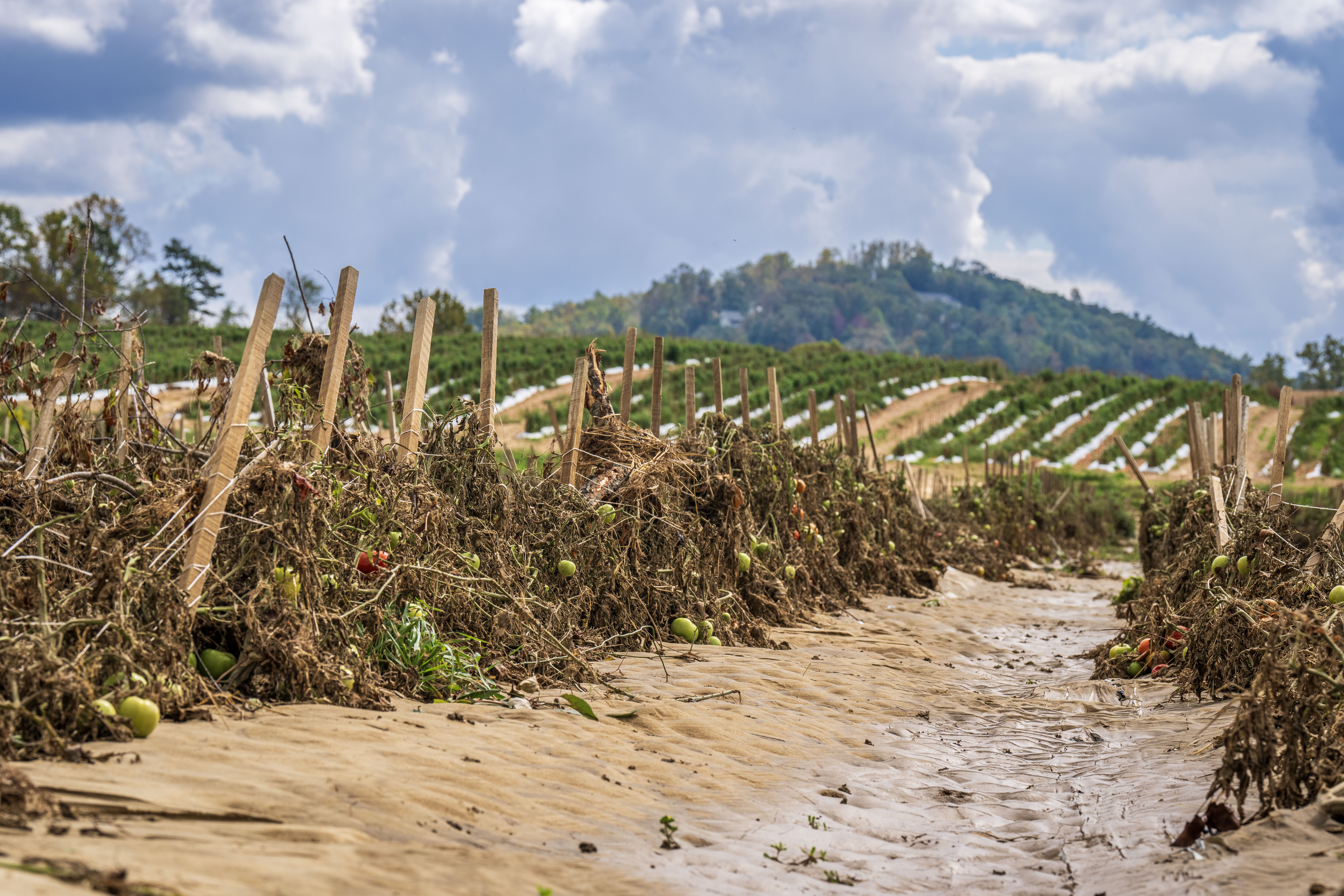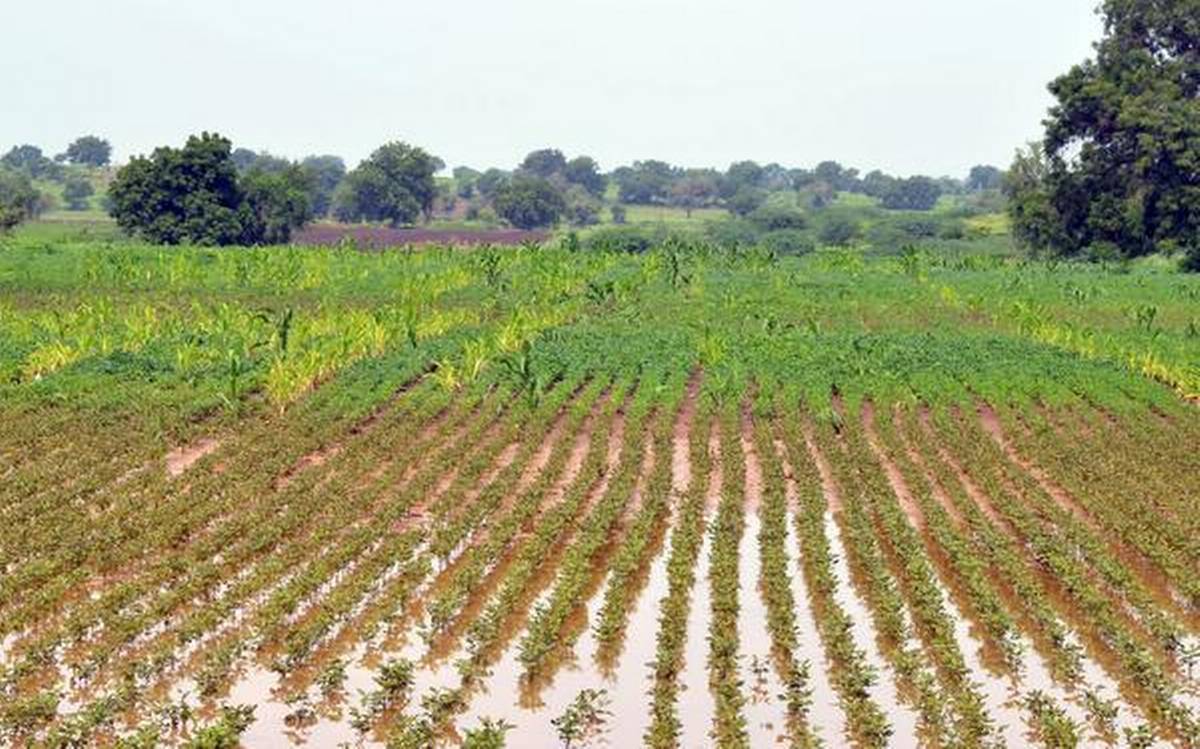
Bruce Hennessey and Beth Whiting were used to fending off flooding at Maple Wind Farm in Richmond. The couple have been in business for 25 years, and for the past 10 they’ve dealt with floods that have put hayfields underwater and torn up their barn.
But all their preparation and experience didn’t seem to save them from the damage they endured last July, when historic floodwaters wracked Vermont. Maple Wind, which raises cattle, poultry and pigs, lost 400 turkeys and 700 broiler chickens in the flood, along with a tractor the couple tried using to save their animals.
“When we added it all up, it was about $100,000 in loss,” Hennessey said. That was the value of the livestock and tractor alone, he said — not even counting the expected revenue of the animals had the flooding not killed them.
In early December, Vermont’s two senators joined their counterparts from Massachusetts to introduce a federal bill that could help farmers like Hennessey and Whiting facing future floods and other disasters.
The Withstanding Extreme Agricultural Threats by Harvesting Economic Resilience (or WEATHER) Act calls for the development of an index-based insurance policy that would cover agricultural income losses from extreme weather events — faster and with fewer administrative fees than existing crop insurance, the bill’s sponsors say.
Hennessey has hesitations after dealing with other U.S. Department of Agriculture insurance. When he and his wife filed claims to the USDA’s livestock indemnification program after last July’s floods, he said, it took until November to finish extra paperwork — only to find out officials wanted “more or different” info.
“Any additional help will certainly be welcome by us,” Hennessey said of the WEATHER Act. “Until that’s law and we know exactly what it means, I think our community won’t pay too much attention to it.”
That tracks with Ryan Patch, a policy manager at the Vermont Agency of Agriculture, Food and Markets: “I don’t think this is really on farmers’ radar.”
But Patch and other officials think the bill could shore up the bulwark for farmers in the state facing fallout from extreme weather.
In a survey by the state agriculture agency after last summer’s flooding, 70% of farmers who responded said they didn’t have crop or livestock insurance. Another 10% said the insurance didn’t apply to their industry — meaning only around one in five farmers here had coverage for those losses, estimated by the state as over $16 million.
“I think (the WEATHER Act) would really help Vermont producers, as well as other smallholders or small-size farms throughout the United States, to be able to participate in a crop insurance program which is responsive to the rate and pace of climate disasters we’re seeing,” Patch said. “Current federal programs aren’t really set up to work at that pace.”
The bill would direct the USDA to research creating an index-based insurance program. That kind of insurance pays out based on local measurements, such as rainfall, rather than on specific damages or losses.
“Unlike traditional crop insurance, the insurance company does not need to visit a farmer’s field to determine premiums or assess damages; if the rainfall amount is below a pre-specified threshold, then the insurance pays out,” according to Columbia University’s International Research Institute for Climate and Society.
A threshold would be set at the county level for a variety of weather events: high winds, flooding, freezes and more. If local weather indices for covered events go above those levels, and the events cause income losses, the envisioned system would automatically pay policyholders within 30 days.
“It deals with the responsiveness issues as far as how quickly crop insurance can make these payments,” said Patch, adding, “Anything that can provide additional coverage and support when economic times are so difficult in agriculture across the sectors right now, I think it would be welcome.”
When the bill was first introduced, lead sponsor Sen. Peter Welch, D-Vt., said in a statement that the legislation “works to reinvent crop insurance as a worthy investment for Vermont farmers by calling for the implementation of an index-based insurance policy that more adequately compensates farmers for extreme weather-related income losses.”
In the same statement, co-sponsor Sen. Bernie Sanders, I-Vt., cited last year’s frost during early growing season, July flooding and continuous rain across the summer and fall in describing the impetus for the bill.
“Unfortunately, the current federal crop insurance options are simply not workable for many of the small and diversified farms we have in Vermont,” Sanders said. “In the face of more intense and unpredictable weather due to climate change, the federal government must step up to support farmers, food producers and small businesses.”
The month after the bill’s introduction, Welch visited Roots Farm Market in Middlesex to discuss the legislation and get an opinion from small Vermont farmers. What Welch found was lots of support and appreciation from the farmers, according to a spokesperson for the congressman.
State Sen. Brian Collamore, R-Rutland, vice chair of the Senate Committee on Agriculture, applauded Welch and Sanders for their efforts on the bill.
“We’ve had a lot of serious impacts especially on our really small farmers and the state because of the July flooding,” Collamore said in a recent interview. “I think this would be a great idea.”
Jackie Folsom, retired dairy operator and president of the Vermont Farm Bureau, showed support for the bill and its potential benefit to small farmers in particular.
“Its purpose is to help the small farms that do retail, rather than wholesale products, get some assistance,” she said. “And with all these calamities that we’re having here, I think it’s a good idea.”
Source - https://www.charlottenewsvt.org