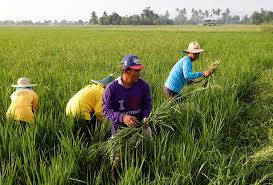
Since rice is one of the most important crops in the world, constituting the primary food source for more than half of the Earth’s population, protecting rice plantations from disease such as bacterial blight (BB) – an infection caused by the bacterium Xanthomonas oryzae that leads to losses of hundreds of millions of dollars each year – is essential in modern agriculture.
Although one of the best strategies to control BB and other crop diseases is to grow genetically resistant cultivars, since pathogens often evolve rapidly, scientists have to constantly explore new genes that could offer resistance and apply them to breeding. To be able to do this, they must regularly sample multiple rice plants at different times of the year and measure their responses to bacterial infection, which is a manually intensive and time-consuming labor.
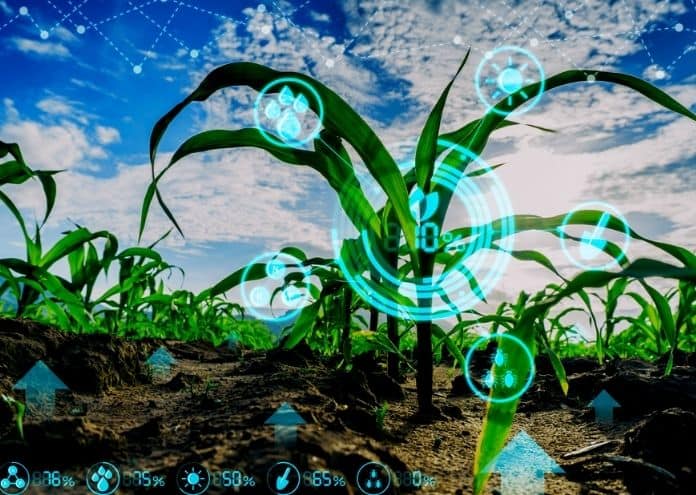
Now, a research team led by Zhejiang University (ZJU) has developed an innovative method combining unmanned aerial vehicles (UAVs, popularly known as drones) and machine learning algorithms to assess BB outbreaks in the field and screen for potentially resistant genes. After setting up two experimental sites in the Zhejiang Province in China containing 60 types of rice cultivars with different resistances to BB, the experts used drones equipped with regular and multispectral cameras to image the crop sites at different stages of development. Afterwards, they combined these images with accumulated temperature (AT) data and used them to train a deep learning computer model to evaluate the severity of BB.
By testing whether a model trained with data gathered at one site could be supplied with a small amount of training data from another site to improve its predictions for the latter, the experts found that a transfer of only 20 percent of new data was a useful and cost-effective updating strategy leading to reliable predictions of BB severity across different sites.
In a next step, the scientists employed this method to effectively measure BB severity using drones to perform quantitative trait loci (QTL) mapping. “QTL mark the location in the genome where a gene controls specific quantitative traits, such as susceptibility to a disease. Mapping QTL to crop responses under pathogen stress can help breeders identify the functions or traits of crops that a given set of QTLs controls,” explained study senior author Xuping Feng, an expert in Biosystems Engineering at ZJU. Through this innovative approach, Feng and his colleagues managed to detect both previously identified QTLs related to BB resistance and three new ones.
Implementing these findings in real plantations all over the globe could help minimize crop losses due to disease and secure sufficient food sources. “Compared with manual measurements of disease severity, UAV remote sensing techniques enable us to gather large-scale phenotypic information rapidly, which provides technical support for accelerating breeding research,” Dr. Feng concluded.
Source - https://www.earth.com