A new report has found that lower crop yields significantly affect industries beyond agriculture, including trade and transport.
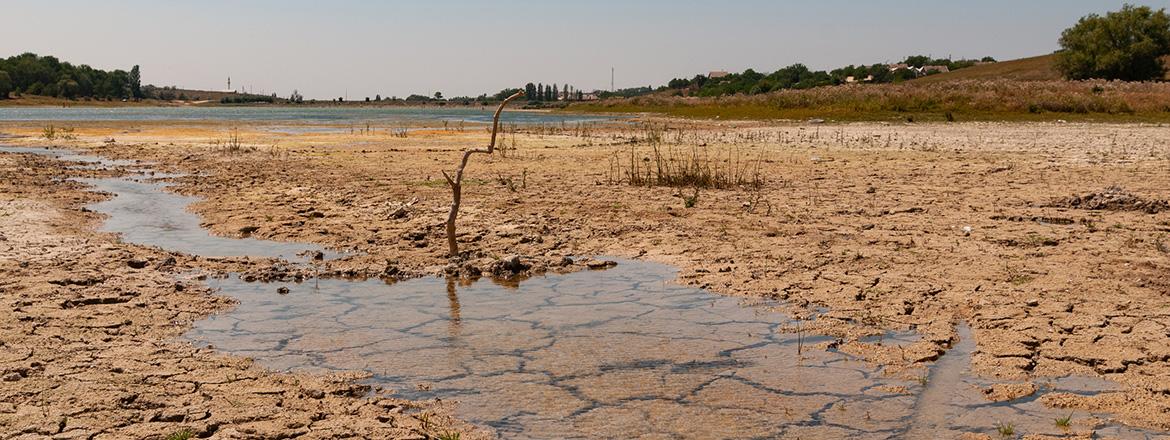
Recurring periods of drought are causing losses worth billions of złoty to the Polish economy every year and are affecting business across the agrifood supply chain, a new report has found.
The Polish Economic Institute (PIE), a state-backed economic think tank, said in a report published last week that droughts in Poland lead to lower crop yields which, on average, reduce the country’s GDP by 0.2%.
Based on last year’s economy, that figure amounts to a loss of 7.5 billion złoty (€1.7 billion), the institute said.
According to the report, drought reduces cereal and rapeseed crop yields by around 12% in an average year, while potato and sugar beet yields see drops of about 20%.
The organization calculated its findings by using satellite data on water shortages in crops to estimate losses between 2004 and 2025.
Its report also said that this year’s cereal harvest will be about 5% lower than in 2025, citing estimates from Statistics Poland, the country’s state-run statistics office.
“Almost all of the lost value added occurs in agriculture, but the decline in production affects the entire food supply chain,” the PIE said, adding that about 45% of economic output decline was recorded in non-agricultural sectors like food processing, trade and transport.
The think tank, citing figures from the Institute of Soil Science and Plant Cultivation, said that drought affected spring and winter cereal crops in about 65% and 57% of municipalities, respectively, in Poland this year.
“Droughts are not an exception in Poland; they are becoming a recurring cost of doing business,” it said.
The Polish Economic Institute said that recurring droughts means that Poland should move toward a “systematic approach to drought risk management” rather than simply responding to losses.
It suggested measures such as reducing water runoff and drainage, restoring rivers to more natural conditions and protecting wetlands and forests.
It also said monitoring and early-warning systems should be enhanced, adding that reducing crop losses by just one-fifth would lower the cost of drought by about 1.5 billion złoty (€340 million) per year.
Amid severe prolonged summer heat waves across Europe in recent years, Poland’s Institute of Meteorology and Water Management (IMGW) last year said that drought conditions in the country are getting worse.
Water levels in Poland’s longest river, the Vistula, fell to record lows in August this year, while the Polish Geological Institute (PIG) issued groundwater drought warnings covering almost the entire country amid rainfall shortages earlier this month.
Source - https://tvpworld.com