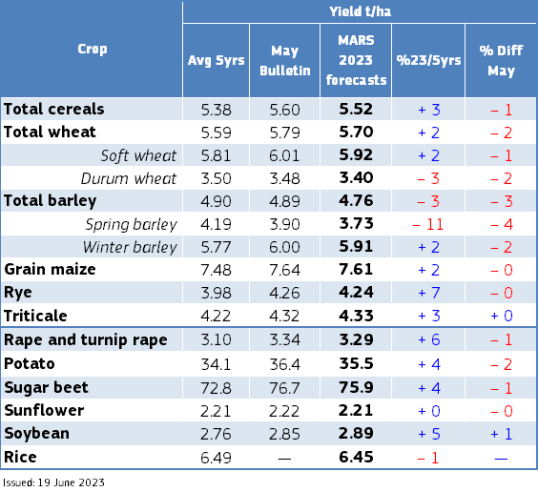
According to the June 2023 issue of the JRC MARS Bulletin - Crop monitoring in Europe, the weather observed between 1 May to 12 June 2023 was once again marked by strong contrasts, with negative impacts on crop yield expectations in several regions.
The negative impact is particularly strong for spring barley, for which the yield forecast at EU level was revised downward by 4% at EU level, to 11% below the 5-year average.
For other crops, the yield forecast at EU level remains close to the 5-year average.
Rain in the Iberian Pensiula arrived too late for spring and winter crops
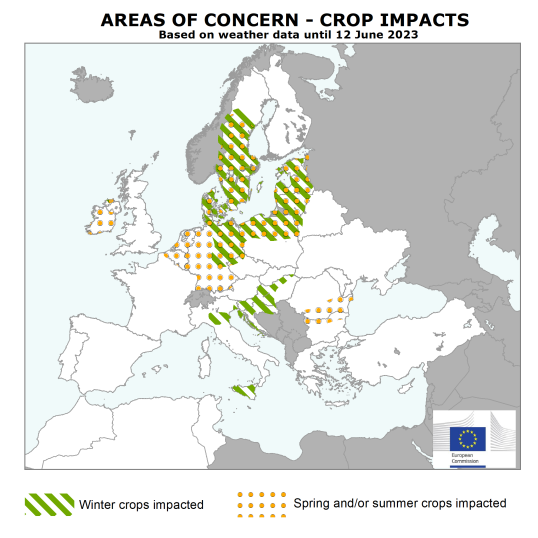
The map below reflects the most distinct weather-related impacts on crops that occurred after the reporting period of the May edition of the Bulletin (14 May). Since then, drought conditions ended in most parts of the Iberian Peninsula. However, the recent rains arrived too late for spring and winter crops.
Prolonged rain deficit raises concerns in northern regions
Sunny and dry conditions in large parts of north-western, northern and northern-central Europe resulted in rapid depletion of soil moisture reserves, negatively affecting the yield potential of winter, spring, and summer crops. Rain is urgently needed to avoid further deterioration.
Distinct rain surplus and/or cold temperatures negatively affect crops in several regions in the south
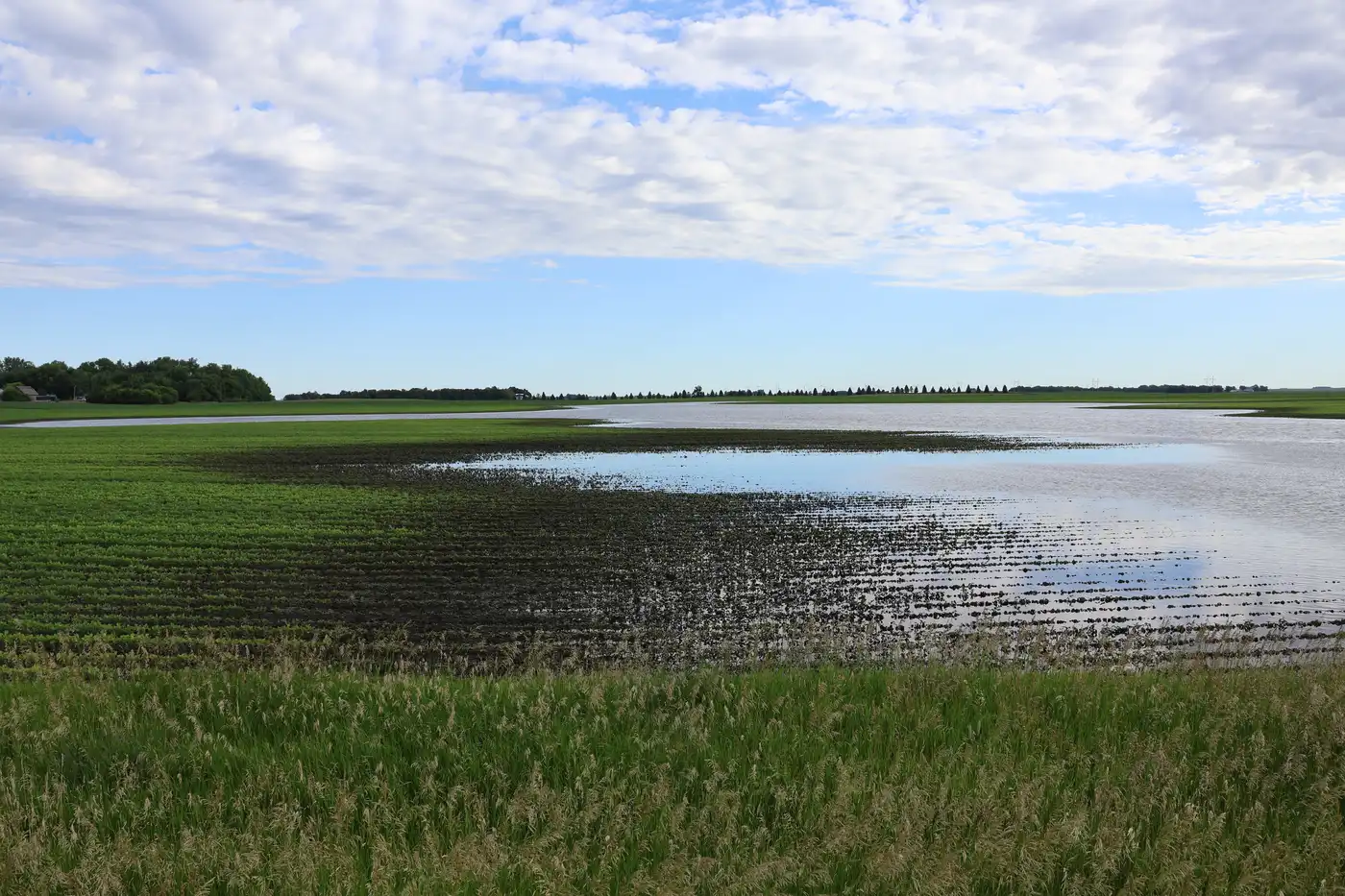
A distinct rainfall surplus in large parts of Italy, Hungary, Croatia and Slovenia, resulted in waterlogged conditions, flooded areas and increased pest pressure, with negative impact (total losses in flooded areas) on winter crops.
In the Danube River valley in northern Bulgaria and southern Romania, cold temperatures caused delays to sowing and the early emergence of summer crops.
Source - https://joint-research-centre.ec.europa.eu