Ecuador - Mango volume significantly impacted by El Niño

14.09.2023 618 views

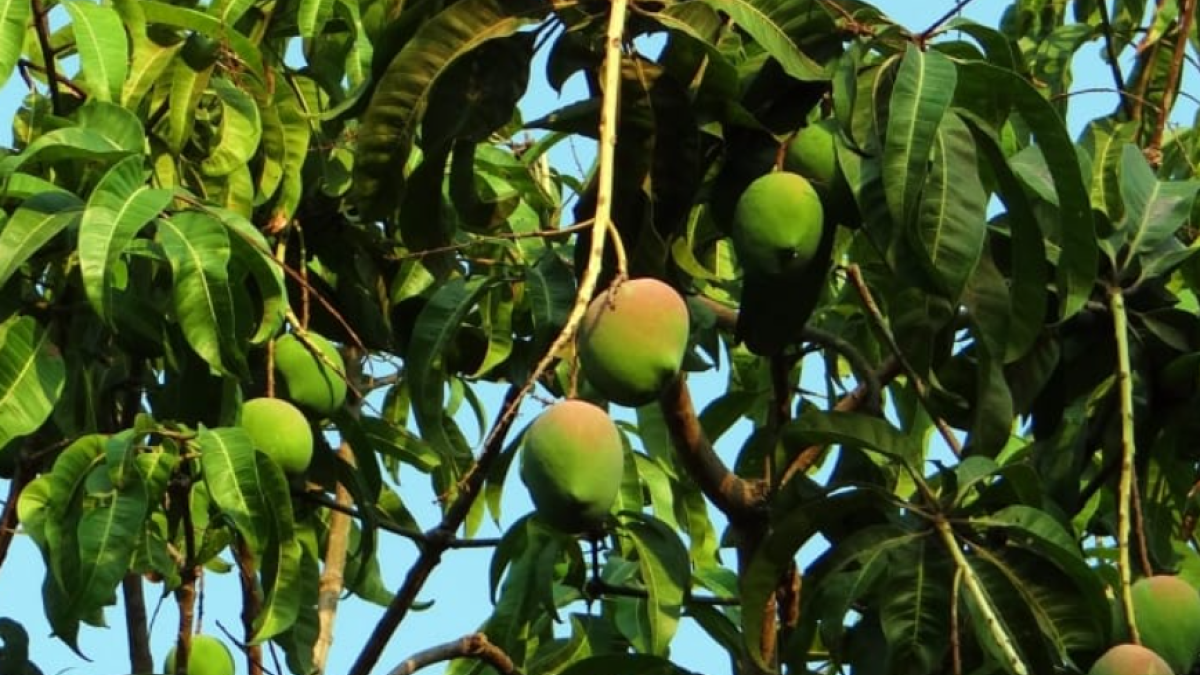
The upcoming 2023 mango season is not looking promising at all for Ecuadorian growers as they might be facing a 65 - 75 percent overall volume reduction due to the “El Niño” climatic phenomenon. Ecuadorian mango season usually starts with yellow varieties around mid to late September followed by Tommy Atkins during October and ending with Kents and Keitts in late November and December.

It was just too warm says Bernardo Malo, chairman of the Mango Ecuador Foundation which represents 97 percent of the country´s growers, packers and shippers. Temperatures were on average three degrees Celsius higher than normal during the time when floral inductions took place, which also brought some unexpected late rains back in May and June.

In addition to the lower expected volume, Ecuadorian growers and shippers are also facing the possibility of early winter rains forecasted by the end of the year, says Malo. This could jeopardize the harvesting of the fruit due to logistics restrictions in addition to eventually compromising its condition as well. The final volume will depend on how soon rains come, but the industry as a whole anticipates a severe reduction in one way or another.

Five pack houses regularly operate out of Ecuador but because of the overall situation, there might be fewer of them actually opening as shared risk agreements between some of them might be a valid option in order to optimize operations costs.

The Ecuadorian mango industry is one of the few among the different growing origins with full traceability at both farm and pack house levels. All farms in Ecuador are Globalgap certified and all pack houses are Primus GFS and SMETA certified.

It will be a very complicated season for Ecuador as the projected economic losses are huge. The last “El Niño” occurred 26 years ago. However, experts believe that present conditions could be even worse than those in 1997.

Source - https://www.freshplaza.com

19.01.2026

FAO issues new guidance on food safety risks linked to climate mitigation chemicals in agriculture

As governments and agribusinesses race to curb greenhouse gas emissions while feeding a growing global population, the UN’s Food and Agriculture Organization (FAO) has released new guidance to help policymakers and industry assess food safety risks linked to emerging climate-mitigation chemicals used in agriculture.

19.01.2026

Indonesia pushes agricultural downstreaming to boost farmers’ income

Agriculture Minister Andi Amran Sulaiman has called on regional governments to accelerate downstreaming of local agricultural commodities - particularly coconuts, cashew nuts, and cocoa - to increase added value and raise farmers’ incomes. 

19.01.2026

Japan struggles to weed out plant threatening agriculture, ecosystems

The seemingly innocuous alligator weed, or Alternanthera philoxeroides, poses a real problem, especially to rice farmers.

19.01.2026

Canada - Kamsack-based Nytro promotes Green Lightning technology

The Green Lightning system uses electricity to convert water into nitrogen-rich fertilizer, with larger units designed to meet the needs of farm operations.

19.01.2026

Ireland - Almost €2.9m issued in farm scheme payments last week

Just under €3 million was issued in various farm scheme payments last week by the Department of Agriculture, Food and the Marine (DAFM).

19.01.2026

India - Horticulture Director gave his suggestions in the National Conference of Crop Insurance Scheme

A two-day National Review Conference was held in Bengaluru under the Pradhan Mantri Fasal Bima Yojana. 

18.01.2026

India - Bihar Launches Online Crop Loss Compensation Scheme: Farmers Can Claim ₹7,500–₹10,000 per Hectare

The Bihar government has announced financial assistance for farmers affected by crop losses under the Bihar State Crop Assistance Scheme. 

18.01.2026

Afghanistan - $30m new cold storage facility opens in Kabul to boost agriculture

The Ministry of Agriculture, Irrigation and Livestock (MoAIL) has inaugurated a new cold storage facility in Kabul, saying it will help reduce agricultural waste, cut imports, and strengthen the economy.