The European Union and the African Union propose a joint plan for water resource supply within the framework of SIAM 2025 held in Morocco.
The International Agricultural Show in Morocco (SIAM) is an opportunity for senior officials, experts and politicians to meet and discuss the main challenges facing the water and agriculture sectors.
This international meeting places particular emphasis on sustainability, innovation and cooperation between countries as practical solutions that will help resolve the water crisis and the obstacles facing agriculture in the face of global climate change.
France/Morocco: same water management
The Moroccan Minister Delegate to the Ministry of Europe and Foreign Affairs, Benjamin Haddad, reaffirmed the richness of the partnership between Rabat and Paris, stressing that ‘the presence and participation of dozens of French companies at SIAM reflects the importance of the strategic partnership that unites the two countries in terms of food sovereignty and agricultural management’.
Haddad highlighted the importance of ‘water management for sustainable and resilient agriculture’ as well as for the food security of both countries, which face challenges and emergency situations such as water stress. The minister called for coordinated efforts and consolidated exchanges on agricultural water.
‘France has shared with Morocco successive years of drought, a context that requires strategies to optimise water storage and reasonable management of agricultural water,’ emphasised the representative of the Ministry of Europe and Foreign Affairs.
Benjamin Haddad called for the development of innovative solutions built collectively, within the framework of fruitful cooperation, the exchange of best practices and the consolidation of technical cooperation to achieve sustainable agriculture capable of coping with climate change.
‘We need an ambitious European Union in its partnership with Morocco, its gateway to the African continent and the country capable of becoming a driver of agricultural development in the Mediterranean,’ insisted Haddad, who clarified that the primary objectives are to achieve resilience in the agricultural sector and sustainable water resource management.
Italy calls for a common human plan between the EU and the AU
Italy's Minister of Agriculture, Food Sovereignty and Forests, Francesco Lollobrigida, shed light on the issue of food security affecting Africa, the continent richest in land: ‘According to the FAO, agriculture is the largest user of water and we need more rainfall to have sufficient water on this continent.’
Lollobrigida argued that ‘in order to achieve common sustainable development between Europe, with its economic and technological wealth, and Africa, with its demographic and natural wealth, so as to be able to face the challenges of climate change, we need to think about a practical partnership between the two continents’.
‘Italy has proposed to the European Union and the African Union a common human plan as an efficient strategy to address the issue of sustainability and achieve equal growth on this planet, where the issue of water is fundamental,’ added the Italian minister.
Francesco Lollobrigida highlighted the water situation in Italy, which has experienced a 20% drop in its water reserves, and stressed the need to take measures for innovation and sustainability in a context marked by drought and climate change.
Faced with this situation, ‘the agricultural world must adapt by reducing risks; reusing wastewater; increasing the use of drip irrigation systems; protecting vegetation cover; and encouraging good agroforestry practices,’ explained Lollobrigida.
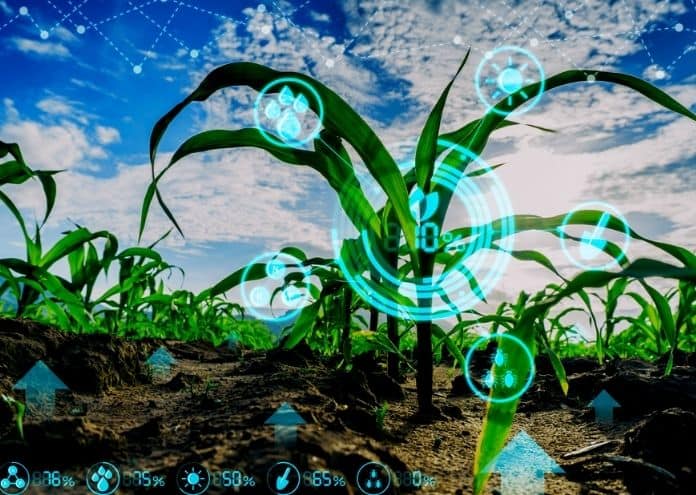
Faced with rising water supply costs and the challenge of improving the availability of this natural resource, Italy's Minister of Agriculture, Food Sovereignty and Forests called for the use of digitalisation, genetic selection and agriculture assisted by artificial intelligence technology.
The Italian minister placed particular emphasis on improving productivity and sustainability, which depend on our ability to manage water through good governance and good practices, since, in his view, resource management must be conditioned by equity and justice in the Mediterranean basin.
The World Water Council praises Moroccan excellence
The president of the World Water Council, Loïc Fauchon, described the construction of the seawater desalination plant in the city of Dakhla as a ‘pure revolution’, reflecting Moroccan excellence in the field of proactive management of the water and agriculture sector.
A revolution because, according to Fauchon, it uses renewable energies in the water production process for both the population's drinking water needs and irrigation.
In this regard, the Council announced the creation of a Centre for Non-Conventional Water and Renewable Energies in Morocco, confirming the country's central role in addressing global water challenges. The Council also proposed a water autonomy plan for Gaza.
Loïc Fauchon clarified that we live in a world caught between peace and war, between wealth and poverty, in the midst of a water, health and food crisis, within the context of an alarming paradox.
The president recalled the consequences of the irrational exploitation of natural resources, which directly affects biodiversity, and explained the water crisis, i.e. the lack of this vital resource, contaminated water and drought, which we are seeing in several countries in Africa and other continents.
Fauchon insisted on the importance of linking water and demographics, as well as the relevance of rethinking policies applied in terms of water and agriculture, in order to guarantee more water resources that will enable the human community to survive. This requires more investment to maintain biological, political and social balance and to arrive at efficient solutions on the ground, taking into account the following three priorities:
- Water for health.
- Water for food, reviewing food models, with 2 billion people in Africa in need of food.
- Water for nature and knowing how to conserve water with new generations of dams and preserve biodiversity.
Key messages from the World Water Council
Among the main messages delivered by the president of the World Water Council, Loïc Fauchon, during his speech at the International Agricultural Show in Morocco, were the following:
- The implementation of a water supply plan for Gaza developed by the council under the slogan ‘Water for peace and peace for all’.
- The cancellation of water debt for poor countries and the creation of a public water guarantee mechanism within the framework of a process of water resource sovereignty.
- Water is political and hydro-diplomacy has a key role to play in the democratic management of this vital resource, offering great potential for national and international cooperation aimed at helping to share transboundary basins.
- Security, health and food are three areas that are inextricably linked to water.
- The imperative importance of strictly controlled artificial intelligence that serves equity and equality in water matters.
- At the financial level, water lacks money and money lacks water; taps before guns and land before wars, in order to find money for water in the future.
Source - https://www.atalayar.com