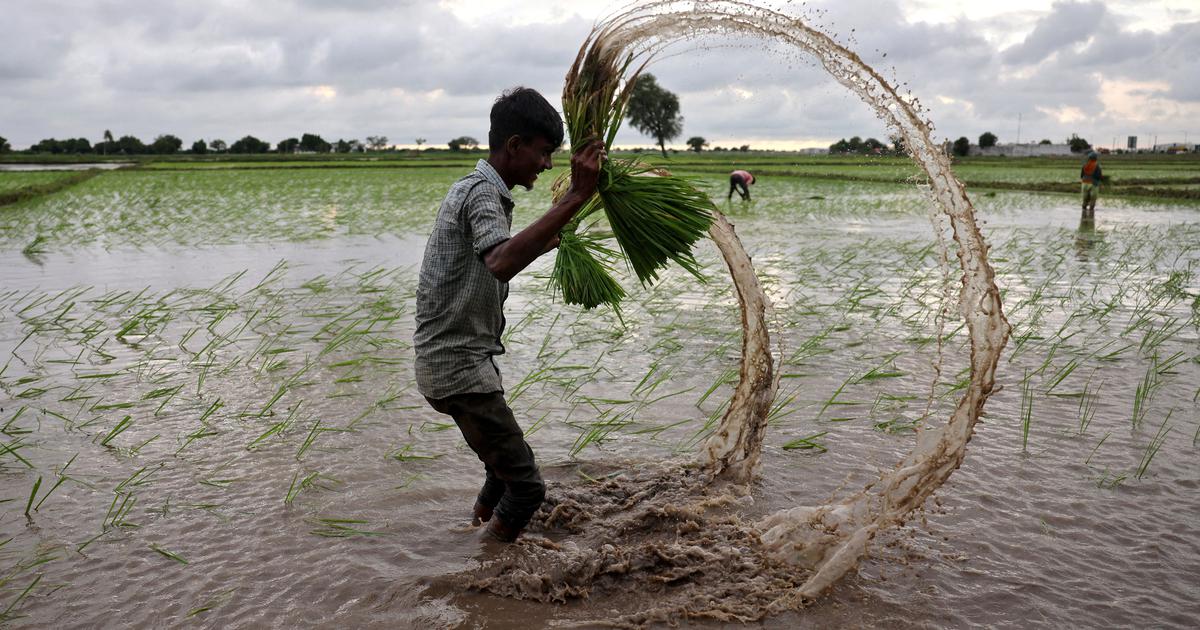
As climate change disrupts agriculture, small and marginal farmers pay high premiums but struggle with delayed, inadequate payouts.
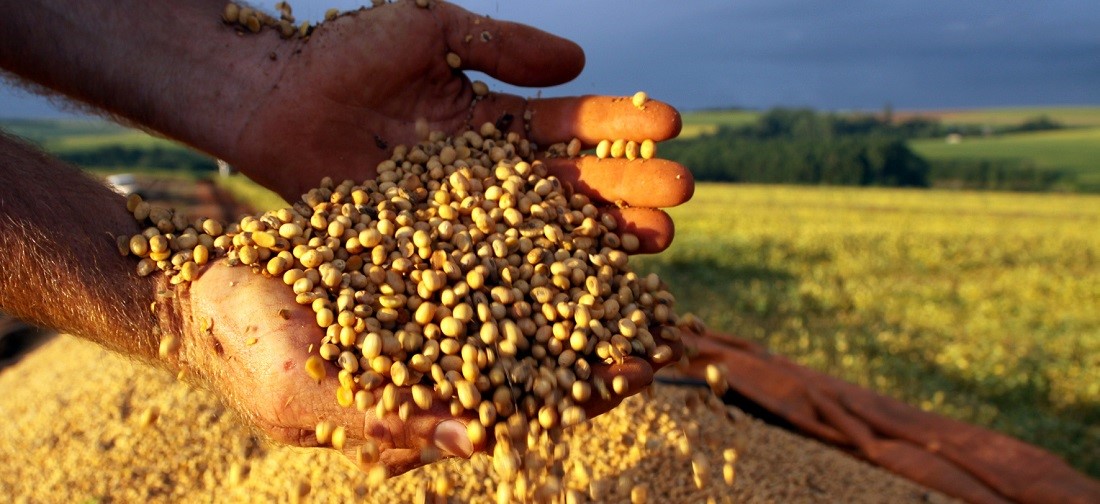
After years of low rainfall devastating soya bean crops on his central Indian farm, Dileep Patidar last year planted the pulse urad as it needs less water and he counted on the government’s crop insurance scheme to cover him if it did not work out.
But the gamble failed and he lost nearly half his crop. Then the insurance money never came.
“I last received an insurance payout in 2019, and I’ve lost crops to low rainfall almost every year since then,” said 49-year-old Patidar, who farms five hectares in the Mandsaur district of Madhya Pradesh.
The Indian government runs the world’s largest agriculture crop insurance scheme, subsidising insurance to reduce farmers’ premiums.
But an analysis by the Indian think tank, the Centre for Science and Environment, said farmers living in climate-vulnerable districts like Mandsaur faced higher premiums, had lower levels of insurance cover and received lower payouts compared to farmers in lower-risk districts.
This undermines the purpose of a scheme that could be a crucial tool in building farmers’ resilience, the analysis said.
Climate change is increasingly impacting India's crops, with more than 4 million hectares affected by extreme weather events in 2024, nearly double the previous year, according to India's Atlas of Disasters, maintained by CSE.
Just under half – 46% – of India’s 1.4 billion people are employed in agriculture, a sector that supports 70% of rural households and generates 16% of the country’s GDP, according to Indian government data.
Patidar’s monsoon crops were insured, but he is frustrated at still waiting for a payout while he said farmers in neighbouring villages had already been compensated.
“I checked my bank passbook and saw that around Rs 10,000 was deducted for the insurance premium, but to what end?” he asked.
Launched in 2016, the farm insurance scheme aims to protect farmers’ incomes by aiming to insure 50% of all agricultural land by 2020, but by 2021 only 30% was insured, according to the latest official data.
CSE Programme Director Amit Khurana said India's crop insurance scheme could be a vital safety net for climate-vulnerable farmers.
But, he said, “farmers must perceive a benefit in adopting it which means those vulnerable have to pay less, if at all, for better support”.
However, this is not currently the case. CSE analysed 2023 monsoon crop insurance data for 21.5 million farmers in agricultural districts classified by the government as vulnerable to very high and high climate change risk.
Farmers in very high-risk districts pay 70% more in premiums than those in lower-risk districts and 60% more than those in high-risk districts, the analysis showed.
Despite paying more, farmers in the most vulnerable districts also received 20% less money in insurance payouts.
“From farmers’ perspective, the main challenge with the insurance scheme remains the lack of transparency,” said Donthi Narasimha Reddy, a public policy expert in the southern state of Telangana.
Farmers often talk about not receiving any pay out after losing their crops, or the amount being too little to help, Reddy said.
Tech solutions
As well as sharing the financial burdens of premiums, state governments should look to technology to make the insurance work better for farmers, said Khurana from CSE.
He cited the southern state of Andhra Pradesh, which in 2018 became the first in India to introduce a digital crop survey, utilising satellite and other tech to track crop yields. This process complimented the much-criticised physical crop surveys.
“High-quality yield data, combined with robust weather data from our expansive system of weather monitoring stations enhanced transparency and trust in the system,” said D Venugopal, deputy director of the state’s crop insurance department.
Citing state government data, Venugopal said greater transparency had helped Andhra Pradesh reduce the amount farmers paid for the insurance to about 4% of the total premium from a national average of around 10%. The federal and state governments pay the rest.
The Indian federal government piloted digital crop surveys in 12 states in 2023 and is now planning to launch them in all districts by March 2026.
Using technology including mobile apps, global positioning, artificial intelligence and machine learning, the government wants to enhance the precision of crop yield estimates.
This, it hopes, will enhance the efficiency and transparency of crop insurance and make settling claims easier.
But for farmers like Patidar in Mandsaur change cannot come soon enough.
“I’m not getting a break,” he said. “The government must resolve these issues soon. Otherwise, where will the food come from?”
Source - https://scroll.in