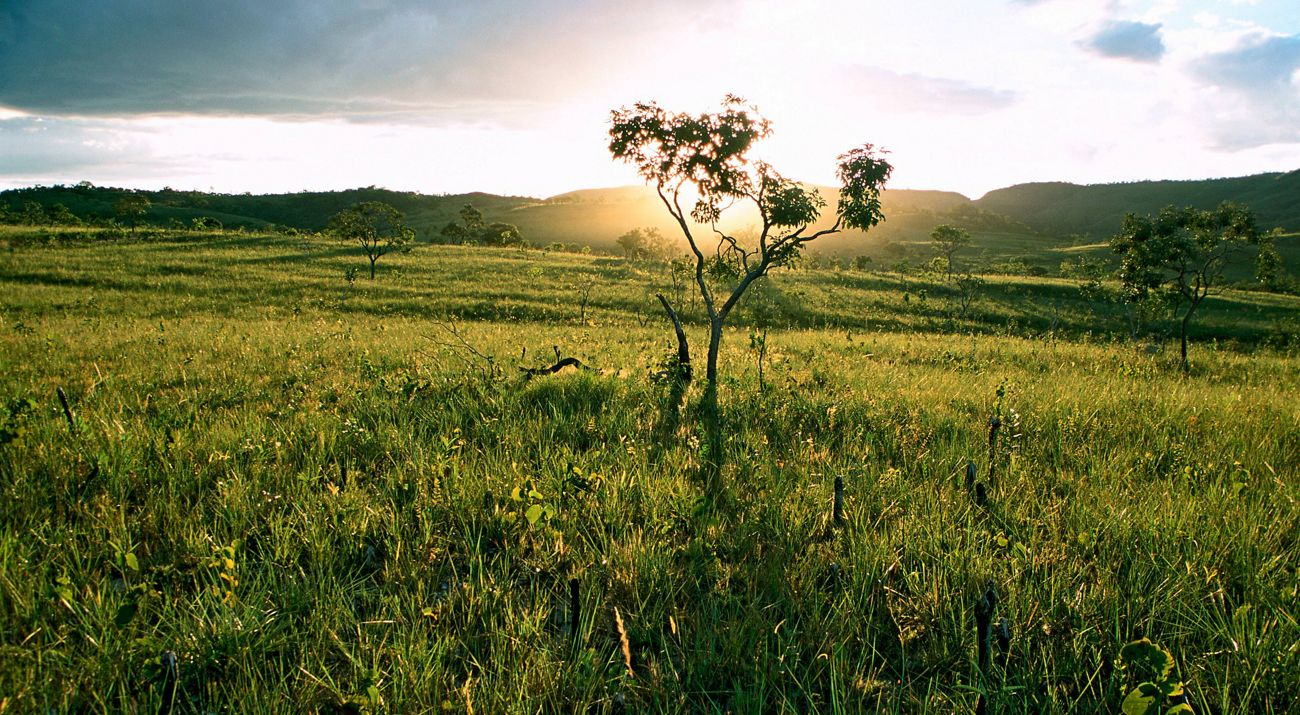
Brazil’s Cerrado biome, the country’s second-largest, plays a central role in national agricultural production while also hosting significant biodiversity and ecosystem value. Nearly half of its native vegetation remains intact, presenting an opportunity to expand agriculture on already cleared land. How agricultural finance—particularly public rural credit and emerging blended-finance instruments—is structured and deployed will be critical in shaping land-use outcomes and balancing agricultural growth with conservation goals.
Within the Cerrado, the MATOPIBA region, spanning Maranhão, Tocantins, Piauí, and Bahia, has been the focal point of recent agricultural expansion and deforestation. Although it covers only 28% of the biome, MATOPIBA accounted for more than 55% of Cerrado deforestation between 2013 and 2022 and nearly 80% of Brazil’s soybean expansion since 2000. This combination of ecological vulnerability and rapid agricultural growth makes the region a crucial testing ground for sustainable finance policies.
Research from the Climate Policy Initiative and Pontifical Catholic University of Rio de Janeiro (CPI/PUC-RIO) shows that while substantial financial resources flow to the Cerrado and MATOPIBA, current financing mechanisms do not sufficiently align with Brazil’s sustainability and zero-deforestation goals. Incentive-based finance is essential to accelerate sustainable land use while supporting broader efforts to reconcile agricultural production with environmental conservation.
Between the 2020/21 and 2023/24 agricultural years, subsidized rural credit for the Cerrado totaled R$198 billion, with MATOPIBA receiving R$48.59 billion despite generating only 14.5% of agricultural production value, highlighting the intensity of capital flows supporting expansion. Credit distribution is uneven: MATOPIBA relies heavily on Constitutional Financing Funds (FCFs), which finance roughly 62% of subsidized credit in the region, exposing it to the design and governance of these instruments.
Sustainable credit remains limited, accounting for just 5.7% of total rural credit during this period, and is highly concentrated among larger producers and specific geographies. Programs like RENOVAGRO and the ABC Program provide larger average loans, favoring big farms and leaving smaller producers, particularly in MATOPIBA, with limited access. Only 40% of Cerrado municipalities recorded contracts under RENOVAGRO/ABC, and 53% had no sustainable PRONAF contracts, highlighting persistent access constraints that undermine the adoption of sustainable practices.
The rural credit market in MATOPIBA is dominated by a few institutions, primarily Banco do Brasil and FCF-administering banks, reducing competition and limiting producers’ financing options. Sustainable credit is even more concentrated, with nearly half of municipalities offering only one or no institutions providing sustainability-linked loans, effectively excluding many producers. Innovative blended finance mechanisms show promise but remain small in scale, limiting their impact relative to the capital needed for broad transformation.
Overall, sustainable public finance in the Cerrado is constrained by limited scale, insufficient transparency, concentration among large producers and institutions, and uneven territorial coverage. Improving transparency through better reporting and classification frameworks, expanding sustainable credit within the broader rural finance system, and leveraging financial innovation to mobilize additional capital will be essential. These steps can help align financial flows with deforestation reduction and long-term sustainability, supporting both agricultural productivity and conservation in the Cerrado and MATOPIBA.
Source - https://news.fundsforngos.org