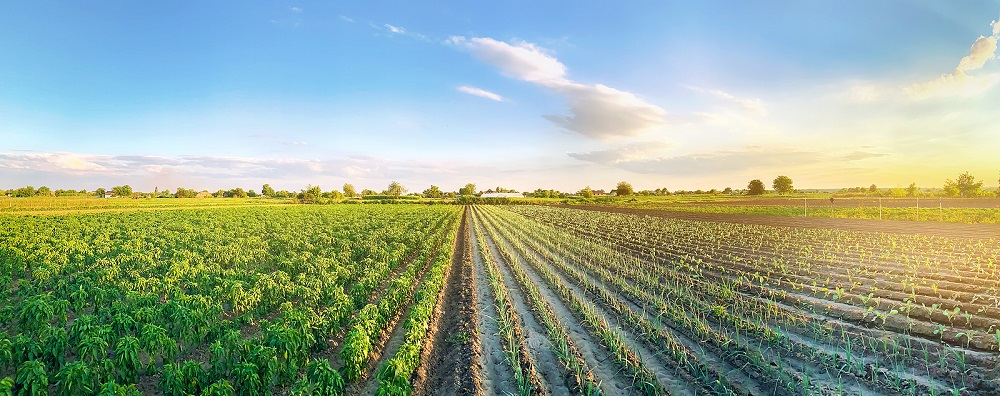
The fast-tracked decision lets uninsured farmers file compensation claims within days, with first payments expected in October.
France on Monday began the first formal state recognitions of 2026 crop losses caused by heat waves and drought, a step that clears the way for uninsured farmers in affected areas to receive compensation as early as October, the Agriculture Ministry said.
The ministry said the emergency process was accelerated and simplified under the government’s Climate-Adaptation-Drought-Fires plan, known as CASI, which Agriculture Minister Annie Genevard presented on Sept. 4. The aim is to get money to farmers hit hardest by the summer’s extreme weather more quickly than under the usual timetable.
The first decisions were taken Monday after an exceptional meeting of the National Committee for Agricultural Risk Management, or CNGRA, and CODAR, the commission that helps oversee crop damage insurance policy. According to the ministry, those bodies reviewed the first requests for recognition of crop losses linked to the 2026 heat waves and drought for crops that were not insured.
The ministry said areas covering all or part of 18 departments were recognized in the first round. They are Ardèche, Corrèze, Côtes-d’Armor, Eure-et-Loir, Ille-et-Vilaine, Indre, Loir-et-Cher, Loire-Atlantique, Maine-et-Loire, Haute-Marne, Mayenne, Morbihan, Oise, Puy-de-Dôme, Rhône, Sarthe, Vendée and Haute-Vienne.
That recognition allows local state offices, known as departmental directorates for territories, to open the first ISN filing windows in the coming days. Farmers will then be able to submit individual compensation claims for review. The ministry said the first ISN payments to uninsured operators are expected from October 2026.
The initial recognitions cover field crops as well as fruits and vegetables for which loss assessments have already been documented at the departmental level. The ministry did not provide a total number of farms expected to qualify in this first phase, nor did it estimate the value of the first payments.
For insured farmers, the system is different. The ministry said ISN payments for insured operations are handled by insurance companies, which committed in July to speed up claim processing and pay advances more quickly on both the private insurance share and the national solidarity share. To support that effort, the government published a decree on July 31 raising the maximum ISN advance for insured farms to 80%.
The announcement is one of the first concrete administrative steps since the government acknowledged the severity of this year’s dry conditions. In a separate statement last week, the government said it had unlocked more than €1 billion to support farmers and maintain production after the drought. Monday’s move narrows the focus from broad support measures to the first departmental recognitions needed for direct crop-loss compensation.
The ministry described the 2026 drought as exceptional and said the fast-track decisions reflect measures 1 and 2 of the CASI plan. It also said a second exceptional meeting of CNGRA and CODAR will be held on Oct. 1 to examine additional ISN recognition requests tied to the same heat waves and drought. Those new cases will be based on files sent up by local state offices by Sept. 15.
Another measure tied to the CASI plan also moved forward Monday. The ministry said a draft decree to implement an “8-year Olympic average” was presented to CODAR and will soon be sent to the advisory committee on financial legislation and regulation for review before quick publication. In agricultural policy, an Olympic average usually removes extreme high and low values from a multiyear series to calculate a reference average, a method often used to assess losses more evenly after volatile seasons.
The timing matters for farms that do not carry crop insurance because dry weather can leave them exposed to immediate cash-flow pressure before the next planting or harvest cycle. In many cases, growers must absorb lower yields while still paying for irrigation, inputs, labor and debt service. By moving the recognition process to early September and indicating that first payments will begin in October, the government is trying to shorten that gap.
The effects could extend beyond farms. In drought-hit areas that supply grain, fruit and other agricultural inputs, faster compensation may ease some financial strain in parts of the raw-material chain used by brewers, cider makers, distillers, juice producers and other beverage businesses. That does not mean supply risks have disappeared, and the ministry’s first announcement does not single out beverage crops. But in regions where water shortages have already reduced harvests, earlier state support could help stabilize some growers that feed into those markets.
The ministry’s statement did not say whether more departments are expected to be added in large numbers at the Oct. 1 review, but the structure of the process suggests that Monday’s approvals are only the first wave. Because the current recognitions are based on losses already documented locally, more files may emerge as departments complete field assessments and transmit them to Paris.
The announcement also gives a clearer picture of how France is dividing support between insured and uninsured producers during a climate shock. Farmers with insurance are being routed through insurers, backed by a larger possible state advance, while uninsured growers must first wait for official loss recognition before local offices can open claims. Monday’s decisions begin that second track, which had been closely watched in areas where repeated heat and rainfall deficits have hit production hard this summer.
Source - https://www.vinetur.com