The Minister for Food and Agriculture, Eric Opoku, has announced a €154 million investment from the Government of Italy, in partnership with BF International, to support the transformation of large-scale commercial agriculture in Ghana.
He made the announcement at the Government Accountability Series in Accra on Monday, November 24.
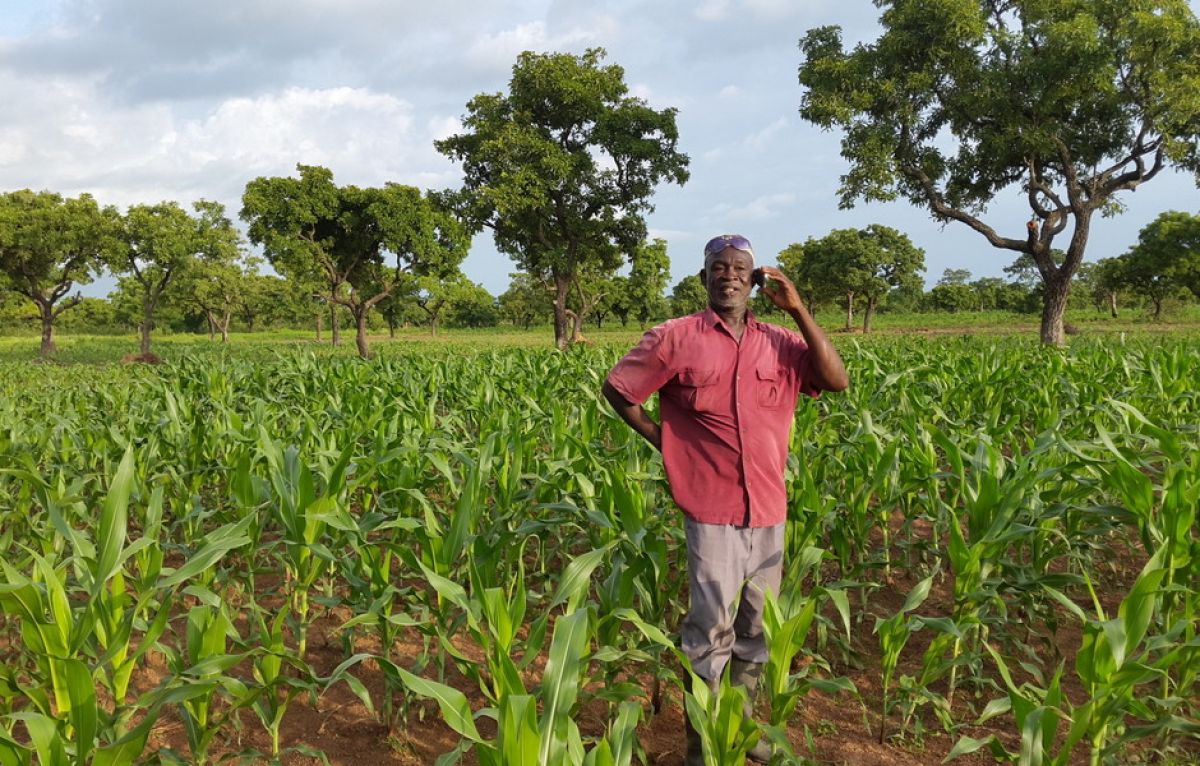
According to him, the project will include the development of a 10,000-hectare irrigated model farm for the all-year-round cultivation of rice, maize, soya and tomatoes.
As part of the initiative, CIHEAM Bari, an agency of the Italian Government, will collaborate with the West Africa Centre for Crop Improvement (WACCI) at the University of Ghana to establish a national seed bank.
CIHEAM Bari will also partner with the Council for Scientific and Industrial Research (CSIR) to roll out a nationwide soil testing and land-suitability programme to improve crop performance.
Mr Opoku explained that these efforts fall under the Mahama administration’s Feed Ghana Programme, introduced to modernise agriculture, strengthen food security, support job creation, reduce import dependence and increase domestic production and exports.
He outlined a series of developments achieved over the past nine months.
He noted that 10 new small dams have been constructed while eight existing irrigation dams have been rehabilitated. In addition, 250 solar-powered boreholes have been installed for farming communities and second-cycle schools across the five regions of the north, Bono and Ahafo.
The Agric Minister noted that major irrigation schemes are also undergoing rehabilitation.
These include the Vea Irrigation Scheme in the Bolgatanga and Bongo districts of the Upper East Region, covering 850 hectares; the Weta Irrigation Scheme in the Ketu North Municipality of the Volta Region, covering 880 hectares; and the Tanoso Irrigation Scheme in the Techiman Municipality of the Bono East Region, covering 100 hectares.
The Kpong Irrigation Scheme in the Shai Osudoku and Lower Manya districts of the Greater Accra and Eastern regions, which spans 930 hectares, is also being upgraded, together with the 200-hectare Ashaiman Irrigation Scheme in Greater Accra and the 245-hectare Aveyime Irrigation Scheme in the Volta Region.
He added that 25 solar-powered boreholes have already been completed, and the remaining 10 will be ready in the first quarter of 2026, alongside 44 additional solar boreholes for selected northern districts.
The Minister said processes have begun for the development of several inland valleys for rice production.
These include the 175-hectare Anunuso Inland Valley in the Anunuso, Brofoyedu, Nkwawkwanua and Awaham communities of the Ashanti Region; the 150-hectare Atonsu Inland Valley in the Atonsu and Abramaso communities, also in the Ashanti Region; and the 647-hectare Kawampe Inland Valley serving the Kwawampe, Tanfulto, Kaaka, Tadefufuo, Tahiru Akura, Chiranda, Atta Akura and Abrewanko communities in the Bono East Region.
Additional developments include the Odaho and Odamu Inland Valleys in the Yaw Nkrumah and Donuaso communities of the Ashanti Region, covering 114 hectares, along with the Waamu-Kumi Inland Valley in Waamu Kumi and Offinho, also in the Ashanti Region, which covers 114 hectares.
Mr Opoku revealed further that the Government of Ghana and the Korea Rural Cooperation (KRC) are constructing irrigation infrastructure on 100 hectares of land to support rice seed production.
He assured the public that the Mahama administration is committed to expanding irrigation systems nationwide to promote all-year-round farming.
He said the government expects 10,000 tonnes of high-quality rice seed to be produced by 2027, adding, “Ghana will be well on its way to rice seed independence.”
He also highlighted improvements in food inflation, recalling that it stood at an unprecedented 61 per cent in January 2023, dropped to 28.3 per cent in January 2025, and declined further to 9.5 per cent by October 2025.
According to him, this demonstrates the positive impact of the reforms and strategic interventions being rolled out under the Feed Ghana Programme.
Source - https://www.myjoyonline.com