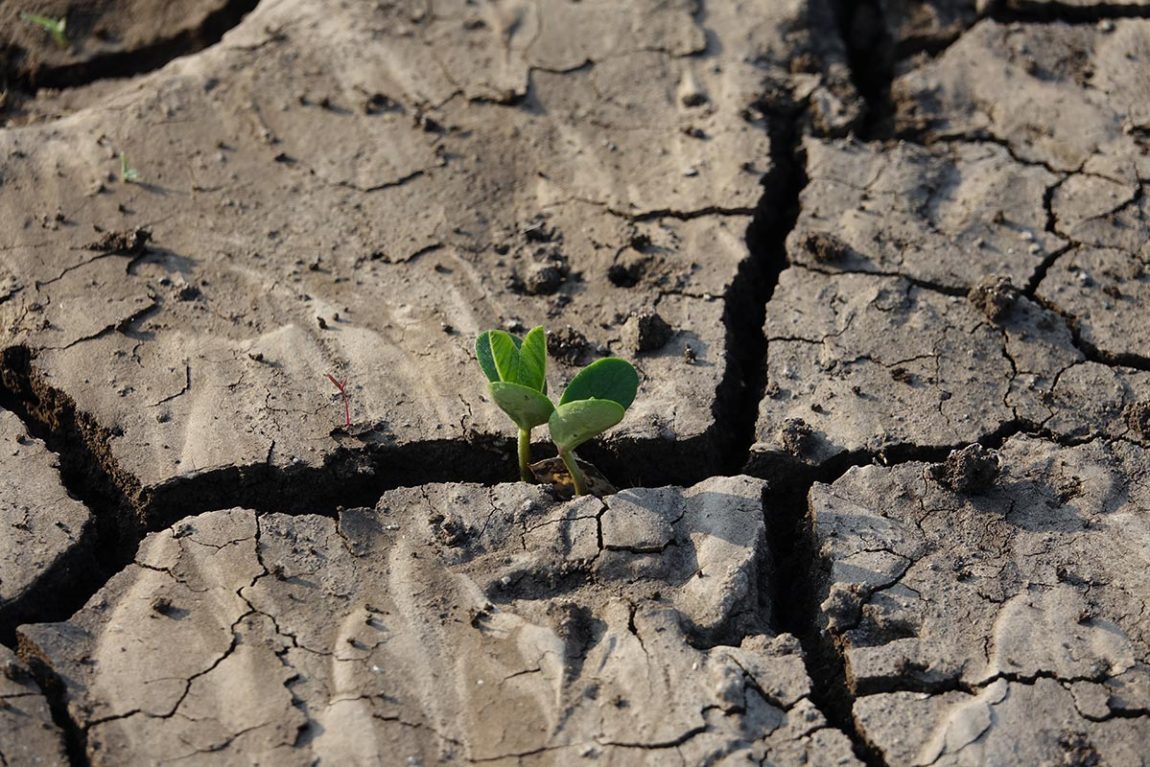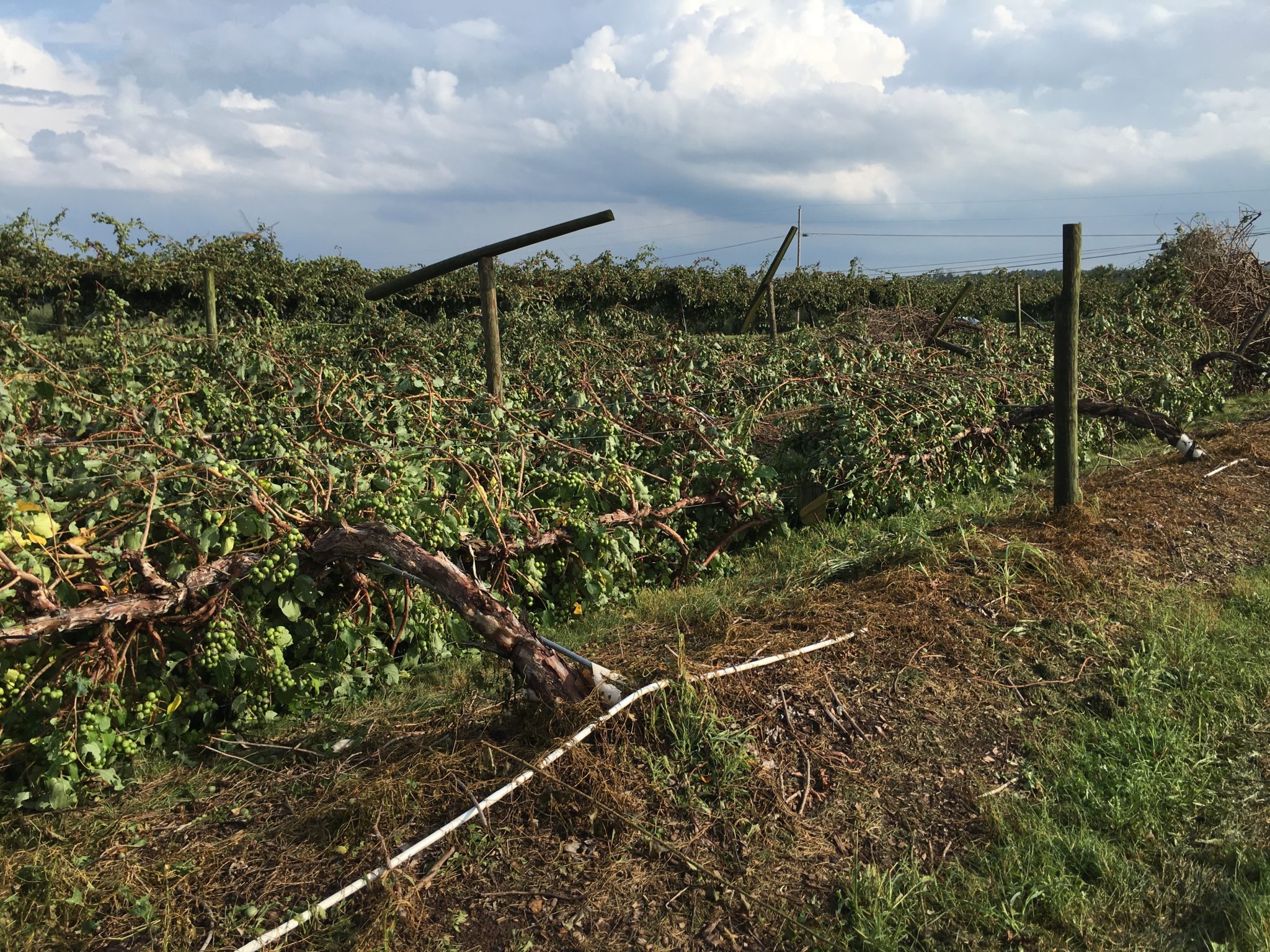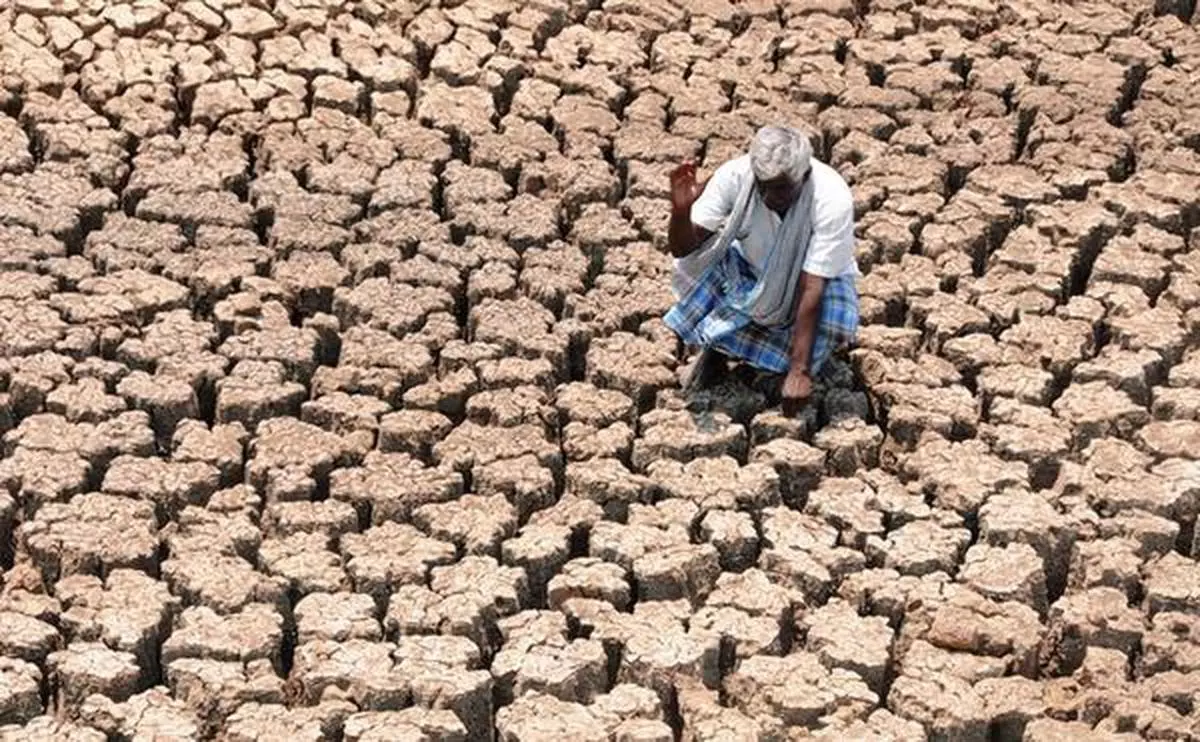
Ivis Rene Cabrera no longer gazes up at the sky in hopes of rain to irrigate his field. He’s come to expect the long dry spells as northwestern Honduras grapples with increasingly longer periods of drought during the dry season.
Now, he and the rest of the Indigenous Tolupan community’s gaze is to the ground. Their hope lies in an agroecology project to revive the harvests on their typically fertile lands. Beans and corn, staple foods of the community, used to be bountiful in Honduras’s Yoro department, before they were hit by severe droughts.
“We used to produce 10-12 cargas [1,400-1,700 kilograms, or 3,000-3,700 pounds] each, and now we cannot cultivate the crops anymore in many parts of Yoro. The drought-led crop failure has led many people to migrate to other areas in search of better livelihood opportunities,” Cabrera says.
In 2021, to build community agricultural resilience to climate hazards in Yoro, Spain-based NGO Ayuda en Acción and its Honduran partner, FUNACH, introduced an initiative where 1,669 people, almost equal parts women and men, participated in multiple synchronized strategies to help them adapt to hazards like droughts.
Agroforestry in particular has helped Cabrera find his way back to the fields.
“We have now begun harvesting all year around as we cultivate different foods. The support that we received in building water systems helped us experiment and harvest new crops like leafy greens and avocados. It helps bring food to my table,” Cabrera tells Mongabay.
The agroforestry plots are established to diversify crop production practices and systems — planting corn and beans with fruit and timber trees.
According to Johan Davis Reyes Chavez from Ayuda en Acción, the initiative established 31 agroforestry parcels, provided technical assistance and support to 95 Tolupan agricultural producers, established four native seed banks led by Indigenous women, and installed energy-efficient stoves in 199 households in Yoro.
Along with this, soil water conservation practices, methods to increase yields during organic farming, and helping farmers access markets are all strategies encouraging community members to favor sustainable crop farming. “With the initiative, we are trying to diversify the crops that can be consumed and sold at good prices by community people without having short cycles,” Chavez tells Mongabay.
He says the issue in Yoro is that the communities cultivate the same crops: corn and beans. That allows the intermediaries who buy from them to drive the price very low, leaving the farmers without any profit. But by conserving the diverse grains through seed banks, and planting diverse fruits and vegetables, the farmers are in a better position.
Adapting to El Niño
According to the 2023 United Nations Convention to Combat Desertification (UNCCD) report, 24 countries declared a drought emergency between 2022 and 2023. These episodes and impacts of severe drought events seem on the rise, it warns.
Though Honduras didn’t declare an emergency, the country is mired in the impacts of the El Niño weather event. In June last year, the U.S-based Climate Prediction Center (CPC) officially announced the onset of El Niño, projecting it would strengthen through the winter of 2023-2024 in the Northern Hemisphere. The updated projections indicated a greater than 90% probability of continued El Niño conditions through March 2024, further impacting food security throughout the year.
Although the severity of drought events varies according to the region, the risk is constant across nine of the 18 departments in Honduras, including Yoro and Choluteca. The historical analysis of previous events makes the Honduran dry corridor on the Pacific, a strip of land prone to intense droughts, more vulnerable to immediate El Niño exposure.
Kermith Roberto Bussi, country director for Ayuda en Acción, says the increasing drought events reinforce the need to build appropriate mechanisms to help farmer communities.
In 2014 and 2015, droughts caused by El Niño and climate change spiked food insecurity and pushed young people out of rural areas. In 2018, about 65,000 families in 13 departments were severely affected by another El Niño event, according to the United Nations Office for the Coordination of Humanitarian Affairs.
To select producers and the lands best suited for the resilient agriculture project, communities with both fertile and degraded lands were identified. All plots had to be already legally owned by a community member and needed to have a suitable topography for effective farming. Committees within the community then examined and decided together which crops would be best for cultivation.
Amid the out-migration of community people, Sirly Yarela Rodriguez Hernandez, one of the Indigenous Tolupan farmers from Yoro, says the trainings, workshops and discussions with local farmers built back their hopes in agriculture.
“The initiative gave us grains and showed us how to use and store them. I believe this has helped develop our agricultural practices because we now have knowledge on grains, its market demands and do not only rely on corn and beans that we previously harvested,” he tells Mongabay.
Farmers also built water storage systems to irrigate their crops during dry periods, and diversified their crops with leafy greens, papayas and avocados. Though avocados are a water-intensive crop associated with dominating water resources, the project organizers say it’s an important crop to introduce as it commands a high price due to demand, thus benefiting farmers impacted by drought.
Along with the farmers in Yoro, female farmers in Choluteca, southern Honduras, are also trying to build a resilient farming system. Situated in the Central American Dry Corridor, droughts here are more intense than in Yoro. The women here are also more vulnerable due to the absence of a culture allowing them to legally own land.
But as drought episodes intensified and the need to increase yields grew more urgent, community pressure and advocacy by NGOs led to actions to allow women to gain legal entitlement to lands. This was particularly important because farmers could only receive investments to turn their lands into agroforestry plots if they had legal ownership of the land. And since women here had toiled in dry fields without such ownership for years, they had little room to make their own earnings or help increase the size of plots their families could cultivate. Now, women farmers and associations led by women in Choluteca can grow beans, corn and cashews in agroforestry systems on their own lands.
Still, Tolupan communities in general are engaged in a continued struggle for their rights: defending their lands from mining companies, loggers, and power-generation projects. Daniel Tsegai, one of the authors of the UNCCD report, says conflicts such as these, frequent in Indigenous communities, make it that much harder for them to access resources and participate in projects like these to help them adapt to droughts.
To bridge the gap, Bussi of Ayuda en Acción says they’re working to include a larger share of the local Tolupan population in the agroecology project.
“From training individuals to establishing fruit and timber farms, diversifying other local crops including cassava, taro, banana and experimenting drip irrigation and horticultural crops under protected systems,” he says, “collaborations provide options creating spaces for the community people to choose their way of adaptation.”
Source - https://news.mongabay.com