India - Bhilwara farmers face crop loss as yellow mosaic virus hits pulses

23.08.2026 12 views

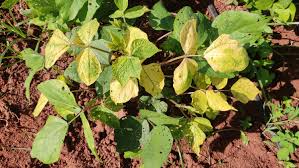
Farmers in Bhilwara district are in distress due to an outbreak of yellow mosaic, commonly known as yellow disease, affecting their pulse crops. Agriculture department’s Joint Director Vinod Kumar Jain confirmed that this virus-borne disease, caused by infections in the plants, leads to substantial crop destruction.

In a year where farmers had high hopes for their Kharif crops, including black gram (urad) and green gram (moong), the sudden onset of intense sunlight has exacerbated the spread of this disease, particularly in black gram fields. Many farmers are now witnessing their crops turn yellow, with some already facing complete destruction. The situation has become so dire that several are contemplating ploughing their fields anew.

The distress among farmers is palpable, prompting agriculture department’s Bhilwara unit to compile a ground report on the extent of crop damage and submit the findings to state govt. Currently, around 70,000 hectares of land in the district have been allocated for pulse crop cultivation, with black gram being the predominant seed sown, followed closely by green gram.

Joint Director Jain said the yellowing of the plants is primarily a result of the yellow virus and nitrogen deficiency, with the virus being the main culprit in most cases.

To mitigate the impact, he urged farmers to spray insecticide to control sap-sucking insects. Farmers are also being advised to promptly uproot and dispose of yellowing plants to prevent further spread of the disease.

In response to this agricultural crisis, a specialised team has been formed, comprising scientists from an agriculture university and officials from agriculture department, to conduct field inspections and assess the situation thoroughly. The findings from these investigations will be forwarded to the state govt to seek appropriate interventions.


Source - https://timesofindia.indiatimes.com

23.08.2026

USA - Pennsylvania Opens $10M Aid Program for Freeze-Hit Growers

Pennsylvania will open a $10 million disaster-relief program Aug. 24 for fruit growers facing an estimated $150 million to $200 million in losses from a spring freeze, Gov. Josh Shapiro reported Thursday during a visit to an Adams County orchard.

23.08.2026

A year of change in Polish agriculture

Minister Krajewski highlights support for farmers and stronger agricultural resilience.

23.08.2026

Nepal - Hunting permits issued to protect crops from wildlife in Arghakhanchi

Amid growing damage to crops and increasing human-wildlife conflict, a system allowing the legal hunting of certain wild animals has been introduced in Arghakhanchi.

23.08.2026

Spain - Barrachina highlights 35.3 million in agricultural insurance for 21,000 professionals in the field

The Generalitat allocates 35.3 million to agricultural insurance in the Valencian Community to support 21,000 farmers and ranchers against increasing risks.

23.08.2026

India - Sodiem locals seek FIR against WRD over paddy crop damage

The Siolim-Sodiem gram sabha on Sunday resolved to initiate criminal action against the Water Resources Department (WRD) over damage to ready-to-harvest paddy crops allegedly caused by leakage and seepage from the Tillari canal.

20.08.2026

Philippines - Farm damage from ‘habagat’ and serial storms hits ₱1.7B

The agricultural damage caused by the recent typhoons has soared to more than P1.7 billion, affecting over 50,000 farmers and fisherfolk, according to the Department of Agriculture (DA).

20.08.2026

India - Tech Guard For Farms: MIT Muzaffarpur Students Develop AI Device To Protect Crops From Nilgai

For years, farmers in Bihar have relied on scarecrows, fencing and constant vigilance to protect their crops from nilgai, wild animals and birds. But these measures often lose their effectiveness as animals gradually learn to ignore them. 

20.08.2026

India - Madhya Pradesh embraces a new technological framework to estimate crop yield losses, but farmers say it misses damage on the ground

For farmer Makhan Singh Mewada, the 2025 kharif season ended long before harvest time. A combination of unseasonal rains and animal attacks destroyed more than a third of the soya bean he had sown on his 2-hectare field in Khamaliya village, located in Madhya Pradesh’s Sehore district.