It is now beyond doubt that climate change is largely due to human activities. Therefore, any discussion on climate change includes human contribution to the same and its effects on life on earth.
Ecologists and environmentalists have come up with concepts and frameworks such as planetary boundaries, ecological footprint and biocapacity to quantify our contribution to climate change and the extent of damage due to it.
The more recent discourse also includes ‘climate action’, which is any positive actions by human society and individuals for adaptation to or mitigation of climate change or both.
At a village level, there has to be a different set of indicators to measure the impact of climate change as well as the outcomes of climate action.
Crop loss due to erratic rainfall, either excessive or deficit, is already visible in a vast part of the Central Indian plateau. The region has been experiencing an increase in rainfall intensity (rainfall in millimetres per hour). However, the total annual rainfall in the region is mostly the same.
This means that high-intensity rainfall occurs for a short period, creating sudden, high surface runoff — the flow of rainwater on the land.
High surface runoff damages existing structures such as earthen embankments or field bunds created by the villagers for water harvesting and soil moisture conservation.
High runoff also causes topsoil erosion, which heavily impacts productivity. Further, in our interaction with villagers, many talked about delayed monsoons or long summer months and how those affect the crop cycle.
Many farmers have reported a higher frequency of irrigation because of long dry spells during Kharif and high temperatures in the summer months.
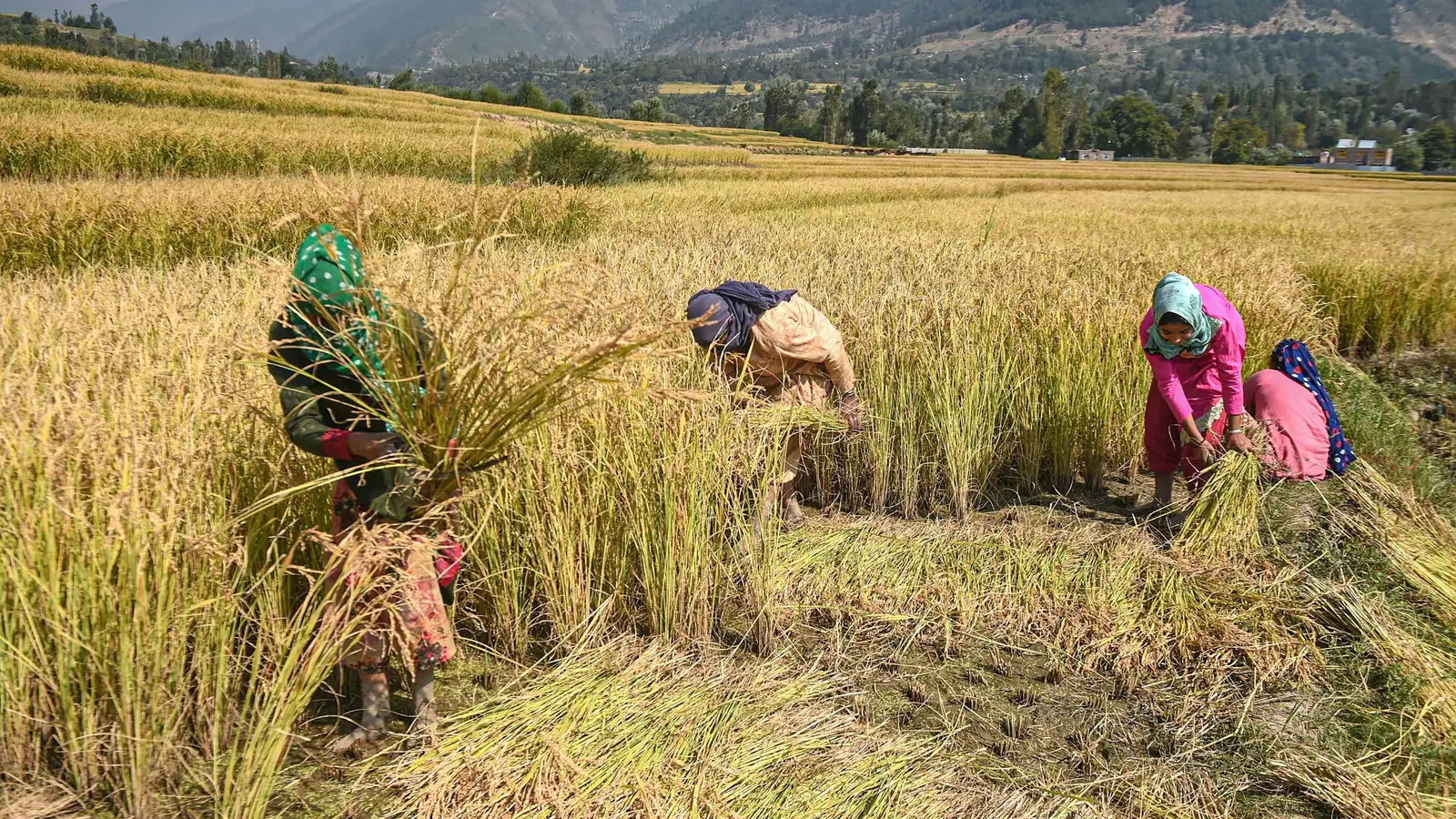
Small and marginal farmers in the central plateau are gradually finding agriculture non-viable, losing interest in rural livelihoods and the only option they have is to migrate to cities in search of work.
Further, some places in the central Indian belt may become uninhabitable during a specific period of the year because of an excessive heatwave.
Way forward
Climate actions can be defined as any positive actions by villagers or other actors, including the government, to help locals adapt to and mitigate climate change.
Adaptation is about taking appropriate action to prevent or minimise the damage that can be caused by climate change. Mitigation means making the impacts of climate change less severe by preventing or reducing the emission of greenhouse gases (GHG) into the atmosphere.
Mitigation strategy, in the long run, may result in a reversal of the trend of climate change.
The expected outcomes of adaptation are less erosion of the topsoil and better water use efficiency (increase in the gross cropped area).
Enhanced water harvesting and reduced surface runoff help arresting topsoil erosion. A second crop in at least a third of the land of the small and marginal farmers improves their farm income.
Adaptation provides people from the affected area with a safe place to stay during the heatwave. It also ensures sufficient water for livestock.
The expected outcomes of mitigation are less use of fossil fuels and chemical fertilisers. It reduces carbon emissions and enhances sequencing through more permanent vegetation.
Less use of chemical fertilisers such as urea reduces greenhouse gas emissions. Mitigation ensures the protection of forests and enhances biodiversity through community forest resources management. It also helps maintain groundwater levels by balancing recharge and draft.
Climate action will also need the development of prototypes or context-specific models around the following:
- Models should be employed for harvesting water and maintaining soil moisture in areas facing high-intensity rainfall and heatwaves.
- Area-specific irrigation models should be adopted for different agroecological zones in the central plateau.
- Area-specific cropping pattern and cropping cycle that matches climate change should be employed.
- Housing schemes should be adopted to protect people from heat-wave in most-affected areas.
There are now many facilitative policies and legal frameworks in India for climate action. Nationally Determined Contributions to address GHG emissions, National Action Plan on Climate Change and Forest Rights Act, 2006 are worth mentioning.
Source - https://www.downtoearth.org.in