The pink bollworm (PBW) pest has decimated Bt Cotton crops in the northern cotton zone of Haryana, Rajasthan and Punjab this year. Many farmers have reported being unable to complete even one harvest.
Farmers across the belt said that at least 80 to 90 per cent of their crop was damaged by the infestation of PBW (Pectinophora gossypiella), also known as Saunders. This is the pest’s most severe damage in the last two decades.
Krishan Lal (55) of 11 TKW village in the Sri Ganganagar district of Rajasthan, should have been busy harvesting cotton and transporting it to market. But the disappointed farmer is now stressed and clearing his 18.74 acres of cotton fields.
“I requested labourers to pick up the harvest a couple of times, but the yield is so low that they refused to pluck the damaged cotton. Such menial work is time-consuming and pays little,” he said.
Lal spent Rs 2.5 lakh cultivating cotton over the last six months and has now lost it all. The story is similar for all cotton farmers in the three states who have suffered heavy losses due to the infestation.
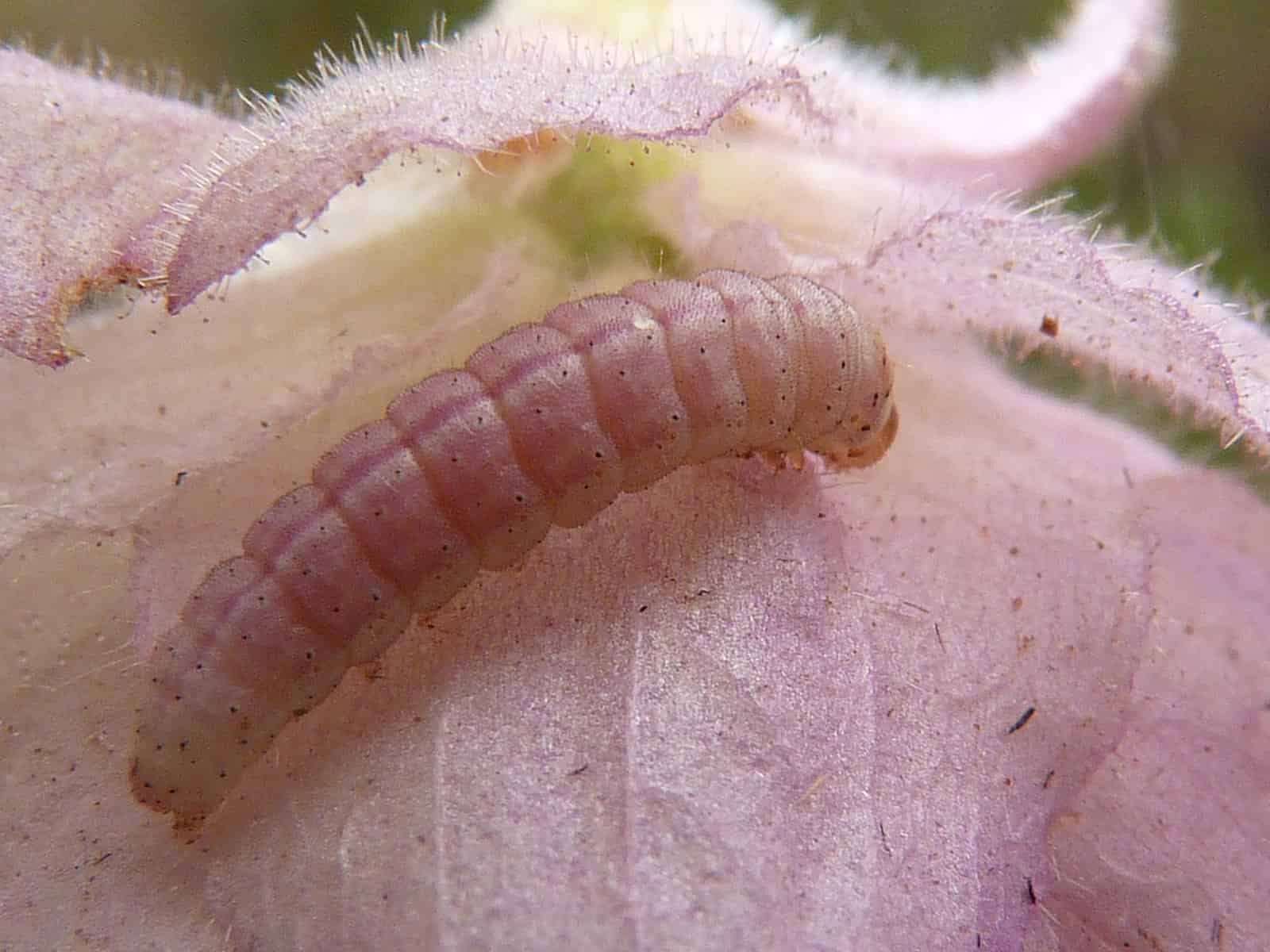
PBW is a worm that damages parts of the developing cotton fruit, like the square (the flower bud) and the boll (rounded sac of seeds with cotton fibres). The adult worm is a thin, grey moth that lays eggs on buds, flowers and bolls. The eggs hatch into larvae and burrow into bolls to feed on the the seeds. In the process, it cuts through the lint and stains it, resulting in quality loss.
The disease is common in cotton crop and has made its presence in the northern cotton zone in recent years. However, the damage this year has been the highest since 2001, according to both government officials and farmers. Before 2001, the American bollworm created havoc and ruined the lives of farmers.
The Indian government introduced the genetically modified pest-resistant cotton variety Bt Cotton (Bollgard II seed) to provide resistance against the American bollworm, pink bollworm, and spotted bollworm. However, the pink bollworm has developed resistance to Bt cotton over time.
Rajesh Nain of Khariya village in Haryana’s Sirsa has lost two acres of cotton cultivation due to the infestation. “My harvest should have been close to 24 quintals, but pest damage has ruined the yield; I will be lucky to get five quintals now,” he said.
The damage, according to Nain, was visible in late August, when the crop was in its later stages. He sprayed pesticides 13 times on his fields throughout September, but the infestation still destroyed 90 per cent of his crops.
“I have put in Rs 1.6 lakh. With the losses, I will not even be able to recover the amount I invested,” he lamented.
Cotton farmers in Rajasthan are facing a double whammy of pests, said Gurudutt Singh from Rhodawali Dhani in Hanumangarh district in the state. “This year, the excess and short duration of rainfall in August led to saturation of water in the cotton fields, resulting in the formation of boll rot fungal disease,” he said.
The disease infects the plant during square and boll formation. “Many of the bolls have pink bollworm infestations and later developed boll rot. It is a challenge for government officials to find out what caused the damage and to what extent,” he said.
According to Rishi Kumar, entomologist at the Central Institute for Cotton Research, Sirsa, Haryana, at least 25 per cent Haryana cotton farms have experienced 50 per cent damage. In Punjab, the damage has been reported around 65 per cent and Rajasthan is the highest with 90 per cent.
Source - https://www.downtoearth.org.in