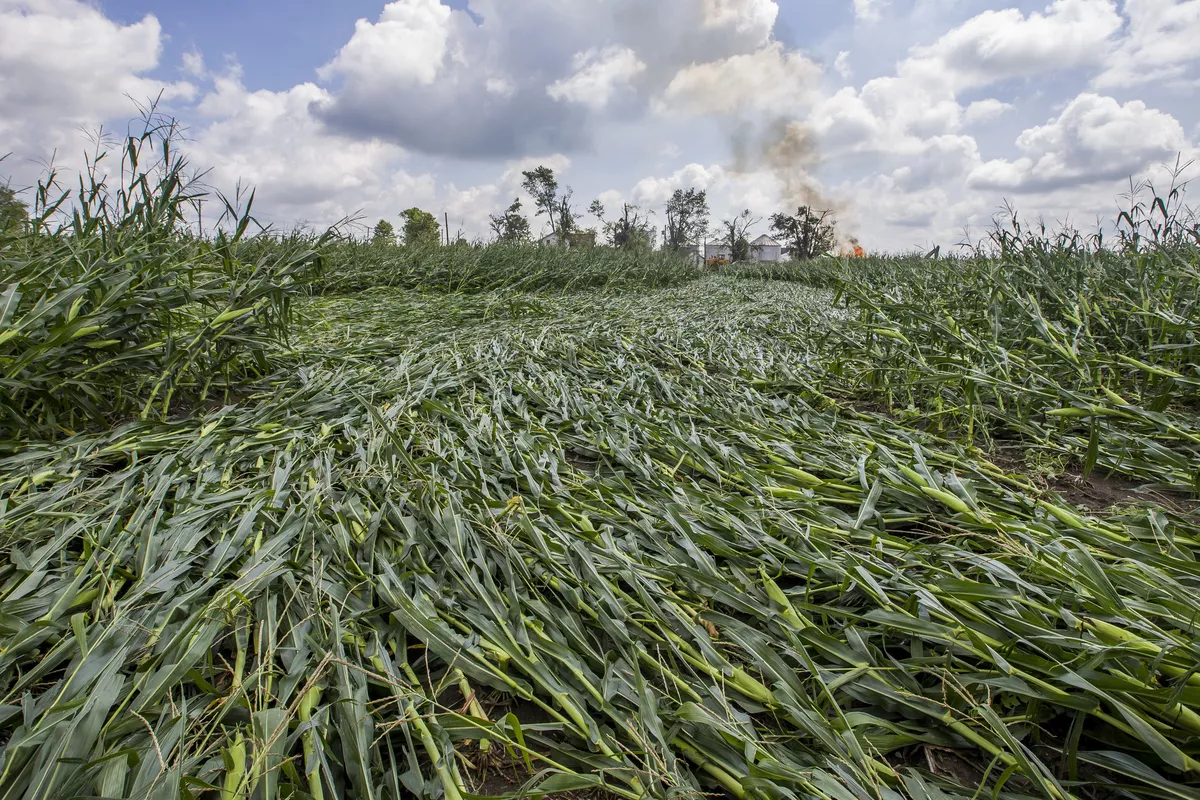
Over 4.25 lakh hectares in villages along the Punjab, Haryana and Pakistan borders of Rajasthan are under cotton cultivation. However, pink bollworms have been eating into the profits of cotton farmers for the past few years. This year, it has taken a more serious turn.
The invasion started early into the cropping cycle this time. With cotton-picking season (September to October) on, farmers claimed their yields have never been this low and demanded that the government should declare pink bollworm infestation as a natural disaster to offer them compensation.
“The crisis has gripped Hanumangarh, Anupgarh and Sriganganagar districts. Pink bollworm infestation on BT cotton has affected every village without exception. Full crop loss has been registered in certain areas,” Resham Singh, president of Bhartiya Kisan Union, Hanumangarh, told 101Reporters.
Singh requested the government to conduct a girdawari (field inspection) in these villages to determine the extent of crop damage. This assessment is crucial for governments and insurance companies to determine the financial assistance or insurance payouts that the affected farmers may be eligible for.
“Pink bollworm infestation should be declared a national disaster. A provision should be made for nationwide compensation in case of insect infestation, similar to the compensation provided for damages caused by unseasonal rain, hailstorm, storms and other natural calamities,” Resham said.
Meanwhile, agriculture department officials said that the pest has destroyed approximately half of the cotton crop planted between April and May. “A team of agriculture officials and scientists are conducting a damage assessment survey,” said an official, on condition of anonymity.
Deputy Director of Rajasthan Agriculture Department Subhash Dudi told 101Reporters that decisions regarding the classification of insect infestations as natural disasters and the subsequent compensation fall under the purview of the state government.
No trust in insurance schemes
While Pradhan Mantri Fasal Bima Yojana does have provisions for claiming compensation for crop damage due to pest attacks, cotton farmers rarely opt for it due to delayed and pending compensation. In addition, the high insurance premiums -- double that of other crops -- add to the financial burden of cotton farmers, with no guarantee of returns.
“Earlier, I insured my crops regularly, but I never got a penny despite suffering damages. So I stopped getting insurance two years ago. This year, the cotton crop on my six bighas has been affected. I do not know what will happen,” Surendra Nain, a farmer from Malarampura village in Hanumangarh, said.
Jagtar Singh of Jodkiyan village in the district shared a similar story. “Despite taking a loan from the cooperative society and insuring my wheat crop sown on my seven bighas of land, I never received any claim for the losses I suffered four years ago. After repaying the loan, I made the decision to discontinue the insurance,” he said.
Raghuveer Singh of Lambi Dhab village of the district agreed with Jagtar. “In 2021, my paddy crop on seven bighas was affected due to adverse weather, but I was not deemed eligible for a claim… so I do not have any insurance for this year. My farm has witnessed pink bollworm infestation and I think my harvest will drop by 50% this year. I still do not regret not taking insurance because I would not have received any money even after paying a substantial premium.”
Explaining the cautious approach of farmers regarding crop insurance, Resham said insurance companies often employed various tactics to avoid settling claims. “Sometimes farmers are blamed for not taking care of their crops. The premium for cotton is exceptionally high as it is a cash crop,” he said.
“The notion of cotton being more profitable than other crops is no longer applicable. The cost of cotton production has risen significantly, with farmers investing up to Rs 20,000 per bigha for the same return as before,” he added.
Crop insurance premiums for crops like moong (green gram), guar (cluster bean), paddy and bajra (pearl millet) typically amount to 2% of the sum insured. In contrast, cotton insurance charges a premium of 5% per hectare.
Bollworm’s bite
Farmers claim that this year the bollworm infestation has spread uncontrollably and unprecedentedly. However, recurring loss of cotton crops due to pest attacks is common here. In the 1990s, cotton-producing farmers were severely affected by pest infestations, causing significant hardships.
In 2003-04, the introduction of hybrid BT cotton seeds brought hope, as it was believed to be pest-resistant. This proved accurate during the initial years. But in the last three to four years, even BT cotton has come under attack from whiteflies and pink bollworms.
Dudi agreed that compared to the past two years, the pest infestation occurred on cotton at a much swifter rate this year. “In northern India, the pink bollworm infestation was observed last year during the final days of the season. However, this year, it was evident right at the onset of the cotton season,” Dudi said.
“This early onset has resulted in a more substantial damage, particularly as the insect continues to harm the crop throughout its growth cycle, impacting the middle and final phases significantly,” Dudi said, adding that farmers who took precautionary measures from the outset have experienced fewer losses.
Ramkumar Saharan of Chunvadh in Sriganganagar district said seed-producing companies assured them that the seeds were resistant to pest attacks. “However, their claims have been proven false. Over the last two to three years, there has been a surge in pink bollworm infestations on BT cotton,” he said.
He attributed the rise in pest infestations to poor quality BT cotton seeds “Companies are distributing low-quality seeds, making crops susceptible to pest attacks. Once infestations begin, pests quickly spread throughout the fields, rendering various solutions ineffective,” Saharan added.
In a memorandum submitted to the administration, farmers asserted that the companies gave them BT seeds that were mixed with non-BT seeds. Farmers are urging the formation of a high-level committee to thoroughly investigate the matter.
Sustainable solutions
The cotton-producing regions in northern India remained relatively free from pink bollworm infestation until 2017-18. Starting 2018-19, reports of pest attacks emerged, particularly from Punjab’s Bathinda and Jind district in Haryana. Since then, the insect has consistently posed a threat to cotton cultivation in the region.
For the past three to four years, agricultural scientists and officials from Punjab, Haryana and Rajasthan have been emphasising the need to implement effective measures to address the issue of pest infestation.
During annual meetings held at Chaudhary Charan Singh Haryana Agricultural University in Hisar, attended by agricultural scientists and officials from these three states, growing concerns were expressed regarding the escalating incidence of pink bollworm infestations.
Vijendra Singh Nain, a retired agriculture department joint director, told 101Reporters that the decision to entrust BT cotton seeds to the private sector was misguided. Instead, he suggested that it should have been entrusted to government agricultural universities and research centres.
“These institutions not only conduct ongoing research on BT seeds, but also have the capability to develop and register new seed varieties if necessary. In contrast, the private sector has primarily focused on profit generation, and the detrimental consequences of this approach are now evident,” he said.
Nain elaborated that the seeds developed by government institutions remain highly effective to this day. “For instance, the RJ 8 variety of native cotton, pioneered by the Agricultural Research Centre of Sriganganagar in the 1980s, is still in active use. There is a need to stop the neglect of agricultural research institutes. It is time to research about indigenous cotton varieties and to preserve them,” he added.
Source - https://www.daijiworld.com