Agriculture and allied activities saw an allocation of Rs 1.62 lakh crore, an increase of around 7 per cent compared to Revised Estimates of Rs 1.51 lakh crore in 2025-26.
However, allocations for many of the important schemes remain either unchanged or were increased only marginally, except for a few like Krishionnati Yojna (scheme to enhance production, productivity and better returns on produce) whose allocation saw a substantial hike of Rs 4,400 crore in 2026-27.
Here is a look at some of the key schemes.
Cut in crop insurance
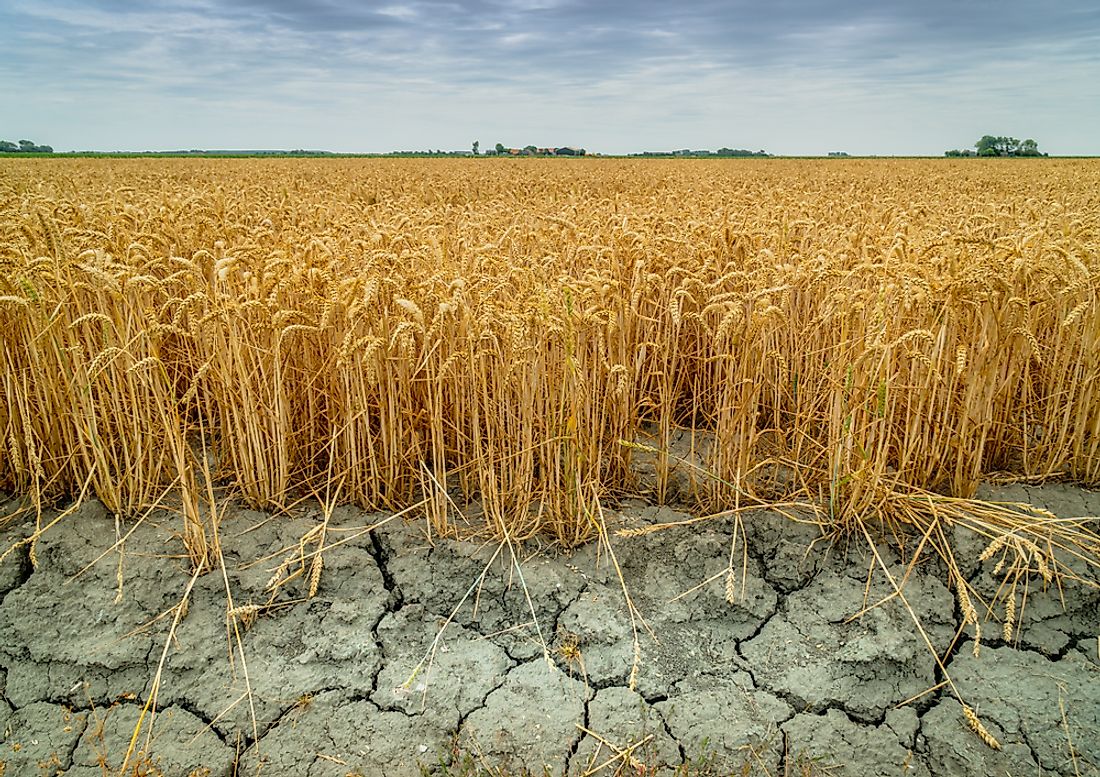
The budget for the government’s flagship Pradhan Mantri Fasal Bima Yojana (crop insurance scheme) has been reduced from Rs 12,267 crore to Rs 12,200 crore. This cut comes at a critical time, as farmers are increasingly facing floods, heatwaves, and erratic rainfall and crop insurance remains one of the most important safety nets for protecting farm incomes.
The importance of the scheme is also reflected in the actual expenditure under it in 2024-25 -- Rs 14,473 crore. When the current allocation is compared with this expenditure, the reduction under PMFBY is a high 15.7 per cent.
In just the first nine months of 2025, more than 9.47 million hectares of crops were damaged, a 400 per cent increase from 1.84 million hectares damaged in 2022, according to Centre for Science and Environment and Down To Earth (DTE)’s Climate India 2025 report, an annual assessment of extreme weather events.
In fact, this is the lowest budget allocation for the scheme in the last eight years (since 2019-20), even as just two days ago the government’s Economic Survey admitted how agriculture was increasingly facing weather-related shocks, causing heavy crop yield losses for farmers.
National Mission on Natural Farming (NMNF)
Budget allocation for NMNF was Rs 750 crore, up by 3.4 per cent from 2025-26 Revised Estimates (RE) of Rs 725 crore.
However, experts have highlighted how the allocation is not significant, especially given the scale of change proposed under the mission. NMNF was launched on November 25, 2024, to promote natural farming in a mission mode and reduce farmers’ dependence on chemical inputs across the country. The operational guidelines propose a planned transition towards jan bhagidari (mass movement) for natural farming (NF) with location-specific solutions.
G V Ramanjaneyulu, executive director of the Centre for Sustainable Agriculture (CSA), which works with farmers on transitioning to natural and organic farming said in a social media post that the allocation virtually ensures “that the programme remains a demonstration exercise rather than a transformation strategy.”
DTE had earlier reported how regional councils (RCs), which are government-authorised certification bodies tasked with mobilising farmers and granting certification have been concerned about a pressure to meet targets but without sufficient funds.
“If we want farmers to change practices, we must change the state’s practice of underfunding change,” said Ramanjaneyulu.
Status of schemes announced last year unclear
Some of the schemes that were announced in last year’s budget seem to have been shelved or are not being carried forward. In the previous budget, the government had introduced multiple missions like ‘cotton technology mission’, ‘mission for pulses’, ‘mission for vegetables and fruits’, and ‘national mission on hybrid seeds’ – with proposed allocations ranging from Rs 500 crore to Rs 1,000 crore each.
However, the 2026-27 budget document showed that the ‘missions’ received zero funds in the Revised Estimates for 2025-26 and allocations remain zero even in the 2026-27 budget.
Meanwhile, certain schemes announced with much fanfare last year received zero allocations in the RE2025-26 leading to non-implementation of the scheme, with the same schemes not featuring in this year’s budget.
The Alliance for Sustainable & Holistic Agriculture (ASHA-Kisan Swaraj) has opined that this indicates “that the government has no intention of implementing these so-called Missions”.
Bharat-VISTAAR
The Union government has allocated Rs 150 crore to Bharat-VISTAAR, a multilingual artificial intelligence (AI) tool, that shall integrate the AgriStack (a collection of technology-based interventions in agriculture on which everything else will be built) portals and the Indian Council of Agricultural Research’s (ICAR) package on agricultural practices with AI systems.
The tool, Finance Minister Nirmala Sitharaman said in her speech, will enhance farm productivity, enable better decisions for farmers and reduce risk by providing customised advisory support.
“There clearly is a huge need to provide timely advisories to small farmers to help them reduce their crop and livelihood losses. Technology can play a big role. I hope that the multilingual artificial intelligence-based tool that is announced in the budget today gets developed to effectively fill this big gap,” said Amit Khurana, Director of the Sustainable Food Systems programme at the Centre for Science and Environment.
However, the digital push in agriculture has worried farmer groups, agriculture scientists, and civil society organisations, in the past, especially over conflict of interest, as private companies have taken to promoting their marketing agenda or products like agrochemicals and seeds to the farmers through these services like advisories.
Source - https://www.downtoearth.org.in