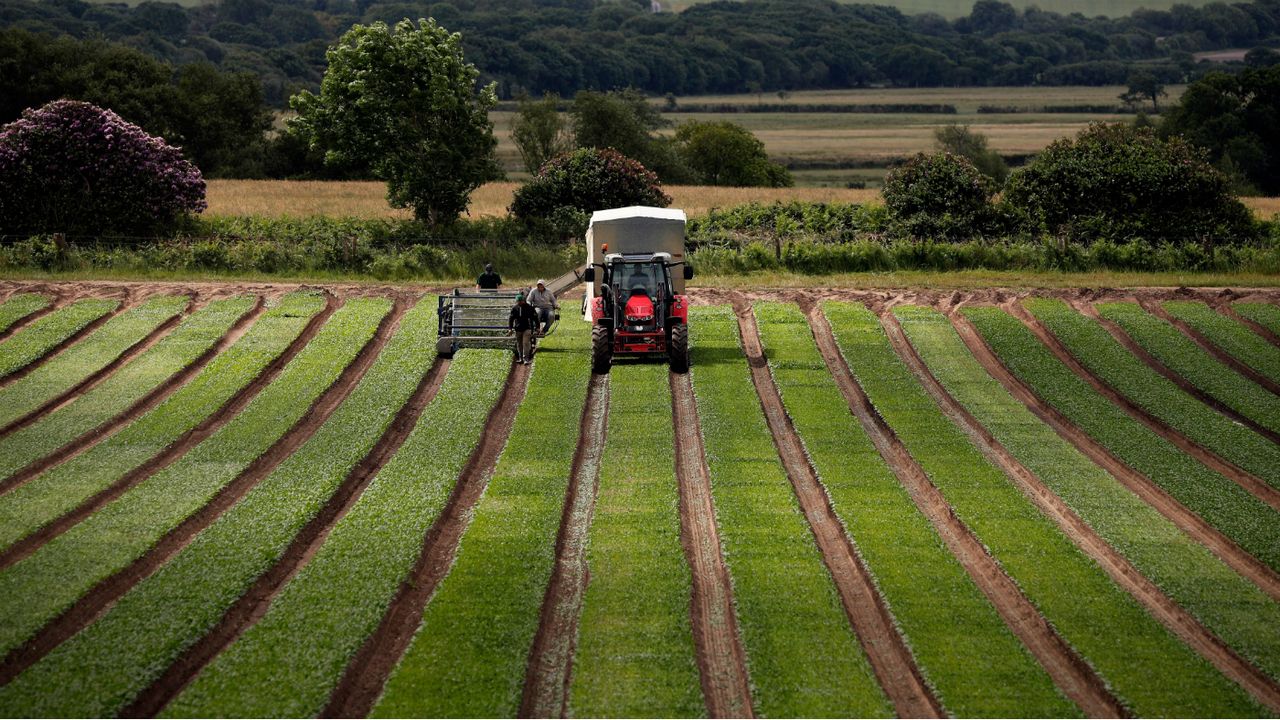
Farmers in Naugaon village, Alwar in Rajasthan, report severe losses every season due to havoc caused by agriculture pests and diseases. During a ground visit, farmers claimed that warming temperatures have worsened the destruction of crops by pests brought out by climate change.
Farmers across villages such as Mandapur, Ramgarh, Beejwa and more complained of pests causing huge crop damage, causing heavy losses and raising environmental concerns.
About ten years ago, agricultural pests started infesting crops, said farmer Roshan Lal from Naugaon village, with six acres of land. “It was not this bad earlier and has considerably worsened over the past three years,” he said.
Lal’s gooseberry produce dropped to 15 tonnes this year from the usual 60 tonnes due to pests. “Crops were damaged during the harvest period. The sudden temperature increase during the peak harvest time in February made it worse,” he said.
The temperature rise meant three times higher demand for water too. Lal experimented with crop diversification, a part of Integrated Pest Management (IPM), but to no avail.
“I tried to grow tomatoes, cauliflower, onions, cucumbers and other vegetables during the Kharif season. But all fell prey to fungus or pests. I tried using pesticides, which cost me almost Rs one lakh, while saving onion alone demanded Rs 50,000. But the losses were huge and I could not even recover the production cost,” he said.
His worries seem to have no end. Until last year, the farmer had to battle the infestation of green aphids, but black aphids have also entered the region this season. “I witnessed it on my safflower plantation,” he added.
Many other crops were under threat, reported other farmers. “The leaf hopper wreaks havoc on bajra (pearl millet) crops, while jowar (sorghum) gets infested by shoot borer. The white fly attacks our cotton and cucumber crops, affecting the yield,” said Lalchand Yadav, another farmer.
Chickpeas have seen frequent damage over the past four years, said Yadav. “Every year, I lose at least 15 per cent of the harvest to pests. It was never an issue before, but the pests have contributed to the losses, eating into my profits,” he added.
Organic and inorganic methods and crop rotation have all failed to save multiple crops from pest attacks that affect the produce on a large scale, Yadav said.
The presence of pests has not only increased in small pockets of Rajasthan; the phenomenon has been recorded across the country.
Crops like cotton, rice sugarcane, wheat, coconut palm, paddy, banana, mango, maize, soybean, apple, gram, chilli, areca nut and cassava have been affected by several pests across 23 states of India between 2015-16 and 2021-22, as per the data from Directorate of Plant Protection, Quarantine and Storage.
In the year 2021-22, ten pest attacks were reported — the highest since 2016-17, which recorded 11 different pest attacks in the country.
Rabi crops are more likely to get more affected by pest attacks due to climate change compared with Kharif crops, said V K Singh, director at ICAR- Central Research Institute for Dryland Agriculture (CRIDA).
Climate change affects insects at multiple levels, said a 2021 report. Impact of Climate Change on Insect Pests and Their Management Strategies was authored by Abhishek Pareek, R K Kalyan and B L Meena.
Even one degree Celsius rise in temperature would enable insects to expand 200 kilometres northwards and 40 metres upward in terms of altitude, the report said.
This means that areas that are not favourable for pests and insects to reproduce and grow due to colder temperatures will become accessible with the rise in temperature.
The planet is likely to warm and temperatures are expected to touch 1.5 degrees Celsius between 2030 and 2052 compared to pre-industrial levels, with consideration of consistent warming as the current trend, according to a special report on global warming by Intergovernmental Panel on Climate Change (IPCC), a United Nations body.
Source - https://www.downtoearth.org.in