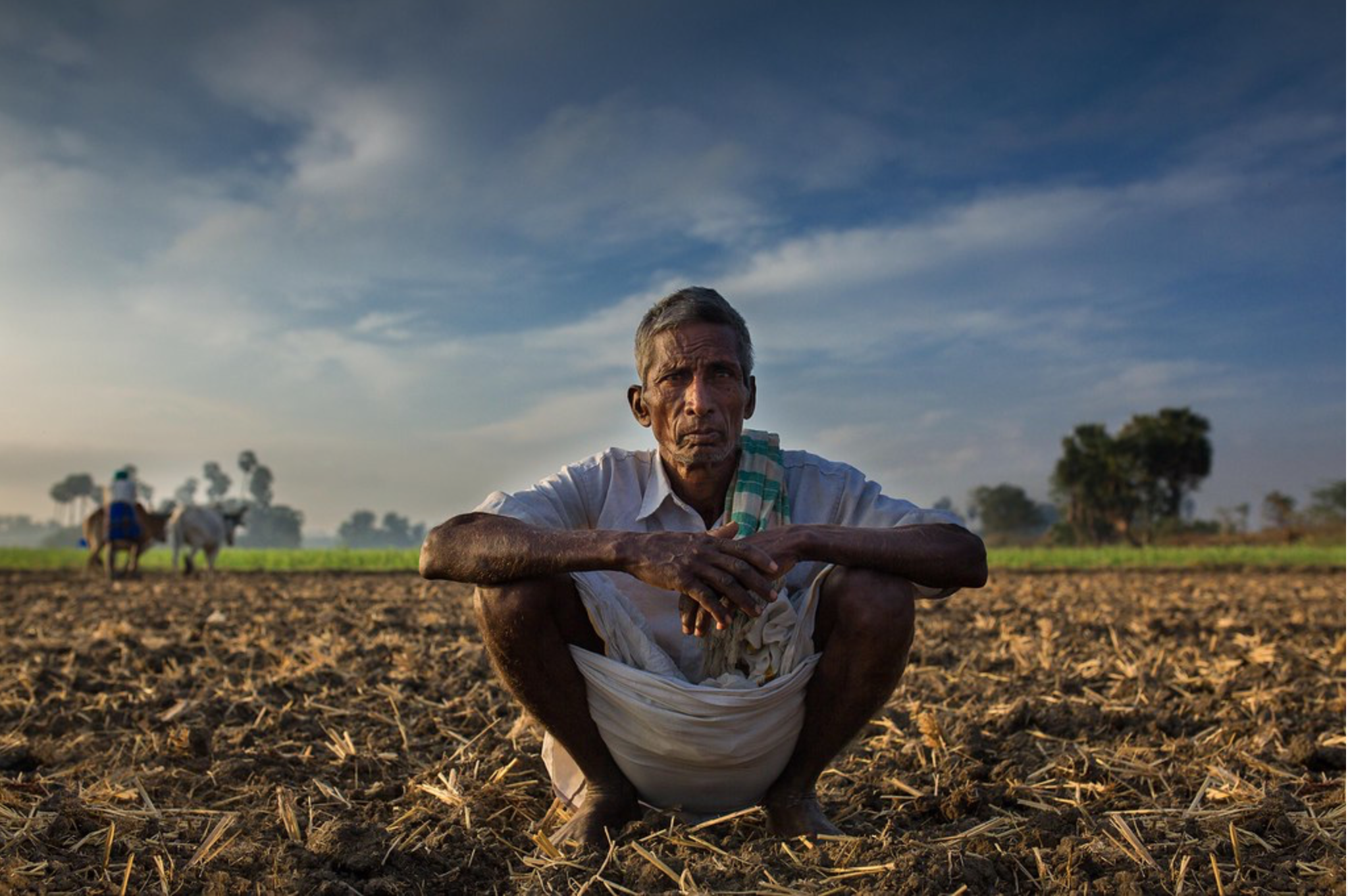
As crop failure becomes a norm, farmers in Maharashtra struggle to get access to crop insurance schemes for which online applications should be submitted.
"Look at these rotten tomatoes. Forget taking a basketful to sell in the market; even finding a few that are good enough to consume has become a task," said Sashikant Ramdas Gogawale, a farmer from Gogalwadi in Pune's Haveli taluka.
This year, ola dushkal (wet famine) has delivered a blow to the farmers, who are already facing the after-effects of crop damage during the pandemic. Wet famine is characterised by a shortage of food resources due to too much rain. It is a condition where crops, fruits or vegetables on a farm are damaged, making them completely unfit for consumption or sale.
"We were not anticipating such a downpour. The tomato harvest was good until the pandemic. Disruption in farm work during the lockdown and loss of market access affected us badly. The subsequent spread of new diseases worsened our condition," Sashikant explained his farm's deterioration over the last two years.
He is fully aware of the damage that pesticides and weedicides cause in the long run. "Spraying too much pesticide is ruining the soil. But we have to use it to protect the current crop. This is the irony."
Besides tomatoes, the combined impact of the pandemic and wet famine is significant in the case of fig farmers. The fig harvest season in Gogalwadi starts in February. So when the first COVID-19 wave hit India in March 2020 and led to a subsequent lockdown, the demand and sales dropped.
"We had no option but to consume as many fruits as possible. The rest were left unplucked, which caused the trees to rot from the inside. In fact, a new variant of crop disease started to affect the trees. It continues to infect the plants to date," said Shrikant Gogawale, whose family owns a fig farm in the village.
"One of my friends had over 300 fig trees. Now the number is down to around 50. A variant of Anthracnose, a fungal disease that emerged during the pandemic, destroyed most of them," he added.
Even custard apples and guava trees on Shrikant's farm took a beating.
"All the fruits are turning black. These crops cannot withstand heavy rains. We plant and harvest according to the seasonal cycles. However, climate change has disrupted this pattern. Even foreseeing weather trends for a few upcoming weeks have become difficult," he elaborated.
Gogalwadi has very few women farmers. One can barely see a woman working in the fields here.
"Actually, I am an Anganwadi teacher. At times, I work in these tomato fields to help out my husband. The fruits are rotting, and they need to be picked and packed quickly because rains are again likely to pound this afternoon," says Reshma Gogawale, Laxman Gogawale's wife.
Compensation eludes many. ThePIK Vima Yojana 2022, a crop insurance initiative of the Maharashtra Government, aims at protecting the food producers in the State.
'PIK Nuksan Bharpai' (damage compensation) grants insurance amounts to the beneficiaries to tide over the crop losses caused by natural calamities. The Central Government also offers Pradhan Mantri Fasal Bima Yojana, a scheme with a similar purpose. However, farmers of Gogalwadi have not found these schemes very helpful.
Dattatray Gogawale, a farmer who harvests multiple crops such as jowar, rice, pulses, figs and onions, said he was told to register online to get compensation for the damage caused due to the lockdown and wet famine.
"A few of us have smartphones, but getting data network is difficult here. We are required to upload images of our farms to apply for compensation. Though we are educated, navigating through the online system is a challenge."
Dattatray said he was told to file a panchanama (evidence of the crisis) when wet famine struck. "But even after doing it, no one reached out. If we do it offline also, the gram sevaks are supposed to pay a visit to the field and see if the farmer is eligible for crisis compensation. But they did not come," he said, pointing to the lack of transparency.
When questioned about this, gram sevak Jyoti Tambe directed this reporter to Talathi Tamboli (Talathi refers to a revenue officer). "This is the officer assigned to visit the farms in Gogalwadi, note down the complaints, register panchanama and other documents required for Nuksan Bharpai Scheme," Tambe said. Multiple attempts to reach Tamboli proved to be futile.
'E-Pik Pahani', which means checking the crops through the photos uploaded online on the official government portal, is a service gram sevaks recommend farmers use for registering their damaged farms for crisis compensation. However, the sparse mobile network and lack of technical knowledge have discouraged farmers from applying online for Nuksan Bharpai.
"At times, we visit the district office where our names and details are taken down. But the compensation amount does not reach us," said Dattatray's family. To this, gram sevak Tambe stated: "The officials concerned will be sent to the farm to examine its status. The compensation amount will be given if the farmer is eligible."
However, the problems of farmers like Dattatray do not end with getting compensation. The newly emerging crop diseases and unpredictable rainfall patterns have made farming unsustainable.
"We are investing in it by buying different types of pesticides and adopting agricultural technologies to improve crop health. But the rains are washing it all out. Forget about profit; we are not even getting back the invested amount," Dattatray said while reminiscing how simple farming was earlier. Seasonal cycles could be tracked then, and farmers used to have their plans chalked out for the entire year.
"There is no doubt that our village is progressing. We have access to primary education. We have proper roads, and most areas are well-lit. There are small clinics where the services of doctors are available. But untimely rains are hampering progress," said Shrikant, calling attention to waterlogging and damage caused to roads.
Walking through his field wearing a muddy raincoat and wiping the sweat from his brow, Sashikant requested, "Take a photo of these fallen tomatoes. It captures the reality of why farmers commit suicide."
Source - https://weather.com