Drones capable of spraying liquids on extensive, horticultural and fruit crops, as well as beneficial insects, are the future. A technical demonstration day on the use of drones took place on Tuesday 5 March 2024 at the farm La Clorofilla in Mercato Saraceno (Forlì-Cesena, Italy).
The meeting, organized by Agrigeodron together with Koppert Italia and 2A Arvensis Italia, focused on 'Smart technologies for the agriculture of the future'. More than thirty technicians and farmers attended a demonstration on the use of drones to distribute beneficial insects and liquid products.
"The use of drones can bring many advantages," says Luca Raimondi, owner of Agrigeodron, "but nothing should be improvised, especially in a delicate sector such as agriculture. It is not by chance that we present ourselves as a working group made up of our team at Agrigeodron, Koppert Italia for beneficials, and 2A-Arvensis Italia for liquid or granular products. Everything can be improved, and it is often by listening to the needs of farmers that we find new solutions to problems."
Raimondi explains: "While there are no specific restrictions on the distribution of beneficial insects, other pesticides are prohibited. For this reason, the liquids or granules are made from biostimulants or bacteria, for example."
Carlo Stagni of 2A-Arvensis Italia added: "We have conducted trials with excellent results on a number of different types of crops. For example, with the application of nitrogen-fixing bacteria, there was an increase in yield."
On the same wavelength is Nicola Vicario of Koppert Italy. "The control of pests by means of beneficial insects in open fields is becoming more and more specialized in the use of drones for the distribution. They are used according to the needs and the most used method is the distribution of capsules that contain the beneficial insects. For example, Trichogramma brassicaceae is a lepidopteran egg parasite. It is therefore widely used in horticulture."
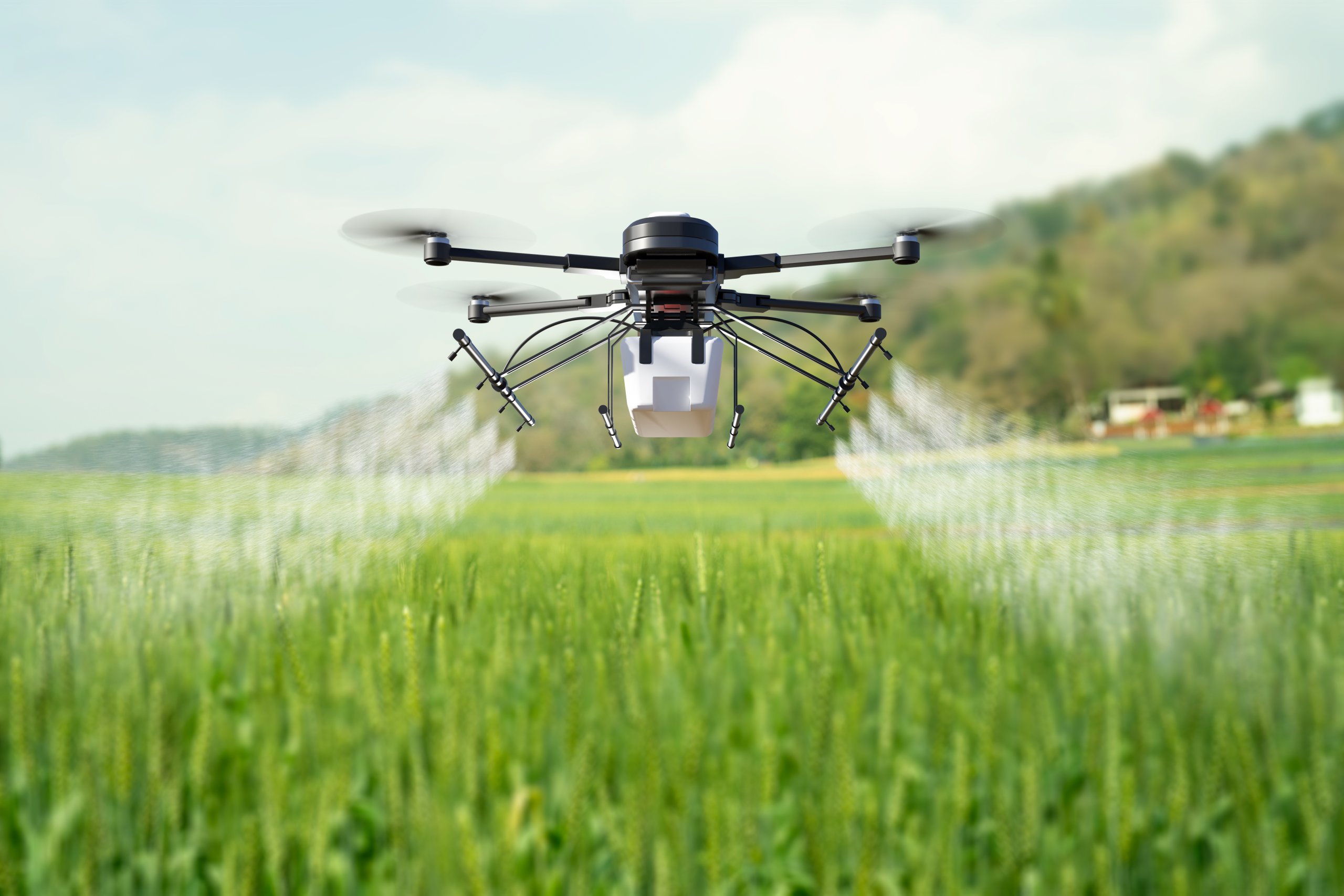
Participants witnessed the flight of three types of drones: one for granular distribution, one for capsules and one for liquids. The latter example attracted particular attention. Raimondi pointed out that "this is the only model that has been approved for liquid distribution. Like the others, it is subject to approval for use. The tank has a capacity of 30 litres and, thanks to the correct concentrations, based on formulae developed by 2A Arvensis Italia technicians, it can cover up to one hectare. A 50-litre drone is also in the pipeline."
When this drone is flown at a height of 3.5 metres (the recommended height for most herbaceous crops), it sprays an area 6-7 metres wide. "Its effectiveness is very good, and it can also be considered for orchards, taking into account the cultural methods of pest control."
It's a method that's constantly evolving, but it needs to be used by competent people. "I bought this drone last year," says farmer Matteo Passerini, "and it's working very well for me at the moment. Of course, there must be a change of paradigm and a change of mindset. You need to believe in it and accept that it is a new way of farming. It's not like changing between atomizer models," he concludes.
Source - https://www.freshplaza.com