Drought reaches 1.2 million people a year – and the losses run into the hundreds of millions.
When drought indicators in Lao PDR cross a defined level, money moves. That is the core logic behind a new anticipatory drought insurance pilot launched May 29, 2026, by the SEADRIF Insurance Company and the Food and Agriculture Organization of the United Nations (FAO) in the Lao People’s Democratic Republic (Lao PDR).
The instrument gives the Ministry of Finance access to pre-arranged funds before drought conditions deteriorate into a humanitarian or agricultural emergency. The trigger is the Combined Drought Index, a metric maintained by the Department of Meteorology and Hydrology that draws on both observational records and forecast data. Once the index breaches a set threshold, the payout process is initiated – without the delays typically associated with post-disaster damage assessments.
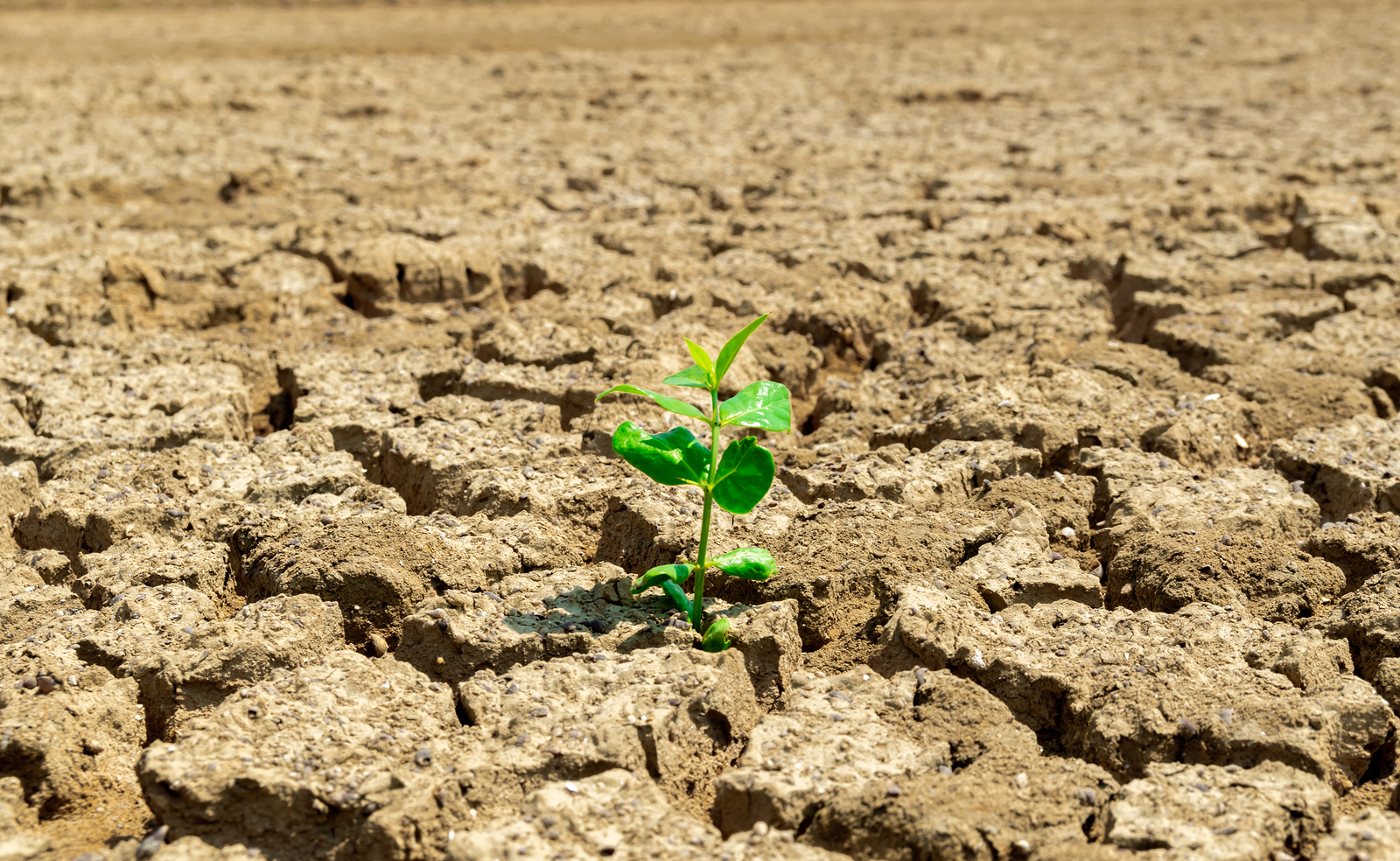
The distinction matters in Lao PDR, where drought is the country’s most significant natural disaster risk. Around 1.2 million people face drought exposure each year, and average annual losses run to approximately US$672 million – equivalent to about 3.5% of GDP, according to SEADRIF. The risk profile is expected to worsen in the near term, with scientific projections indicating a possible return of El Niño conditions in 2026-27, which historically correlates with reduced rainfall and heightened drought probability across mainland Southeast Asia.
What payouts are designed to fund
Once triggered, payouts are directed toward government-coordinated actions that are intended to reduce harm before conditions worsen. These include the distribution of early warning messages through community loudspeaker systems, supported by training for local leaders and volunteers jointly conducted by the Department of Meteorology and Hydrology and Lao National Radio. Funds also support instruction on drought-resistant farming methods and water management practices, delivered through the National Agriculture and Forestry Research Institute.
The pilot is not designed for immediate scale. SEADRIF has described it as a limited-size sandbox, its principal objective being to test whether the institutional infrastructure required for anticipatory financing – cross-ministry coordination, payout processing, and internal funds-flow systems – can function as intended within the Lao government structure. Standard operating procedures governing payout use were developed by FAO together with the Ministry of Finance, Ministry of Agriculture and Environment, Ministry of Labour and Social Welfare, and the Department of Meteorology and Hydrology.
Benedikt Signer, CEO of the SEADRIF Insurance Company, framed the pilot in terms of timing. “Anticipatory action aims to reduce harm before drought becomes a full-scale crisis for communities. This pilot tests how anticipatory insurance can help governments act earlier, providing pre-arranged financing at the moment it can make the greatest difference. The lessons from Lao PDR will inform SEADRIF’s regional approach to drought risk financing,” Signer said.
Thevarack Phonekeo, Deputy Director-General of the Department of Planning and Cooperation at the Ministry of Agriculture and Environment, pointed to the value of structured, predictable financing arrangements. “This pilot provides a pathway to strengthen Lao PDR’s preparedness for drought and the protection of rural communities. Through this partnership with SEADRIF and FAO, we are working to ensure earlier and more predictable support for people affected by climate-related risks,” Phonekeo said.
Connection to existing coverage and next steps
The drought pilot is not a standalone policy. It has been structured as an extension of Lao PDR’s existing multi-peril parametric sovereign insurance policy with SEADRIF, which was put in place in 2025. That underlying policy has already produced a tangible output: a US$2 million payout in September 2025 following the combined agricultural and infrastructure impact of Tropical Cyclones Wutip and Wipha. A feasibility study running alongside the pilot, under the same Green Climate Fund (GCF) Readiness project, will examine what would be required to bring a scaled version of the product to market. The study will look at trigger refinement, actuarial pricing, payout channels that connect to existing social protection systems, and the conditions under which commercial reinsurers could participate.
Kyung-Mee Kim, FAO representative to Lao PDR, said the exposure of farming communities to climate-related disruption underlies the rationale for the instrument. “Rural communities are on the front line of climate change, with drought increasingly affecting agriculture and food security. This pilot is an important step toward ensuring support reaches communities earlier, when action can still reduce losses and protect livelihoods,” Kim said. The pilot also feeds into a broader SEADRIF regional initiative: the Regional Agricultural Insurance and Sustainable Economies (RAISE) facility, which is working to develop agricultural insurance market infrastructure across ASEAN member states.
A wider financing gap
The Lao PDR pilot sits within a regional financing environment that, by most measures, remains substantially underfunded relative to the scale of climate risk. A May 2026 report from the Centre for Impact Investing and Practices (CIIP), titled “Climate Adaptation and Resilience in Asia: Pricing Risk, Sizing Opportunities, Financing Solutions,” puts Asia’s annual climate adaptation and resilience financing need at more than US$200 billion, against current deployment of roughly US$19 billion – leaving a gap of approximately US$181 billion.
Agriculture is among the sectors where the shortfall is sharpest. The CIIP report found that climate-related stress could cut crop yields by as much as 41%, with the consequences falling disproportionately on the roughly 100 million smallholder farmers across Southeast Asia. By 2030, the report projects, Asia will account for approximately 75% of the global adaptation financing gap. Of more than 250 adaptation solutions the CIIP identified as regionally relevant, 65 carry sufficient commercial viability to attract private capital today. Another 93 are categorized as emerging, requiring some form of catalytic or concessional support before commercial structures become viable. The remaining 94 are foundational investments with low near-term commercial returns.
Investor interest, however, is growing. A CIIP survey of 165 Asian funders overseeing more than US$1 trillion in assets found climate adaptation and resilience to be the leading impact investment theme among respondents, with 49% already allocating capital to the space and 28% in the process of assessing entry. CIIP chief executive Dawn Chan identified the core obstacles constraining the market, saying climate adaptation financing in Asia is held back by limited data, fragmented approaches, and uncertainty around where capital can be most effective. Instruments that attach defined financing to measurable physical triggers – as the Lao PDR pilot does – address at least part of that diagnostic by making the conditions for capital deployment explicit and verifiable.
Source - https://www.insurancebusinessmag.com