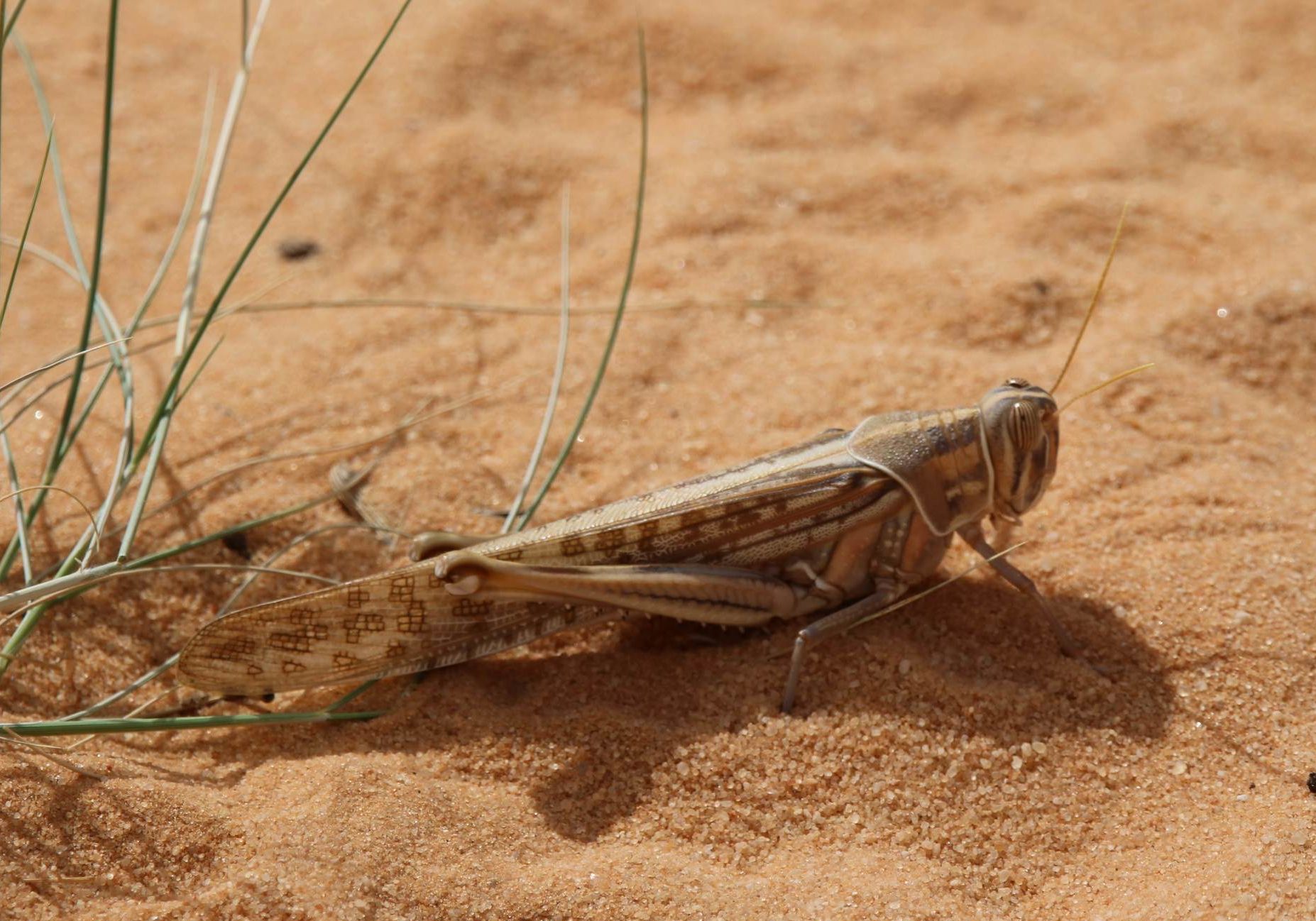
Locust swarms have significantly expanded their reach across Libya, advancing from southern regions into central and northern territories including Sirte, according to Mahdi Al-Tarqi, spokesman for the National Committee for Combating Desert Locusts.
Despite sustained eradication campaigns in southern areas, Al-Tarqi confirmed that locusts have returned to previously treated zones, substantially complicating containment operations.
“We’re confronting a multi-layered challenge,” Al-Tarqi explained. “Our teams are battling both mature swarms and attempting to locate and destroy egg deposits before they hatch.”
Control teams have identified numerous locust nests containing substantial quantities of eggs in agricultural projects throughout southern Libya, prompting Al-Tarqi to warn of an impending “double wave” of infestation as these eggs hatch in the coming weeks.
The situation has been documented by residents in communities near Sirte, including Al-Qadwariyah, Al-Qadahiyah, and Wadi Jarf, who have shared footage of swarms descending upon their areas. These communities have urgently requested pesticide supplies from national authorities.
This invasion represents part of a broader regional locust movement affecting portions of North Africa and the Sahel. The current infestation began in early 2025 when initial swarms crossed into Libya’s southern territories from neighbouring countries, prompting the mobilisation of the National Committee in February.
Libya’s extensive shared borders with Sahel nations, which frequently serve as primary breeding grounds, make it particularly susceptible to locust incursions. A typical swarm can contain millions of insects, with each locust capable of consuming its own weight in vegetation daily—creating potential for widespread agricultural devastation.
“The challenge isn’t merely logistical,” noted Dr. Khalid Benghazi, an agricultural expert at the University of Tripoli. “Effective locust control requires coordination across vast territories, substantial resources, and timely intervention—all of which are complicated by Libya’s current governance situation.”
The Food and Agriculture Organisation (FAO) has previously highlighted how climate change and regional instability have intensified locust control difficulties throughout North Africa. Libya’s political fragmentation and constrained agricultural protection resources have further hindered unified response capabilities.
Without enhanced intervention, agricultural officials project that unchecked swarms could potentially damage up to 30% of Libya’s domestic crop production. Coastal agricultural zones would be particularly vulnerable if the northward migration continues, threatening vital wheat and barley cultivation as well as the country’s economically important fruit orchards.
Source - https://www.libyanexpress.com