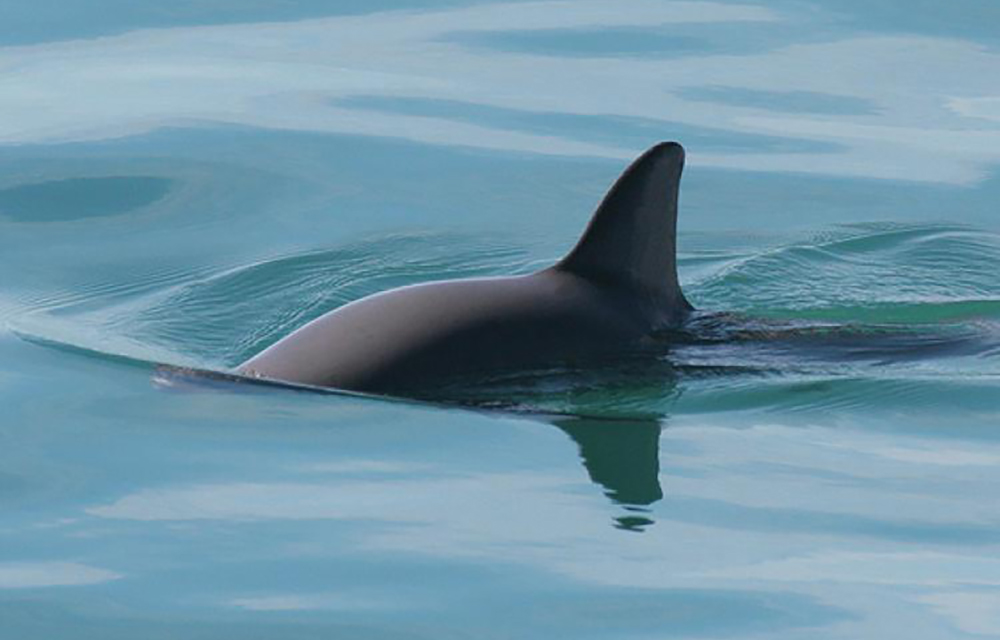
The Mexican government has completed the objectives of a 2023 action plan created to help protected the critically endangered vaquita porpoise and totoaba.
“The protection of biodiversity in the [Upper Gulf of California], which includes the vaquita marina and the totoaba, symbolizes Mexico's commitment to environmental conservation and international compliance,” the National Commission for Aquaculture and Fisheries (Conapesca) noted in a statement listing the agency’s efforts to protect the two species.
The vaquita is one of the world’s most at-risk marine species, with the latest survey showing just eight individuals remaining. The porpoises live solely in the Northern Gulf of California, where entanglements in Mexican fishing gear used to illegally harvest the endangered totoaba – which can demand high prices on the black market – have decimated the population over the last two decades.
In recent years, the Mexican government has faced lawsuits and sanctions from international conservation groups pressuring the country to increase enforcement and protect the two dwindling species.
In 2023, U.S. Customs and Border Protection (CBP) officers seized USD 2.7 million (EUR 2.46 million) worth of totoaba swim bladders being illegally transported through the U.S. state of Arizona. In early 2023, the Secretariat to the Convention on International Trade in Endangered Species of Wild Fauna and Flora (CITES) sanctioned Mexico for failing to adequately address its illegal fishing issues.
In response to mounting pressure, in 2023, the Mexican government adopted an action plan to tackle illegal fishing and protect vaquitas. CITES responded by lifting the sanctions.
In a recent press release, Conapesca claimed it has fulfilled the goals and projects of that action plan. Over the last two years, the agency has held multiple information workshops to encourage legal fishing activities. The government also distributed a brochure to help inform local fishers about illegal, unreported, and unregulated (IUU) regulations.
On the enforcement side, officers conducted more than 730 random checkpoints and carried out inspections at warehouses, collection centers, freezers, markets, and restaurants.
Conapesca also implemented an Alternative Fishing Gear Program and issued more than 230 commercial-fishing permits for alternative fishing gear.
The agency has also increased registration to better track who is legally participating in area fisheries and is working with the Mexican Navy to develop a remote monitoring program that can ensure small vessels are not operating in protected areas.
The Mexican Navy has also partnered with independent conservation group the Sea Shepherd Conservation Society on preventing illegal fishing in the Northern Gulf of California. Sea Shepherd operates enforcement vessels and surveillance drones in the region to prevent IUU fishing, removing gillnets from the ocean and grinding them up on shore.
In a 2 December 2024 post, Sea Shepherd said it plans to expand its partnership with the Mexican government in 2025.
“As the partnership continues to evolve, the focus is on refining these tools and expanding the model to other critical areas,” Sea Shepherd said. “With plans to extend operations to Scorpion Reef and beyond, Sea Shepherd and the Mexican government are setting a new benchmark for marine conservation. This collaboration proves that with the right tools, expertise, and partnerships, illegal fishing can be confronted – and ecosystems can be defended.”
Source - https://www.seafoodsource.com