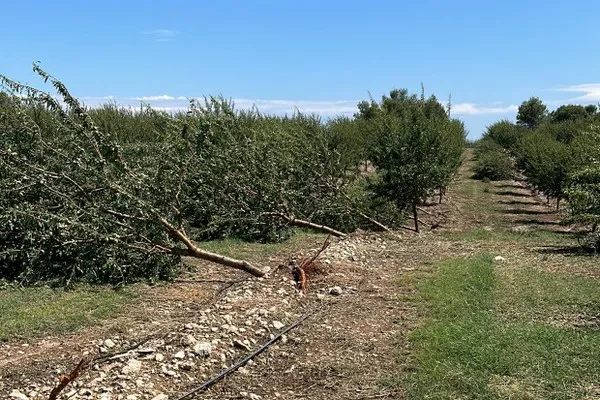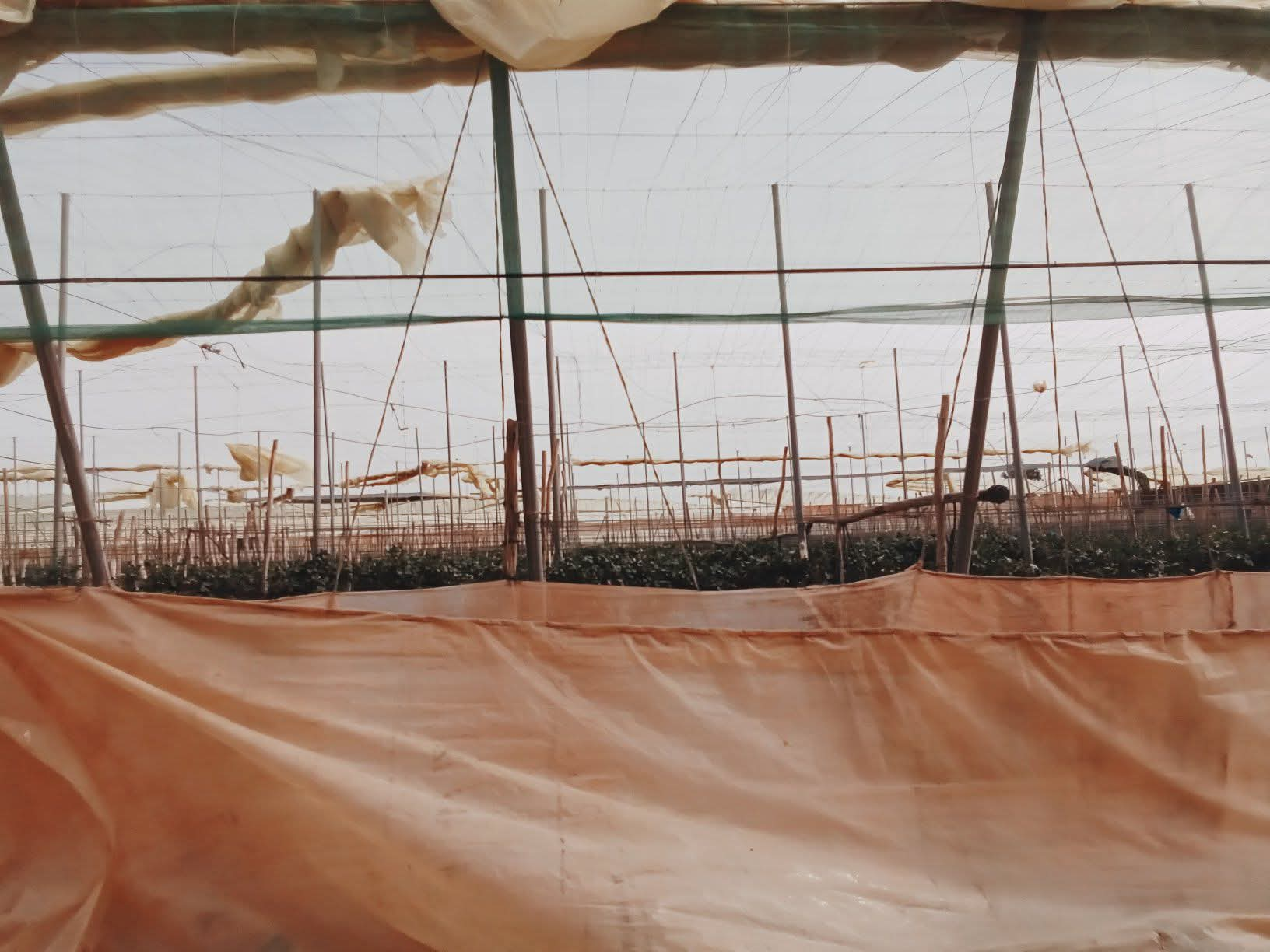
Around 1,500 hectares of greenhouse crops were affected in Chtouka Ait Baha province after strong winds swept through the area, according to growers and preliminary findings from a field visit by the Minister of Agriculture.
On Wednesday, Ahmed El Bouari toured several fruit and vegetable farms, mainly tomato operations, in the communes of Inchaden and Belfaa to assess the damage caused by the winds, which struck on February 26 and 27 with gusts reaching up to 110 km/h.
According to initial field observations, the damage mainly affected greenhouse plastic coverings and protective nets. These losses were confirmed by greenhouse owners who spoke to Yabiladi.
Torn plastic, exposed crops
«On my farm alone, nine and a half hectares of plastic coverings were damaged or completely torn by the winds», said Amine Amantoullah, a local grower. «The crops that are normally protected by plastic are now exposed and at risk», he warned, stressing the urgent need to reinstall the coverings to secure the produce. «Reinstalling the plastic takes time, and during that period the crops can be damaged», he added.
Similar losses were reported by another grower in the Inchaden commune. Ahmed Afkir, who owns a cherry tomato farm, described the situation as «catastrophic». Like Amantoullah, Afkir expressed concern about the exposed crops. «The produce is now unprotected while it is raining, which increases the risk of diseases, insects, and fungal infections», he said. Even crops that survive may «see a decline in quality», which would directly affect exports.
«For example, instead of exporting 100% of your production, with these circumstances you may end up exporting only 50% due to reduced quality and plant diseases», he told Yabiladi.
Plastic availability and soaring repair costs
Beyond the immediate crop damage, repairing the farms presents another pressing challenge: the availability of greenhouse plastic. Amantoullah pointed out that «during this time of year, plastic manufacturers usually reduce production because demand is typically low. They prepare for peak demand in May, when most growers replace their greenhouse coverings».
In addition to limited availability, growers attempting to repair the damage are also facing sharply rising installation costs. «The scale of the damage has driven installation costs significantly higher», the two growers confirmed.
«What used to cost around 5,000 dirhams per hectare now costs as much as 30,000 dirhams per hectare», Afkir said, also pointing to a shortage of skilled workers specialized in installing greenhouse plastic. «Imagine buying plastic for 70,000 dirhams per hectare and add to that installation fees», he said.
Ministry pledges support
Afkir’s farm was among those visited by the minister on Wednesday. «We sat together, and he reassured us», he said. «He mentioned the possibility of subsidies for small growers to purchase plastic. He also promised to work with banks to grant grace periods on loan repayments».
In a statement to the press, Minister El Bouari said the visit allowed authorities to closely assess the damage caused by the strong winds, assuring that the ministry’s services are fully mobilized to support affected farmers and help fully relaunch agricultural activity in the coming days.
For reference, the provinces of Chtouka Ait Baha and Taroudant are among the main suppliers of fruits and vegetables to the national market and serve as key export and employment hubs.
The Souss-Massa region accounts for nearly 85% of Morocco’s fruit and vegetable exports. Together, the two provinces cover more than 24,000 hectares of greenhouse vegetable farming, with annual production approaching 2 million tons.
Source - https://en.yabiladi.com