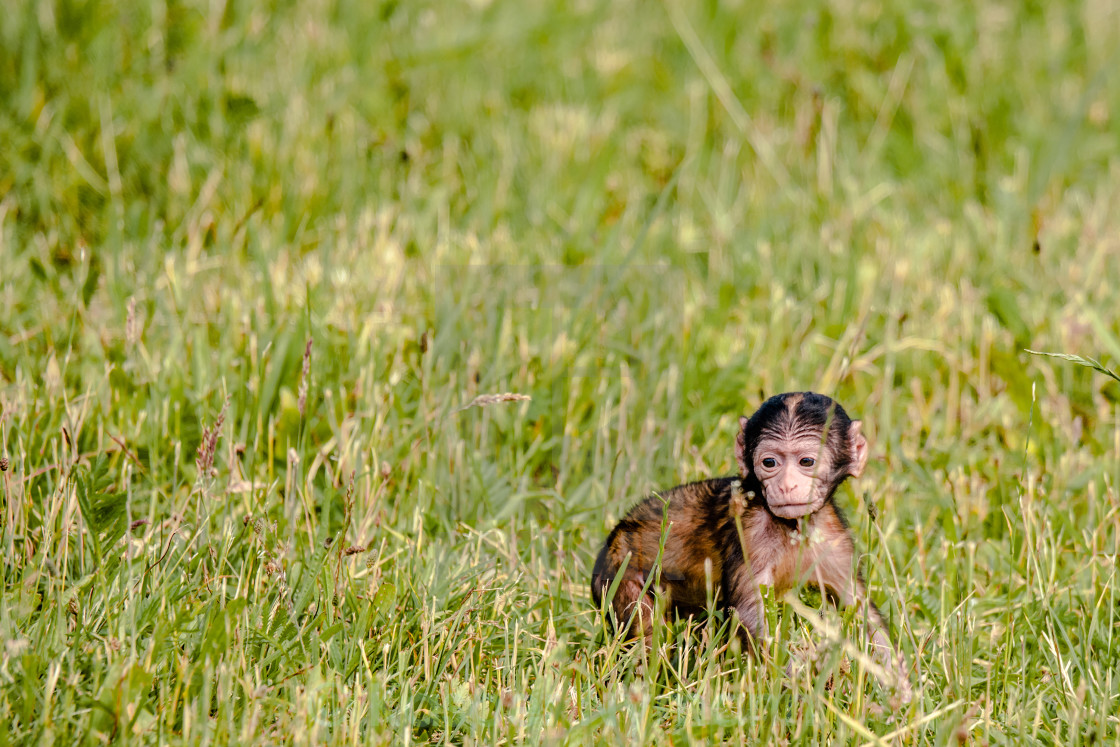
As the damage to agricultural crops by monkeys and wild boars is becoming serious, a proposal of urgent public importance has been registered in the House of Representatives demanding the creation of an integrated national action plan for a long-term solution to this problem. The proposer is Nepali Congress MP Narendra Kumar Kerung, and the supporters are CPN (UML) Chief Whip Nita Ghataani, Communist Party of Nepal (CPN) MP Parvati BK, and Labour Culture Party MP Aren Rai.
The proposal, registered on Monday, states that the problem of monkeys and wild boars is no longer limited to human-wildlife conflict, as it is affecting farmers' production, income, food security, and rural livelihoods.
Under the urgent public importance proposal as per Rule 71 of the House of Representatives Regulations, 2083, it is demanded that the government create a national action plan with a timeline, budget, and clear responsibilities for federal, provincial, and local levels for the management of monkeys and wild boars, said proposer Kerung.
According to him, the proposal reminds that the Constitution of Nepal, Article 36, ensures the right to food and food sovereignty for every citizen, and the Food Rights and Food Sovereignty Act, 2075, has given the state the responsibility to ensure the food security of citizens.
The study published with the technical assistance of the National Trust for Nature Conservation and the Central Department of Zoology, Tribhuvan University, shows the dire state of damage caused by monkeys, the proposal states. 'A direct count of 20,395 red monkeys has been conducted in 44 highly affected local levels, while it is estimated that there are at least 104,137 monkeys in the mid-hill region,' the proposal states, adding, 'Up to 198 monkeys have been found in a single group, and the average group size is 42.66.'
According to the study, the conflict caused by monkeys, wild boars, and porcupines is particularly serious in the Bagmati, Gandaki, and Sudurpashchim provinces, and farmers are facing problems due to monkeys and elephants in Koshi, and monkeys and nilgai in districts of Lumbini and Madhesh provinces, the proposal states.
Kerung said that this problem has also become one of the main reasons for the abandonment of hilly land and migration due to the menace of monkeys.
The economic loss in agricultural production is even greater, and the study shows that the damage caused by monkeys alone amounts to approximately Rs 50 million annually to the 1,846 households surveyed, the proposal states.
The proposal states that the average loss per household in maize is 312 kg, or 50.3 percent of production, and the loss in maize alone for the surveyed families is approximately Rs 25 million, with losses ranging from 18 to 52 percent in paddy, wheat, millet, potato, mustard, orange, and cardamom.
According to proposer Kerung, the provincial situation is even more worrying. The relative loss of maize in Gandaki is 90 percent, in Karnali 88 percent, and the loss of paddy in Sudurpashchim is 85 percent and wheat up to 90 percent.
Farmers have reached a situation where they have to stay in makeshift shelters in the fields from morning till evening to protect their ripening crops. The proposal states that monkeys enter the fields in groups of about a hundred at a time, and traditional methods such as dogs, radios, and making noises are becoming ineffective.
The proposal states, 'Due to the menace of monkeys, hilly land is becoming barren and has become a major cause of migration. It is pushing the rural and urban economy towards a broad risk by affecting self-employment, enterprise, production, and productivity.'
Source - https://english.ratopati.com