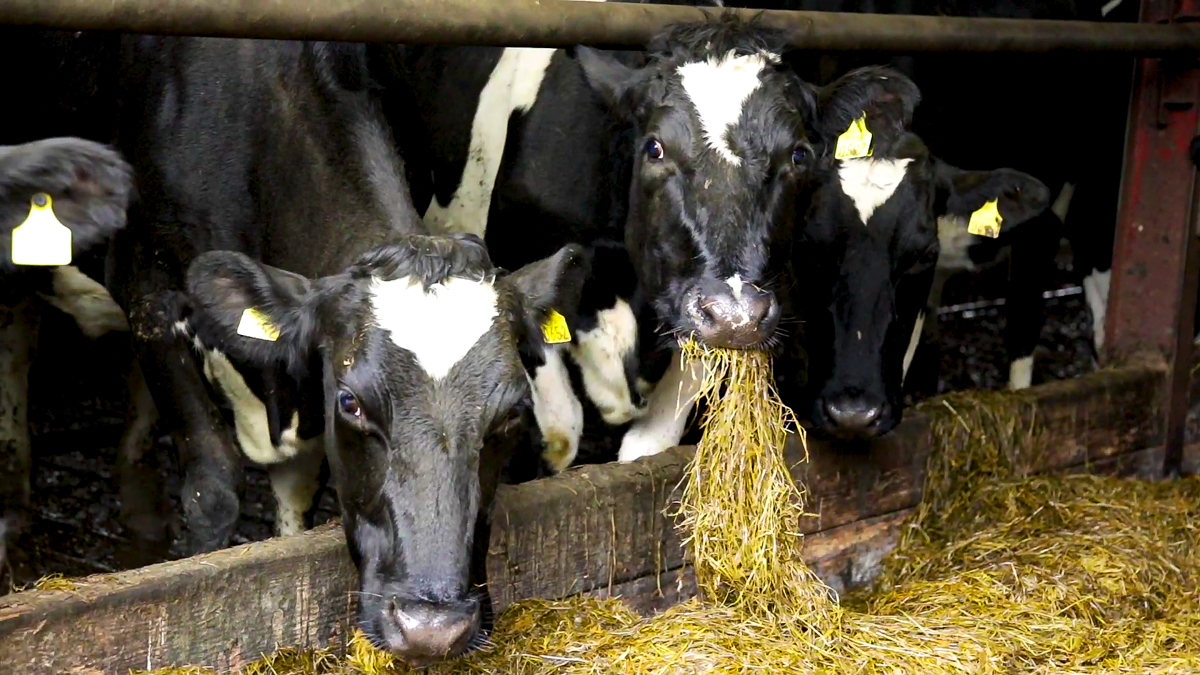
Some farmers’ cattle sheds have been left empty after a rabies-infected dog bit livestock tethered in the same shed.
The rabies outbreak that spread across Phalgunanda Rural Municipality of Panchthar has moved toward control through the efforts of concerned agencies of the local, provincial and federal governments. The rabies outbreak had spread in Phalgunanda–1, 2, 5, 6 and 7 from Ashadh 23, and in the Phidim headquarters area since Shrawan 16.
Fear of rabies spread in the Phidim headquarters area after a single community dog bit 55 other community and pet dogs, along with three people and a buffalo, within one hour on the evening of Shrawan 16.
The risk of infection in the area also increased after a community dog that had arrived from an unknown location and bitten 10 livestock animals and five pet dogs in Phidim Municipality–14 on Shrawan 27 died, and rabies was detected in tests conducted afterward. More than 50 livestock animals have died of rabies in Phalgunanda Rural Municipality alone. Livestock animals have also died of rabies in wards 1, 2, 5 and 7 of the same rural municipality. Doctors say no further infections have been detected in livestock over the past five days.
After rabies was confirmed in tests conducted on the dog that had bitten a large number of people and livestock before dying, teams including experts were mobilized to Panchthar to prevent the spread of the infection by the Veterinary Hospital and Livestock Services Expert Centre, the provincial and federal government’s Department and Ministry of Livestock Services, and the Directorate of Livestock Services, along with the concerned rural and urban municipalities.
The team of experts conducted field visits and interacted with local governments, farmers and stakeholders, while recommending mandatory vaccination for livestock and people who had come into contact with rabies-infected animals. “Along with the team of experts from the directorate, the anti-rabies vaccines required for livestock had arrived in the district. The rabies outbreak has moved toward control after all these efforts,” said Dr Roshan Dahal, inspector at the Veterinary Hospital and Livestock Services Expert Centre, Panchthar and Taplejung.
He said that after the necessary vaccines and supplies for people and livestock were received, a vaccination campaign had been launched in all areas where infections had been detected, targeting community and pet dogs as well as other domestic livestock. “The municipality’s Livestock Development Section said that more than 300 livestock animals were vaccinated collectively during the latest campaign in Phalgunanda–2, 5, 6 and 7, where the highest number of infections had been reported.
Phalgunanda Rural Municipality spokesperson Narayan Prasad Angdembe said that farmers involved in caring for livestock bitten by dogs in Phalgunanda–6 and 7 had also been collectively vaccinated against rabies.
Phidim Municipality has continued its campaign to vaccinate all community and pet dogs in the headquarters area । More than 700 community and pet dogs have been vaccinated against rabies since the infection was detected in the municipality alone, said Narayan Thapa, a technician at the Livestock Development Section. So far, dog vaccination has been completed in Phidim Municipality–1, 2, 4, 5 and 14. It is continuing in the other wards.
Locals are also confident that the infection will not spread further, as collective vaccination campaigns for community and pet dogs, cats and livestock in the infected areas of Phidim Municipality and Phalgunanda Rural Municipality are continuing. Municipal police and technicians from the municipality’s Livestock Development Section are searching in market areas and vaccinating community dogs. In these local governments, technicians are reaching individual neighborhoods to administer anti-rabies vaccines. After the infection spread in the district, 1,000 doses of vaccine for people and 2,000 doses for livestock were received.
Rabies empties cowsheds, with no relief or compensation
Some farmers’ cowsheds in Phalgunanda–6 and 7 have been emptied because of the rabies outbreak. The infection, which spread after a dog bit livestock tethered in the same cowshed, has left farmers’ sheds empty. Elected representatives say that the absence of livestock insurance among farmers has created problems in providing relief and compensation to those who lost livestock.
“There is no separate procedure for providing relief to farmers when their livestock are lost, and since the cattle raised by the farmers were not insured, compensation also does not appear to be possible,” said Angdembe, spokesperson for Phalgunanda. More than 50 livestock animals—including buffaloes, cows, calves, heifers and goats—have died of rabies in Phalgunanda Rural Municipality alone this time । Farmers say a buffalo costs around 150,000 rupees, a high-breed cow 100,000 rupees, and a goat between 15,000 and 25,000 rupees.
Kalpana Sherma of Phalgunanda–6 said she had suffered a loss of more than 250,000 rupees at once after the cow and buffalo she had raised died together. Because of rabies, the cowsheds of farmers including Kalpana, local residents Babendra Angdembe, Daibarsingh Mahara and Liladevi Rijal have been completely emptied.
Source - https://ekantipur.com