A group of 12 to 15 arable farmers are counting about $6 million in losses from a late hail storm landing in a belt running from Canterbury’s Methven to Highbank.
Valuable small seed and other crops were covered in a thick layer of hail by the unseasonal midmorning storm on December 13.
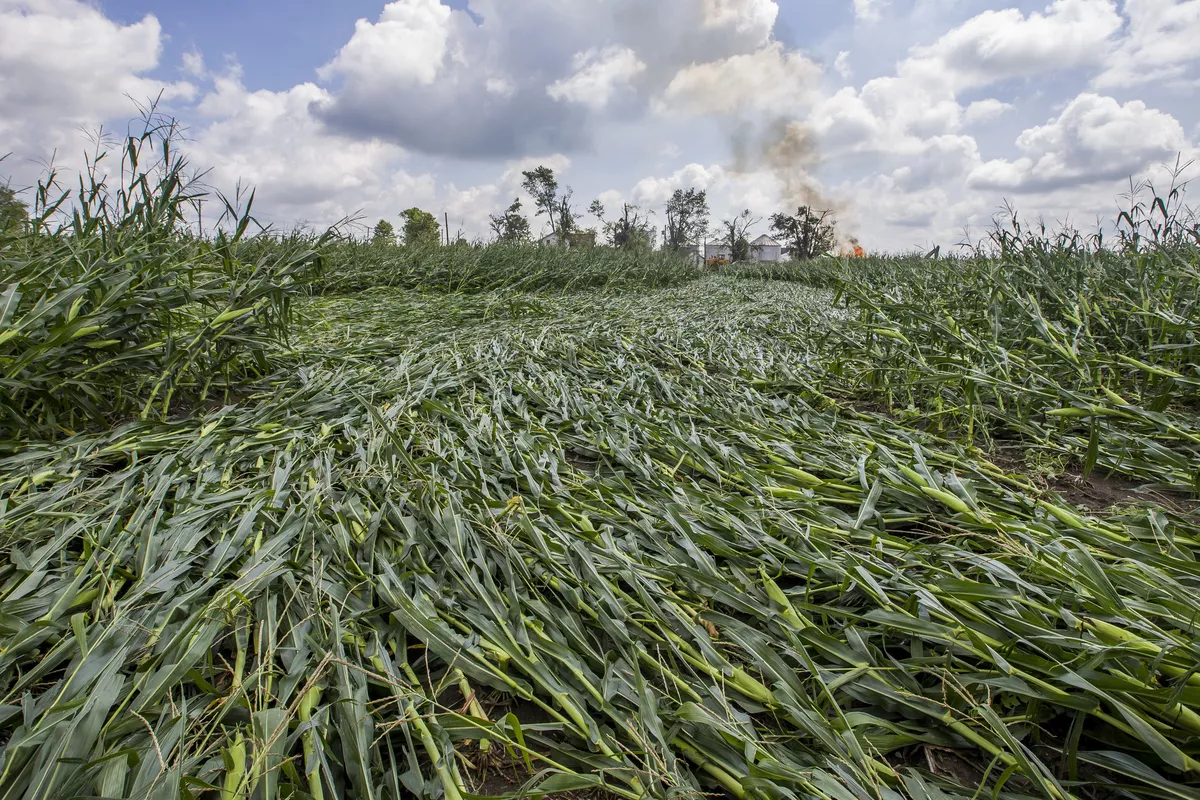
Crops had flowers and leaves torn apart, with often only stalks visible in worst hit areas.
Federated Farmers arable seeds vice-chairman Darrell Hydes and his family were among the arable farmers punished by marble-sized hail in Methven.
"It’s the worst one I’ve suffered by a long, long shot and I’ve been farming since 1988.
"Dad and I can remember one that hit us in 1984 which would be similar and Dad’s been here since 1963 and that’s only the second one that’s been anything like this."
He said it was grim, about half his farm was badly damaged and at his father and brother’s blocks three-quarters were damaged.
A farmer worse off than him was down an expected $1.5m and Highbank farmers also suffered large losses, he said.
"So if the average was $400,000 to $500,000, that’s $6m isn’t it.
"And our costs are so much higher than they’ve been in the past, with most of our ryegrass and white clover crops below break-even in 2022, and when we did the same sums for 2023 — even though fertiliser prices dropped quite a bit — everything else has gone up and the cost of production is higher. The timing isn’t good."
He said any crop in the worst of the hail belt was battered.
"Our paddock of spinach seed got badly stripped.
"I left it for a while hoping it might recover, but the buyers came to have a look at it and said it was never going to recover enough to be worth keeping so I scrubbed that and went and sprayed it off and worked it up to put it into greenfeed oats."
The destroyed spinach seed on 12ha was a high-input crop and Mr Hydes said he was out of pocket after spending about $3000/ha on sowing and chemicals.
He was also back about $130,000 on the expected harvest return at a gross income of about $11,000/ha.
Other crops such as cocksfoot and rapeseed were at least 50% damaged and would be harvested at lower yields.
A fully-leafed potato crop on his land leased by neighbours was stripped back to stalks and would return only a reduced yield.
Mr Hydes said it would take him several years to recoup the losses.
Only his wheat crops were partly covered by disaster relief insurance by United Wheat Growers.
"Of those 15 or so farmers affected, I would say maybe 30% to 40% are [privately] insured, but I didn’t have mine insured because it’s really expensive and it’s a real marginal call whether insurance is worthwhile or you self-insure.
"A year like this, insurance would be worthwhile."
Farms were hit in a 2km wide strip from about 5km out of Methven and continuing towards Highbank and the Rakaia River.
Hail damage was experienced in Glenroy and around Sheffield.
South Pacific Seeds had five specialist seed crops in the same spinach variety as Mr Hydes on farms in the strip and only one could be salvaged.
His father, in a nearby block, had to virtually write off about 20ha of peas — as they were in non-irrigated paddocks, it was pointless re-sowing the crop and the peas were left in the ground.
"I know several people who’ve silaged [milling and feed] barley and wheat crops, so they’ve been written off too."
Mr Hydes was up a ladder with his brother fixing an end gun on an irrigator and returned back to ground when the first of the thunder and lightning arrived.
"I dived into the cab of the tractor to shelter when the hail came down and most of it would’ve been 1cm to 2cm, but it was hard and jagged, and while it didn’t last very long, maybe 10 minutes, it was very intense.
"There would’ve been a layer of 10cm on the ground and we drove over to his [father’s] other block in Highbank where it was worse and had to put the truck in four-wheel drive to get there."
At their father’s block, they saw a white clover crop annihilated into a "green mulch".
The clover crop had since bounced back to some degree as a result of a good rain.
Source - https://www.odt.co.nz