South Africa - Freak snow damages Free State apple orchards

31.10.2023 605 views

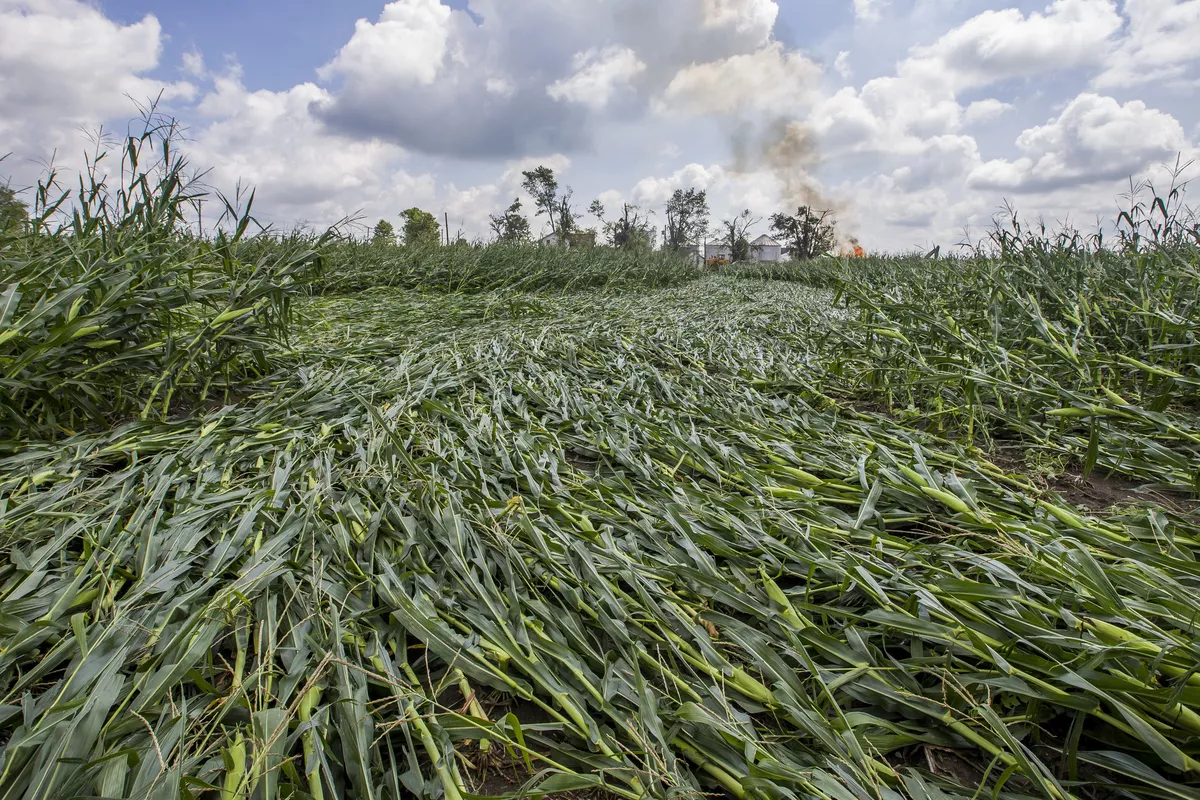
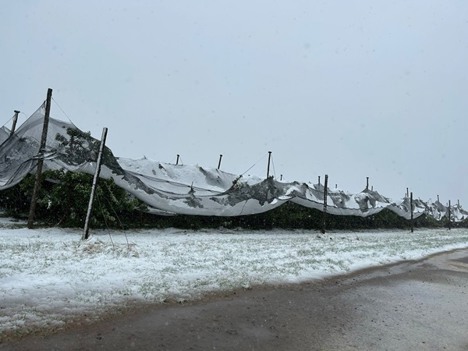
Unexpected snow in a localised area near Harrismith in the Free State has damaged nets and poles, even flattening orchards under the weight of the snow, with trees snapping at the ground in some blocks.

Ironically, this time of the year apple growers are expecting hail, not snow. Maximum 3°C and rainy, tomorrow it's still raining but slightly warmer going forward.

"It started snowing around six this morning," recounts Kerryn Fyvie from Fyvie farming. "It's not normal for us to get snow this late into October, so the nets were already closed in the middle for frost and hail. The snow became very heavy and sticks to the net, it doesn't roll down like hail, putting a lot of weight to the structure."

Snow - during winter - is not unusual over this high-altitude part of South Africa.

"I can't even remember the last time we got snow. We usually get it around every fourth winter. We were probably due for snow - we just didn't expect it at the end of October!"

Growers are assessing the impact at this stage, waiting for the snow to melt. She notes that wires are under so much tension under the weight of the snow that it can be very dangerous to cut anything at this point.

Some nets are split in half, which is not so difficult to fix she says, but the more pressing issue is the two hectare block of Royal Beaut that was flattened.

"And it was a very good young block coming into very good production," she remarks. "We're not sure yet how many of the other blocks are damaged underneath the nets."

Fyvie Farming, which grows 92 hectares of apples in Harrismith, would have hosted a field day next week, but that will have to make way for orchard repairs.

The Free State apple harvest usually starts around in the middle of January; domestic apple price levels have been exceptionally good and good export opportunities are expected.

Source - https://www.freshplaza.com

02.09.2026

Philippines - Bayambang declares state of calamity over P31-M agricultural losses

The municipal council of Bayambang has placed the town under a state of calamity after Tropical Storms “Luis” and “Maymay” and the enhanced southwest monsoon, or habagat, caused more than P31 million in agricultural losses.

02.09.2026

USA - Lynndyl farmers assess crop losses after 100 mph winds and hail

Farmers in and around Lynndyl are beginning to assess severe losses after a powerful weekend storm ripped through fields with destructive winds and hail just as some crops were nearing harvest.

02.09.2026

USA - New Insurance for Breeding Heifers

New LRP Coverage Aims to Reduce the Risk of Retaining Heifers for Breeding.

02.09.2026

Corn's $6 Surprise Could Change the Profit Math for U.S. Farmers

Corn may already be worth more than the board suggests as farm payments and incentives add about 52¢ per bushel to producer revenue.

02.09.2026

Philippines - Iloilo turns over P10M for farm, fishery insurance

The Iloilo provincial government has turned over P10 million to the state-owned Philippine Crop Insurance Corp. (PCIC) to expand insurance protection for farmers and fisherfolk vulnerable to losses from El Niño, La Niña, typhoons, pest infestations and other calamities.

02.09.2026

India - AP sees 1,263% rise in non-loanee crop insurance

The State witnessed a remarkable 1,263% jump in non-loanee farmer registrations, with their participation rising from 2 lakh in the previous Kharif season to 25.26 lakh farmers this year.

01.09.2026

South Africa - Grain SA calls for affordable crop insurance as dry weather threatens Swartland wheat

Severe rainfall shortages threatening the Swartland wheat crop have highlighted the need for government support to make crop insurance affordable for dryland producers.

01.09.2026

USA - Florida farms face nation’s highest disaster loss rate

Natural disasters destroy billions of dollars in U.S. agricultural production each year. From drought and wildfires in the West to hail in the Midwest and hurricanes in the Southeast, farms lose an average of $5.1 billion in crops and livestock annually, according to the Federal Emergency Management Agency.