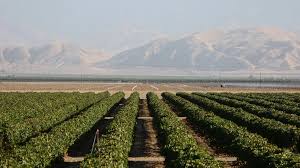
Specialty crops, food processing and rural tourism are helping villages across China strive for prosperity, moving along the path to development having successfully eradicated poverty.
By the end of 2020, China achieved its poverty reduction goals, lifting 98.99 million rural residents, 832 counties, and 128,000 villages out of poverty.
Today, once-impoverished areas are being revitalized with the creation of thriving, sustainable businesses.
New roads now connect villagers in Luotuowan in the mountains of north China's Hebei Province with 18 mushroom sheds that were set up with government backing some 70 kilometers away. Here, workers from the village sort and pack freshly picked mushrooms for wholesale markets and supermarkets in Beijing and beyond.
This "industrial enclave" was expanded last year through cooperation and a vision of shared prosperity with neighboring villages.
"We have high-mountain fruit trees with an annual output value of over 20 million yuan (about 2.74 million U.S. dollars), and edible fungus worth over six million yuan (about 825,000 US dollars). In the new year, we aim not only for Luotuowan to prosper but also to drive common prosperity for all neighboring villages," said Gu Ruili, Luotuowan Party secretary.
President Xi Jinping, visited Luotuowan, which was officially designated as impoverished, in 2012 and discussed daily life with residents before issuing a nationwide call for poverty alleviation in the village and surrounding Fuping County.
With strong support from central and local governments, the village successfully eradicated poverty in 2017, in large part thanks to the mushroom industry. By 2024, per capita annual income in the village exceeded 26,000 yuan (about 3,600 US dollars), a more than 20-fold increase in 12 years.
In addition to its specialty agriculture industry, Luotuowan is also planning homestay upgrades to take part in the nationwide development of rural tourism.
"The general secretary encouraged us, saying, 'With confidence, even yellow earth can turn to gold.' Now our village has changed greatly, with orchards, rural tourism, widened roads, and new homes replacing old adobe houses. Our lives are getting better and better," said villager Gu Yanping.
In Nanmeng, a Miao ethnic village in Leishan County in southwest China's Guizhou Province, villagers are busy managing tea gardens, weeding, and fertilizing. With 86 percent of its land on slopes, villagers previously struggled with the mountainous terrain.
During the poverty alleviation campaign, village cadres used east-west cooperation funds to introduce white tea seedlings and establish cooperatives. In 2018, the first 33 hectares of tea produced 570,000 yuan (about 80,000 US dollars) of tea. Now, the tea plantations have doubled in size to 67 hectares, complemented by other forms of mountain agriculture.
"Now Nanmeng Village has tea growing on the mountains, rice-fish farming on the slopes, and mushroom sheds below. Entering the village feels refreshing, with improved facilities. I want to make my hometown more beautiful and contribute to rural revitalization," said villager Li Hanjie.
Many residents of Zhongnan Village in Huanjiang Maonan Autonomous County in south China's Guangxi Zhuang Autonomous Region, used to travel to China’s big cities to find work.
Since poverty was eradicated in 2017, villagers are staying in their home village to learn new skills including cattle breeding and silkworm farming, with 95 percent of households making a living with these new skills to prevent them from falling back into poverty.
Last year, the village planted sugarcane on a large scale for the first time, and over 17 hectares are now being harvested.
"Things are getting better. Roads now reach the fields, making work easier. Our sugarcane grows over two meters tall. The more we cut, the more we earn, and the happier we are," said villager Tan Qingquan.
Huanjiang is aligning poverty alleviation with rural revitalization and development, producing specialty products like timber, beef, silk and fruit. To date, 169 modern agricultural demonstration zones have been established in the county, benefiting 22,800 previously impoverished families.
Source - https://www.bastillepost.com