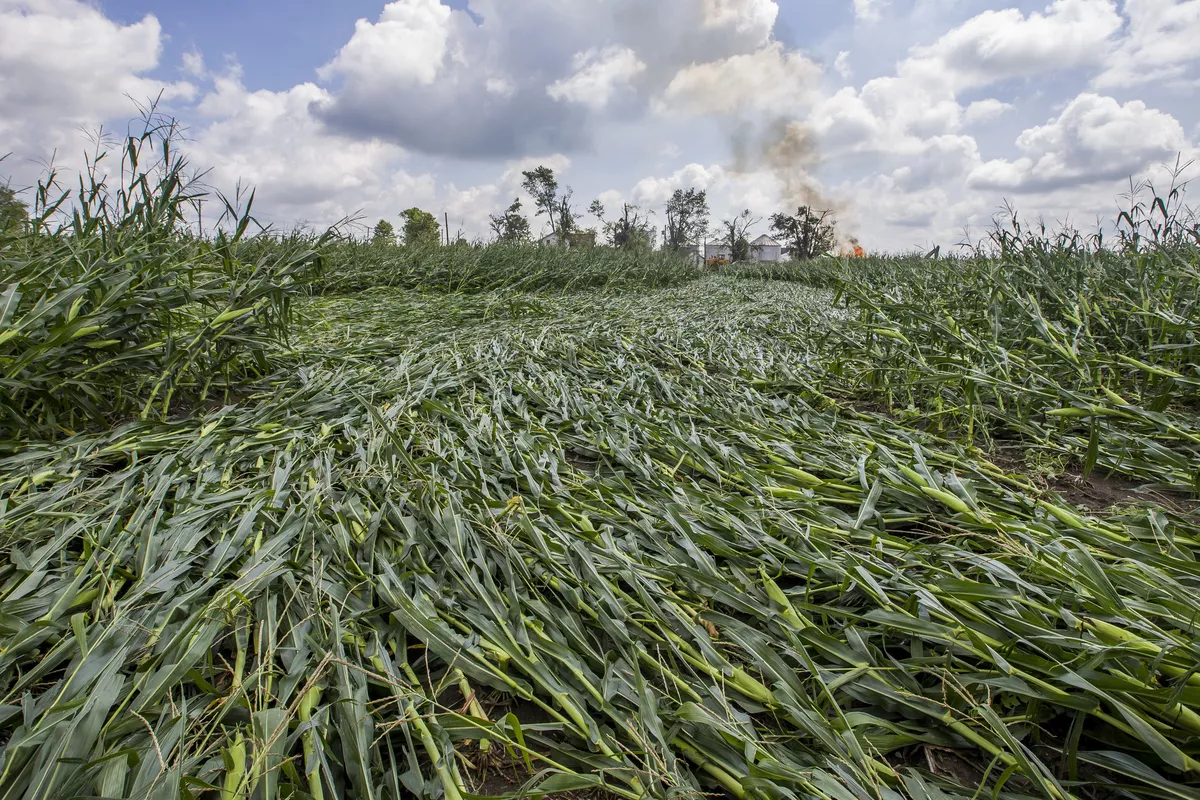
Gradually rising temperatures, changing rainfall patterns, and extreme weather events are resulting in increasing losses in agriculture around the world, with rapid declines in crop production known as shocks.
To study climate change’s impacts on food and other crop systems, scientists have typically measured the change in crop yield in different weather scenarios. But when it comes to building a resilient food production system, it is valuable to look beyond this single metric, according to the authors of a new study published in Nature Sustainability.
“Are we missing part of the picture if we’re only focusing on yield?”
Lead author and doctoral candidate Dongyang Wei of the University of Delaware said that tracking other elements that play a role in food production, such as how much crop can be planted in a given area, could also offer valuable insights regarding crop shocks. Wei studies issues of food security and climate change.
“Are we missing part of the picture if we’re only focusing on yield?” asked coauthor Kyle Davis of the University of Delaware. “That is what we wanted to find out,” he said.
Digging Deeper
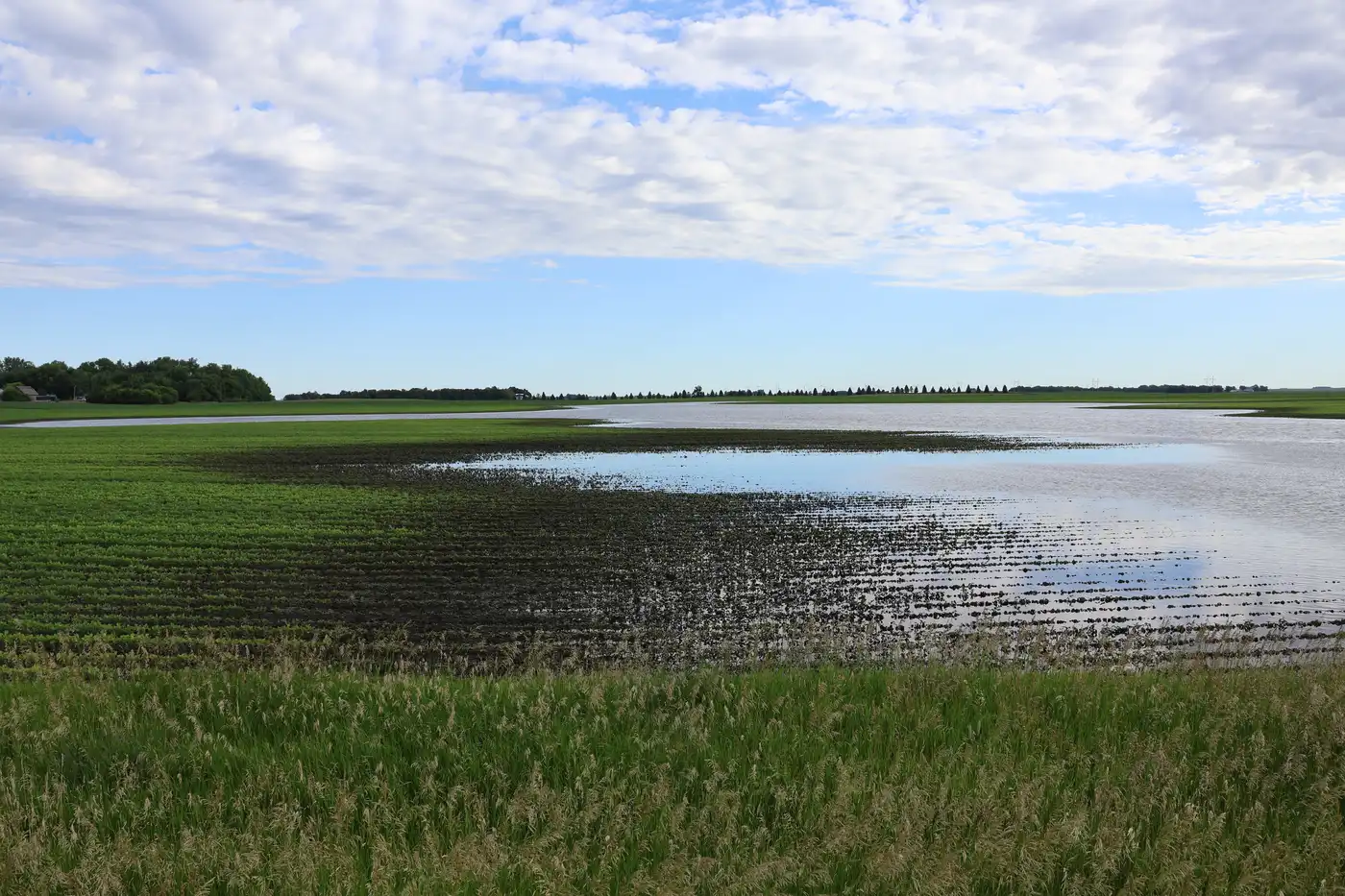
Crop production is calculated as the product of yield (crop per unit area) and the area of land harvested, which depends on how much land has been planted and what farmers and scientists term the “harvestable fraction”—the ratio of harvestable crop to planted crop. Each of these components—planted area, harvested area, and yield—can suffer losses independently and affect crop production, so the researchers analyzed how climate changes affected each one separately.
Wei, Davis, and their colleagues assembled agricultural data for seven major crops—barley, corn, cotton, sorghum, soybean, spring wheat, and winter wheat—in the United States between 1978 and 2020 and detected when shocks to crop production, yield, land planted, and the harvestable fraction had occurred.
“Yield is important, but the data shows that other components are also important for crop production.”
Their analysis revealed that shocks in the amount of planted and harvested areas occurred at the same time as more than half of the production shocks. “Yield is important, but the data shows that other components are also important for crop production,” Wei said.
The team also analyzed how much the different components contributed to the size of production shocks for each major crop type. They found that for corn, cotton, soybean, and winter wheat, yield fluctuations played a greater role in production shocks than the other two components. Changes in planted and harvested areas play a more important role in the magnitude of production shocks for barley, sorghum, and winter wheat.
When looking at different climate impacts on the components, the researchers found that temperature increases most often led to co-occurrences of shocks on all three. But extreme weather events had a greater impact on crop production than did general climate variability. “These [events] are harder to forecast,” Wei said.
Knowledge Is Power
As climate change influences agriculture, and in turn food security, understanding how variations in yield, planted area, and harvested area affect crop production is critical to adaptation efforts. So far, resilience building has focused on stabilizing the yield component by developing drought-tolerant varieties of crops and improving the range of crops, for example. “But by looking only at yield you miss a lot of potential opportunities to adapt to climate variability and climate change impacts,” Davis said.
The findings show that factors related to planting and harvesting area are important when it comes to increasing resilience in food production systems, Davis said. This more comprehensive and nuanced analysis reveals other avenues to stabilize production, such as viewing food production from a landscape perspective and deciding the best place to plant crops, for example.
“This research helps us to better understand opportunities to adapt to future crop production shocks.”
Recognizing large-scale patterns across each of the components that contribute to food production will also help governments and institutes in their efforts to encourage more climate-resilient cropping strategies, Davis said. “I like to think of our findings as expanding the solution space or the opportunities that we have for adapting to climate impacts,” Davis said.
Megan Konar, a water resources engineer at the University of Illinois at Urbana-Champaign, whose research focuses on the intersection of food, water, and trade, concurred. Konar said she believes that by looking at the previously understudied components of crop production—planted area and harvested fraction—the study has taken steps toward greater food production stability.
“This research helps us to better understand historical farmer decision-making in the United States, as well as opportunities to adapt to future crop production shocks,” Konar said.
Source - https://eos.org