Black Bull Biochar (BBB), a UK start-up driving sustainable agriculture and carbon removal, has secured £4m in a late seed funding round to expand operations across the North West of England and accelerate its entry into northern Europe.
The round is co-led by TSP Ventures and the Greater Manchester Combined Authority Investment Fund, alongside Old College Capital.
The funding will enable BBB to take biochar innovation to the next level, building on projects with Avara Foods, M&S, Ahlstrom, AW Jenkinson and Arla Foods, while expanding its production infrastructure to meet growing demand across agriculture and industry, as well as the fast growing carbon removals market.
The round includes £2m in equity from TSP Ventures, the Greater Manchester Combined Authority’s Investment Fund and Old College Capital, the University of Edinburgh’s in-house venture investment fund, alongside £2m in debt financing from Innovate UK’s Future Economy Facility.
The investment will support new production sites, expanded research capacity, new markets – BBB recently opened a subsidiary in Denmark – and the relocation of BBB’s headquarters from London to Manchester.
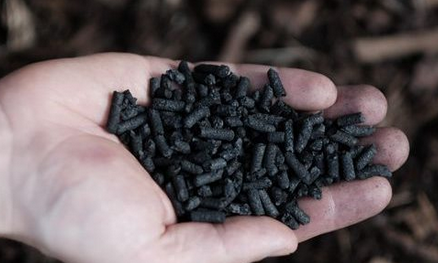
Biochar is a form of stable carbon created by heating organic material, such as woodchip or straw pellets, in a low-oxygen environment, a process known as pyrolysis.
BBB’s technology decarbonises industrial heat systems while restoring soil health on farms through high quality biochar produced from sustainably sourced biomass, all while storing carbon in soils for thousands of years.
Demand for durable carbon removal credits is accelerating rapidly, with global offtake values rising to approximately $1.5bn in 2024, up from $815m in 2023.
The result is a carbon-rich material that can be added to soils with organic fertiliser to improve long term soil health and productivity, increasing crop yields while minimising on-farm emissions.
Alex Clarke, CEO and co-founder of BBB, said: “Farmers are under pressure from every direction – rising costs, tougher nutrient rules, and the need to build more resilient soils. Our aim is to give producers practical tools that fit straight into existing systems.
“By turning sustainably sourced biomass into renewable heat for industry and high impact biochar tailored for farms, we can strengthen soil health, improve nutrient-use efficiency, and store carbon.”
He added: “Our focus is on offering farmers practical solutions that work within existing systems, delivering stronger soils, improved nutrient efficiency and long term carbon storage. This investment allows us to scale in the North West, expand into Denmark and work more closely with the livestock producers we support.”
Mike Doswell, chief investment officer, TSP Ventures, said: “We are incredibly excited to be co-leading this investment round alongside GMCA. Black Bull Biochar is well on its way to becoming a market leader in the biochar and carbon removals space, whilst also delivering much needed off-grid, industrial green heat.
“Carbon removals will increasingly be a vital part of the green transition and the market is just getting going.”
Cllr David Molyneux, Greater Manchester Combined Authority (GMCA) lead for resources and investment, said: “Our investment in BBB will help the business develop its innovative technology, which has huge potential to deliver a real, scalable impact, while creating high quality jobs and opportunities in local supply chains, and helping us achieve our goal of being carbon neutral by 2038.”
In collaboration with UK universities, BBB previously received £3.2m from the Government’s Net Zero Innovation Portfolio after success in the Direct Air Capture and Greenhouse Gas Removal innovation competition run by the Department for Energy Security and Net Zero.
Source - https://www.thebusinessdesk.com