Normally, by this time of year, the trees at Riverview Farm in Plainfield would be flush with growing fruit. But lately, Paul Franklin has to search for apples.
“There should be somewhere around 600 apples on this tree,” he said, standing in a row of Gala trees. “You can see, there are far fewer than that."
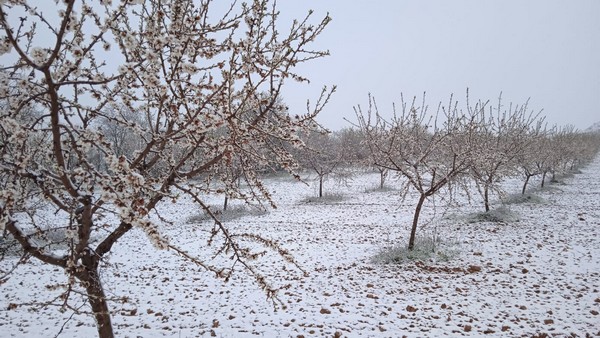
Unseasonably low temperatures on the night of May 18 wiped out practically all of Franklin's apple crop for the season. In a typical harvest, his orchard picks around 7,000 bushels of apples. This year, he expects only about 100 to 200 bushels.
“It’s a 99% loss,” he said.
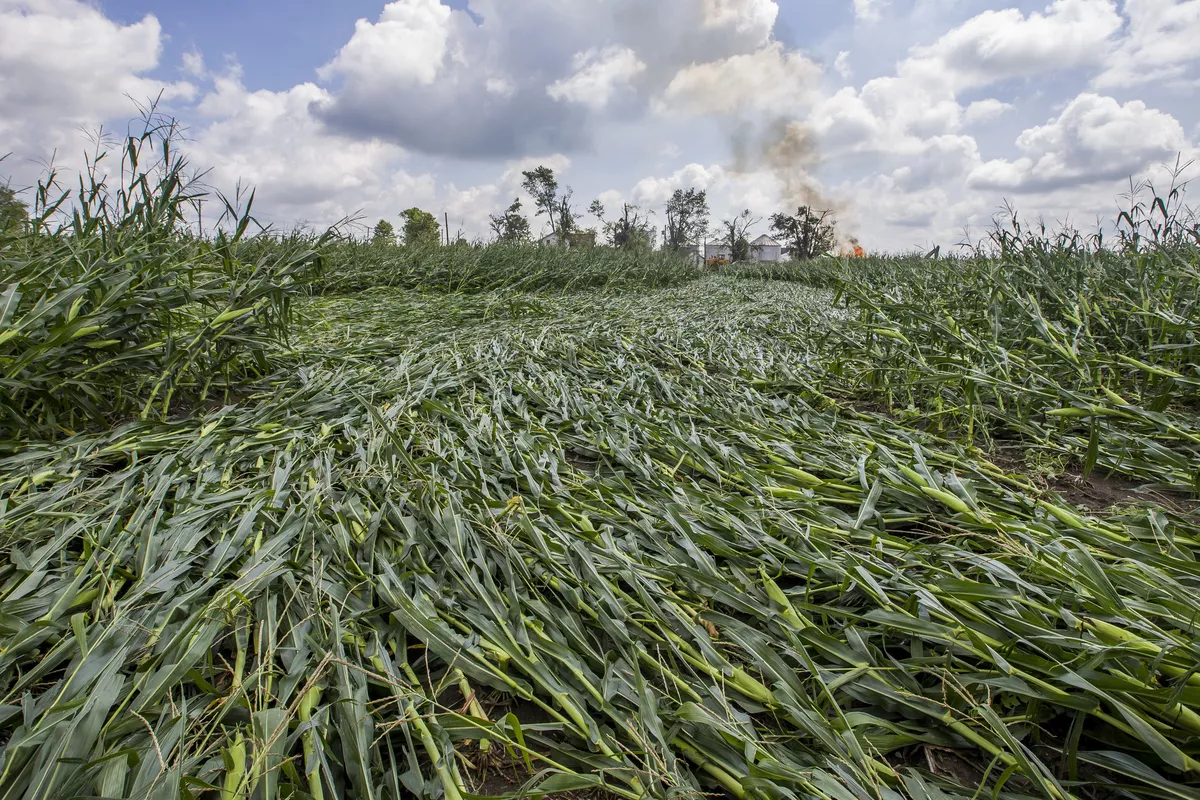
Franklin is not alone. Erratic weather in February and May caused devastating damage for fruit growers across the region. The University of New Hampshire Cooperative Extension estimates that some areas in the state lost at least half of their apple crop, and others saw a near total loss. They also said some types of stone fruit — like peaches, sweet cherries, and plums — were likely wiped out by the weird weather.
Karen Caverly co-owns Union Lake Peach Orchard with her son, Ryan. They were hit hard in February when temperatures dropped to negative 16 degrees Fahrenheit.
“We have no crop and no income from peaches this year,” she said.
The financial hit will be severe for heavily affected producers like Caverly and Franklin. For Riverview Farm, apples typically make up 60% of its inventory and all other fruit — like blueberries, raspberries, squash and pumpkins — collectively constitute the rest.
Franklin says crop insurance will cushion the blow slightly and anticipates that the farm will be able to survive the season without the apple crop. In order to do so, however, he anticipates cutting costs significantly.
“We won't be replacing equipment,” he said. “Just making sure [we’re] not spending anything that's not needed.”
Not all farms suffered equally.
“Generally the damage tended to be less at those higher elevations, even on a particular farm and certainly from one farm to the other,” Jeremy Delisle, a field specialist in food and agriculture with the cooperative extension, said.
Butternut Farm in Farmington is one of those luckier places. Its apple crop survived the May event relatively unharmed, which the farm’s owner, Giff Burnap, suspects is because of the farm’s high elevation and proximity to the ocean.
“We are close enough to the coast that we had some buffering,” he said. “Even just a few miles north inland, there was a big difference in temperatures."
For farms with major crop loss, officials from across the northeast are askingthe federal government for aid to help impacted fruit growers.
“There is some hope there for modifications so that people can survive,” New Hampshire Commissioner of Agriculture Shawn Jasper said.
But the consequences are more than just financial. Franklin said that the unpredictability of farming can have a corrosive effect on the mental health of farmers, especially when decades of work are erased in the course of a few hours.
“Farmers are pretty independent, pretty stubborn and pretty resilient, but there is a point,” he said.
In a typical summer, Union Lake Peach Orchard serves as a community gathering place, holding an annual peach pancake breakfast that benefits the local food pantry.
“That's another entity that will be at a loss for additional donations because of the crop failure,” Caverly said.
Climate experts have cautioned that these extreme temperature fluctuations are likely to be the new normal. Franklin and Caverly both say warming weather has altered their businesses.
“Our first salable crop was about 1985, and we did not have a complete fruit loss until about 2012,” Caverly said. “And now it's happening more and more.”
Many farmers are thinking of creative ways to compensate for the loss. Union Lake Peach Orchard is pivoting to creating a diversified market garden and renting out their recently built event barn.
“We’re dabbling in hosting weddings and any other parties that people would like to have on the farm and at the barn just to keep our heads above water,” Caverly said.
Back in Plainfield, Franklin encouraged people to still go out to their neighborhood farms, even if the harvest is atypical.
“The experience will be there. It'll be different,” he said. “People are going to have a nice time walking through the orchard. They might find an apple here or there, but there's plenty of other things we'll have.”
Source - https://www.vermontpublic.org