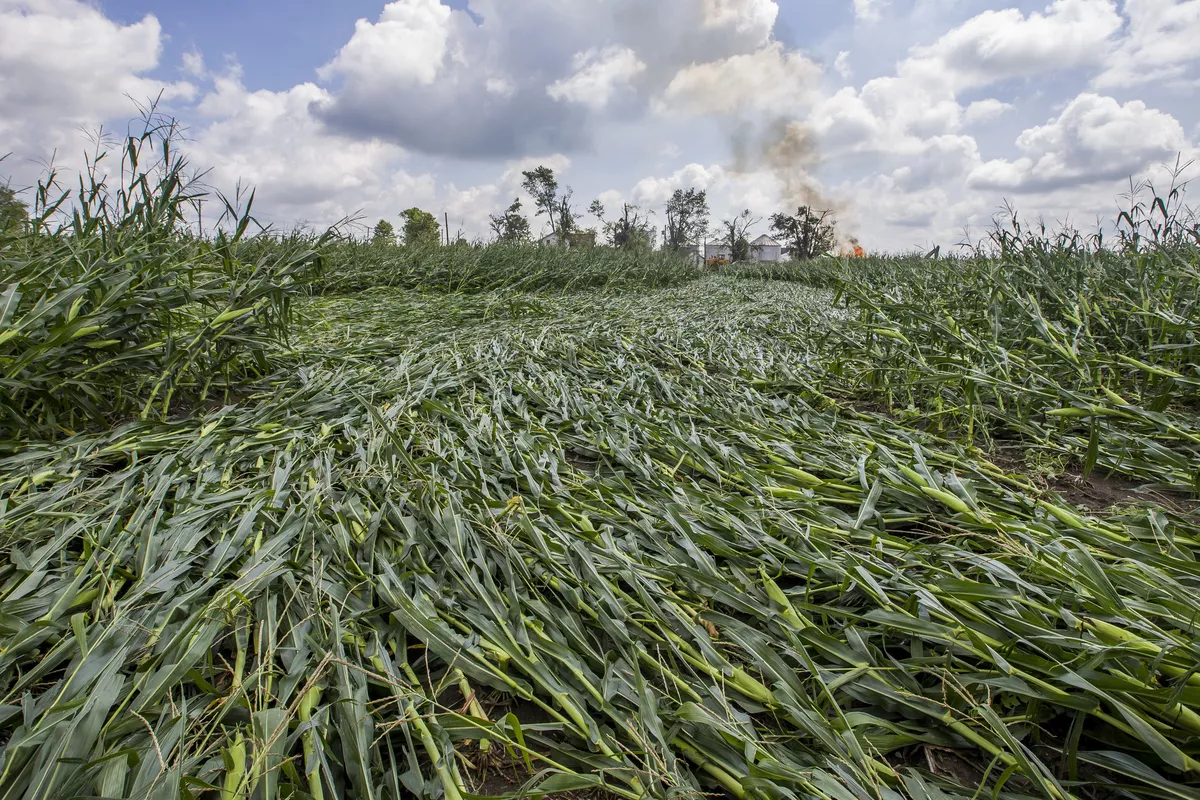
University of Florida scientists will use artificial intelligence technology to quantify damage to fruits and vegetables caused by extreme weather events, such as Hurricane Ian.
When Ian struck on Sept. 28, it brought winds up to 155 mph and caused as much as $1.56 billion in damage to crops, livestock and aquaculture products in its path, according to preliminary estimates from UF/IFAS. Those estimates are based on farmer surveys.
These figures are critical because growers need to know the extent of crop loss to file insurance claims and apply for other recovery aid, and UF/IFAS scientist Yiannis Ampatzidis thinks he can help.
Ampatzidis has already developed Agroview and AgroSense at his lab at the Southwest Florida Research and Education Center. His newest project is to develop a computer model to use his existing technology to count damaged or dead crops.
The UF/IFAS associate professor of agricultural and biological engineering has received a nearly $300,000 grant from the National Institute of Food and Agriculture (NIFA) to use Agroview and AgroSense for the times extreme weather arrives.
“The use of this novel technology in commercial fields is expected to help specialty crop growers rapidly calculate losses and better communicate recovery needs to ensure business viability,” said Ampatzidis. “It will also minimize interruption to the U.S. produce supply chain due to unexpected weather and climatic events.”
Currently, Agroview takes aerial and ground images to determine fruit-tree characteristics, such as height, canopy size, leaf density, health and the number of fruit.
AgroSense is a ground-based, AI-enhanced sensor that tells tree-crop sprayers to apply pesticide only to existing trees. The technology also tells sprayers what not to spray, including poles, pumps and dead trees.
Over the next three months, Ampatzidis and his team will gather aerial and ground images of tomatoes, peppers and citrus on farms in South and Central Florida. Six to eight months after the first round of data-gathering, scientists will return to the same farms to collect more images and data.
Scientists will develop and train an AI model to analyze the images from Agroview and AgroSense. The technology will then be able to automatically recognize and detect damaged crops, fallen trees, broken limbs, ruined tomato and pepper plants, fallen trees and flooded areas.
Ampatzidis and his research colleagues will tell growers about their findings, in hopes they can move to recoup their losses faster.
Source - https://www.newswise.com