One of the world’s worst pests is infesting crops all over California. There are seven active quarantines spanning the length of the state, but experts say those affecting San Bernardino and Riverside counties are especially serious.
Fruit flies can attack hundreds of different crops, including citrus, avocadoes, grapes, figs, peppers, and tomatoes. They feed on fresh fruit and vegetables, rendering them unfit for human consumption.
How might the infestation affect residents? Is there anything individuals can do to foil the flies?
Bodil Cass, expert in subtropical fruit pests and assistant professor of cooperative extension at UC Riverside offers insights.
Q: How bad is the current fruit fly infestation?
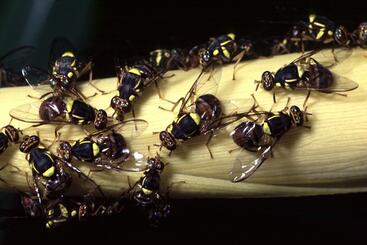
A: The Oriental Fruit Fly (Bactrocera dorsali) infestation affecting San Bernadino and Riverside counties is serious; among the worst exotic fruit fly infestations we have seen in California’s recent history and the worst currently in the state.
We usually detect these infestations when there are just a few individual flies. In this case, we caught it a little later or the initial founding population was larger, so there are already hundreds of these invasive flies present in the environment, making it more challenging to control.
The quarantined area was about 350 square miles as of last week and may to expand as responders find the boundaries of how far these flies have travelled. The adults are strong fliers, and their dispersion is aided by strong winds like we have seen recently in the area.
Q: What are the potential economic impacts?
A: The economic and environmental cost of allowing the fly to establish in California would be devastating to our agricultural industries. It would mean rotten fruit in home gardens, steep increases in fruit prices, and mass use of pesticides. These flies are one of the most harmful to crops because they aren’t specific to one type of plant.
The immature flies chew through the fresh fruit and it rots on the tree or vine, or drops prematurely to the ground before harvest. Fruit actively infested with large maggots is obviously unmarketable to consumers, and the mere presence of this fly collapses export options as other regions understandably don’t want to risk importing potentially infested shipments of produce.
The estimated economic cost of the fly establishing in California is in the range of $44 to $176 million in crop losses, additional pesticide use, and quarantine requirements. More broadly, the shift in production practices needed to grow produce in the presence of this fly would completely disrupt the pest management practices for other pests.
That said, the eradication effort will also be highly disruptive and a significant economic strain for local growers this season.
Q: What is being done about the infestation, and how confident are you that the current plan is the right one?
A: I have full confidence that we will eradicate this infestation if we work together to follow the quarantine guidelines. We have a long-standing success record of keeping this and related fruit flies out of the state, and the exotic fruit fly trapping program in is one of the most impressive collective efforts in entomology that I have seen.
Industry members and the federal, state, and county governments are doing everything they can – bringing in emergency staff experienced in fruit fly detection to place traps in an intensive monitoring grid, conducting treatments of fruit prior to harvest to abate the fly larvae, and not moving untreated fruit out of the quarantined area.
Q: The Citrus Variety Collection, CVC, at UC Riverside is one of the most impressive collections of citrus trees in the world. What is being done to protect it?
A: The quarantine area has not yet reached campus, but we are taking full precautions by preemptively beginning the recommended treatment program to protect the fruit. Researchers are also gauging how this might impact any current experiments being conducted and scrambling to adapt some of our research plans as best we can.
It is imperative that we as residents all do our part protect this incredibly valuable growing region where the CVC is located. This means not moving susceptible fruit from your property without freezing, juicing, cooking, or disposing in regular trash by double-bagging. Report any suspected sightings of exotic fruit flies to the pest hotline 1-800-491-1899.
Additionally, people should cooperate with Department of Agriculture staff if they need to inspect fruit or install traps on your property. Unfortunately, fruit in the immediate area of the find site may need to be preemptively stripped from the trees and disposed to stop the spread of the fly. Yes, this is an unfortunate loss of produce for this season, but the fruit will be unusable either way when the fly infests it.
Source - https://news.ucr.edu