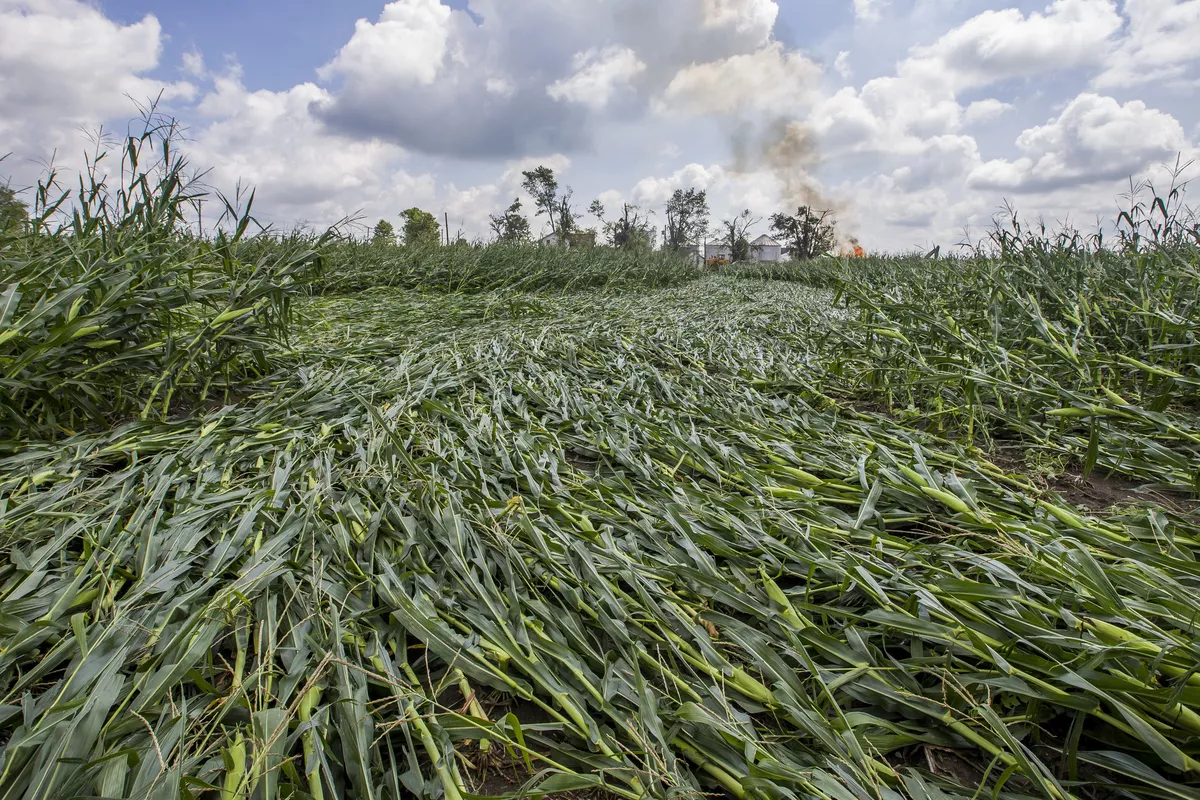
With US crop insurance premiums reaching a record high in 2022 to $21.5 billion, the segment witnessed an underwriting loss due to challenging growing conditions amid widespread drought, reports AM Best.
However, looking back at 2021, insurers reported weaker results, which was due to challenging growing conditions amid widespread drought throughout the country, which led to catastrophic crop damage and resulted in a rise in insured losses.
Both the federal Multi-Peril Crop Insurance (MPCI) program and private crop insurance products comprise the US crop segment with an immense majority of premiums written through the MPCI program, with it standing at 93% in 2022.
According to rating agency AM Best, MPCI insurers posted a combined ratio of 102.8% in 2022, a 9.0 percentage-point deterioration from the previous year.
Best noted that private crop insurance underwriting results have been consistently unprofitable since being introduced as a separate reporting line in the 2014 statement year. While this trend continued in 2022, the 109.8 combined ratio was the best result the line has ever posted.
Moreover, the state of Texas remains the largest market for MPCI products, with approximately $2.2 billion of premium in 2022. While, the Dakotas, Minnesota, Iowa, Illinois, and Kansas all boast more than $1 billion of premium, while Nebraska premium came to $971 million.
MPCI premium growth has been driven by higher commodity prices in recent years, which Best considers to be exposure-driven, as the value of the underlying crops being insured has drastically risen.
Across the past two years, the prices for each of the top four commodities have grown by double digits with cumulative price increases per bushel per pound of roughly 50% across the board.
After rising by 37.5% in 2021, multi-peril crop premiums rose an additional 34.5% in 2022, to a record $20 billion.
Connor Brach, senior financial analyst, AM Best, said: “MPCI premium growth has been driven by higher commodity prices in recent years. AM Best considers this to be exposure-driven, as the value of the underlying crops being insured has soared. Prices for each of the top four commodities have grown by double digits in each of the past two years.”
Meanwhile, M&A activity over the past 15 years has played a major part, as it has led to significant concentration in the MPCI market, and as a result, scale has now become a major component towards developing a profitable crop book, along with innovation and reinsurance strategies.
Best also added how it remains cautiously optimistic that underwriting results will show improvement in 2023 based on conversations with rated crop insurers. Published crop-related industry reports have shown indication that timely precipitation in July substantially has improved the crop yield outlook.
However, yield estimates may still change as the season progresses and weather conditions vary. At the same time, given the fact that farmers are increasingly aware of the importance of comprehensive risk management strategies, the multi-peril and private crop insurance sectors are well positioned to continue their growth trajectory within the coming years.
“By embracing innovative technologies crop insurers can gain better insights into the risks associated with agricultural activities, improve underwriting capabilities, and enhance the overall resilience of their portfolios,” Brach concluded.
In other related news, Swiss Re Institute’s recent Sigma Report recognised substantial global progress in crop resilience but emphasised the urgent need for additional efforts to address the significant $113 billion crop protection gap.
Source - https://www.reinsurancene.ws