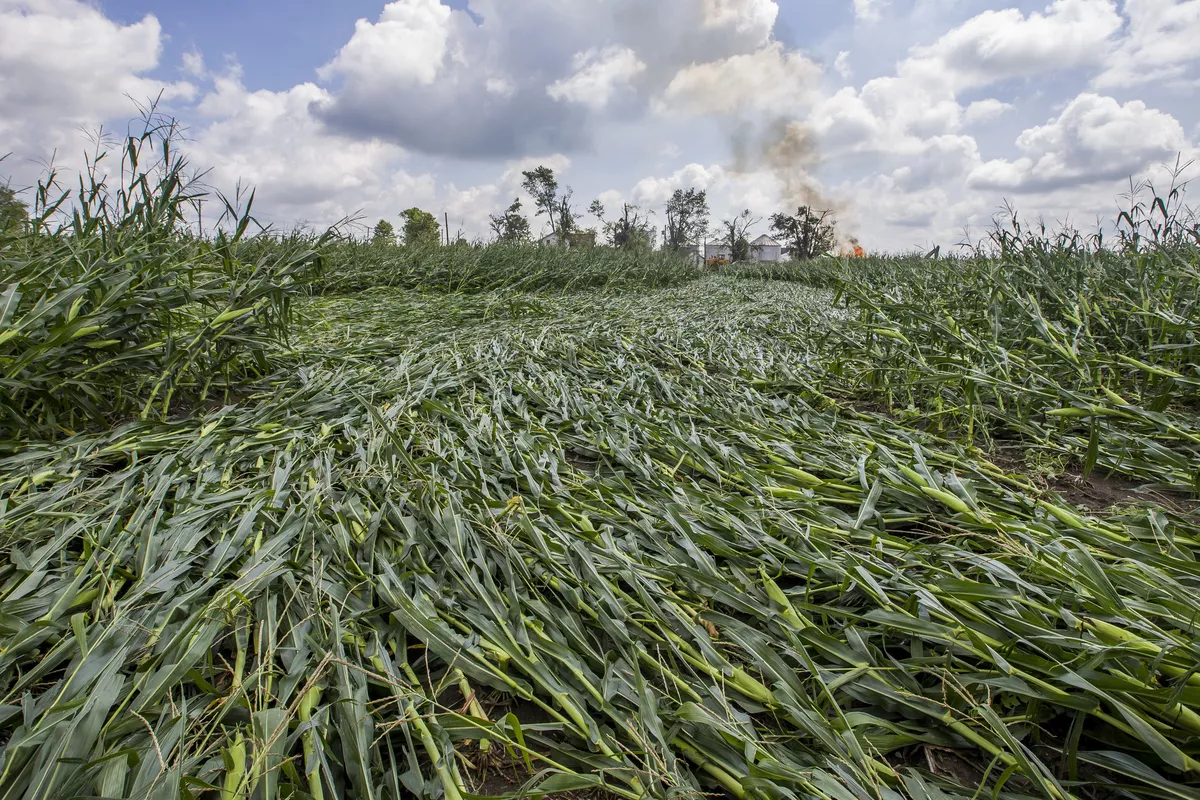
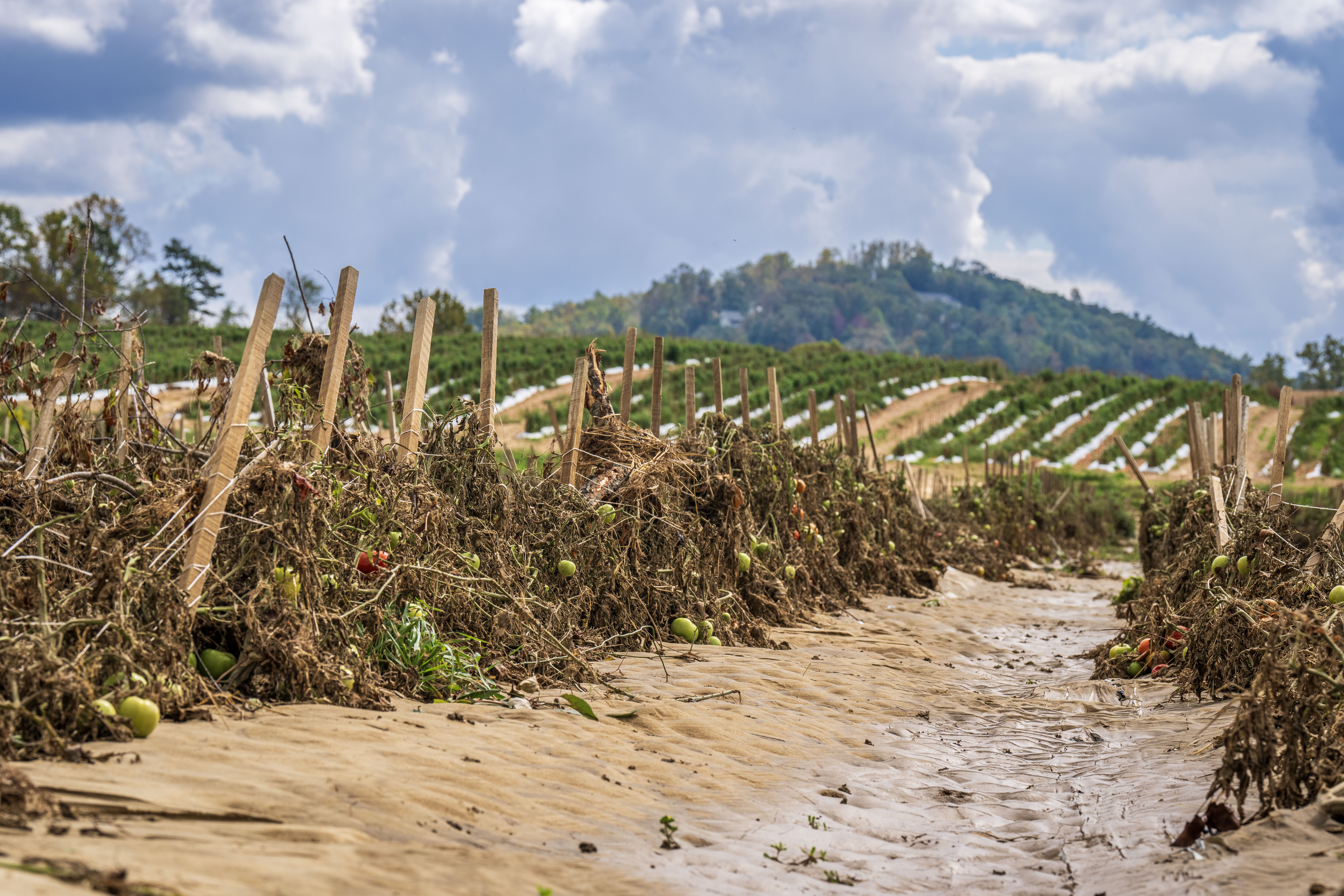
Every year, Georgia farmers are left with millions of dollars in losses thanks to damage done by feral hogs. Across the country, according to the USDA, wild pigs cause more than $1.5 billion in crop damage.
But gauging the extent of the damage in large crop fields can be difficult from the ground. So, University of Georgia graduate student Justine Smith is taking flight to understand more about the animals’ preferences. Smith is using a drone to measure where wild pigs do damage, the time of year they uproot the plants and whether the animals are returning to favored spots—among other questions.
Along the way, she’s pioneering new ways to use unmanned aerial vehicles to survey large agricultural areas, including fields of corn, peanuts, blueberries or cotton.
“These fields are massive, and drone batteries really don’t last too long—sometimes you might get lucky and run a little over a half hour,” she said. “Batteries are expensive and drones are expensive, and trying to map out this entire field with this level of detail is really difficult.”
Smith graduated earlier this year with her Master of Science from the UGA Warnell School of Forestry and Natural Resources and is now pursuing a Ph.D. During her years at UGA she has been working in South Georgia as part of a grant, awarded to the Flint River Soil and Water Conservation District through the USDA’s Animal and Plant Health Inspection Service, to better understand the feral hog problems in the area.
One portion of the project is focused on eradication—wildlife professionals working with USDA-APHIS have been using a variety of methods to eradicate hogs in the area. Another graduate student, Faith Kruis, is testing a novel method of eradication that identifies a social hog and uses it to lead the professionals to a new sounder. Kruis is also investigating types of vegetation in areas where hogs prefer to congregate.
Smith’s portion of the project includes a variety of components that focus on the damage done to crops and the trends of the pigs around the areas where damage is done. By incorporating drones, she’s able to gain a new perspective on crop damage—and experiment with new ways to use drones to gather information over large areas.
Her work has developed better insights into what types of wild pig damage can and cannot be seen by a drone, and some better techniques for flying drones to gather this information.
“There’s a lot of ways you can fly a drone, but until now nobody’s ever said, ‘This is the method you use,’” she said. “Or, there’s usually a method paper that explains how you would use it for data collection for a particular area of wildlife management.”
But those same papers don’t yet exist for using drones to collect wildlife data. Smith’s work will change that. Her work will also provide guidance to farmers and other landowners on expectations and best practices for using this method on their own property.
Smith’s work involved testing a variety of methods to acquire detailed drone photos of corn, peanut, blueberry and cotton fields. She tested transects and waypoints—two of the methods of drone acquisition photos she tested—and also finessed a third method, called a 3-D mapping field, to generate 3-D models of the vegetation.
Having these images of the fields, taken at different times of the year, gives Smith a detailed view of the extent of damage the hogs do. Her work over the past two years has given her a better idea of the damage she can and can’t see with a drone. Her next step is analyzing the data she’s collected over that time.
Smith also has 147 wildlife cameras that she monitors as part of the study. The original plan, she said, was to monitor feral pigs from the ground and overlap that information with crop damage trends. But when she started the project in 2020, she realized a partner on the project, the Jones Center for Ecological Research, had a drone without a specific use. She also realized that the project called for collecting data on crop damages, but didn’t specify how the damage would be determined.
Smith began to get an idea, inspired by a class she took offered by Warnell faculty member Tripp Lowe. With Lowe’s guidance, Smith received her drone pilot’s license and took the project to a new level.
“I realized there’s a drone available, I can fly with a pilot-in-command, there was Tripp, who is just an open book of knowledge about drones, and that got the ball rolling,” Smith said. “It cascaded from there to, ‘Yes, I can use this drone’ to ‘How can I use this drone?’”
In the handful of years since she graduated with her undergraduate degree, Smith has seen the conversations about drones changing. Once considered an “up-and-coming” technology, it’s now a standard technology used in a variety of applications. But there’s still unexplored areas, such as Smith’s research. Her work will be part of the first generation of research guiding the use this technology for this application.
And what’s fun about that, she said, is there are so many unanswered questions. Now as a doctoral student, she’s able to pursue a few as part of the current study. For example, what effect does helicopter removal have on the overall wild pig populations, compared with a whole-sounder method? When pigs are removed from an area, does it have a positive effect on the other wildlife species? And, when pigs move through an area before they are removed, how much time elapses before another species of animal will enter that area?
"Those are just some of the immediate ideas that we could explore to see the influence of pigs on the landscape,” said Smith. She has more than 500,000 images just from the wildlife cameras, and is working through categorizing them on top of the drone work.
“In 2019, when I graduated from undergrad, they said drones were a new and upcoming thing—and then they moved on,” she added. “But now it’s 2023, and we’ve figured out these little nuances and are really getting things rolling.”
Source - https://www.nationalhogfarmer.com