Drought, the federal Farm Bill, foreign ownership of agriculture land and the Waters of the United States (WOTUS) dominated agriculture headlines in Northeast Arkansas during the 2023 growing season.
For a second consecutive year, severe, extreme and exceptional drought afflicted many areas along the Mississippi River with more than 65 percent of Arkansas, Louisiana, Mississippi, Oklahoma, Tennessee and Texas having some form of drought in September.
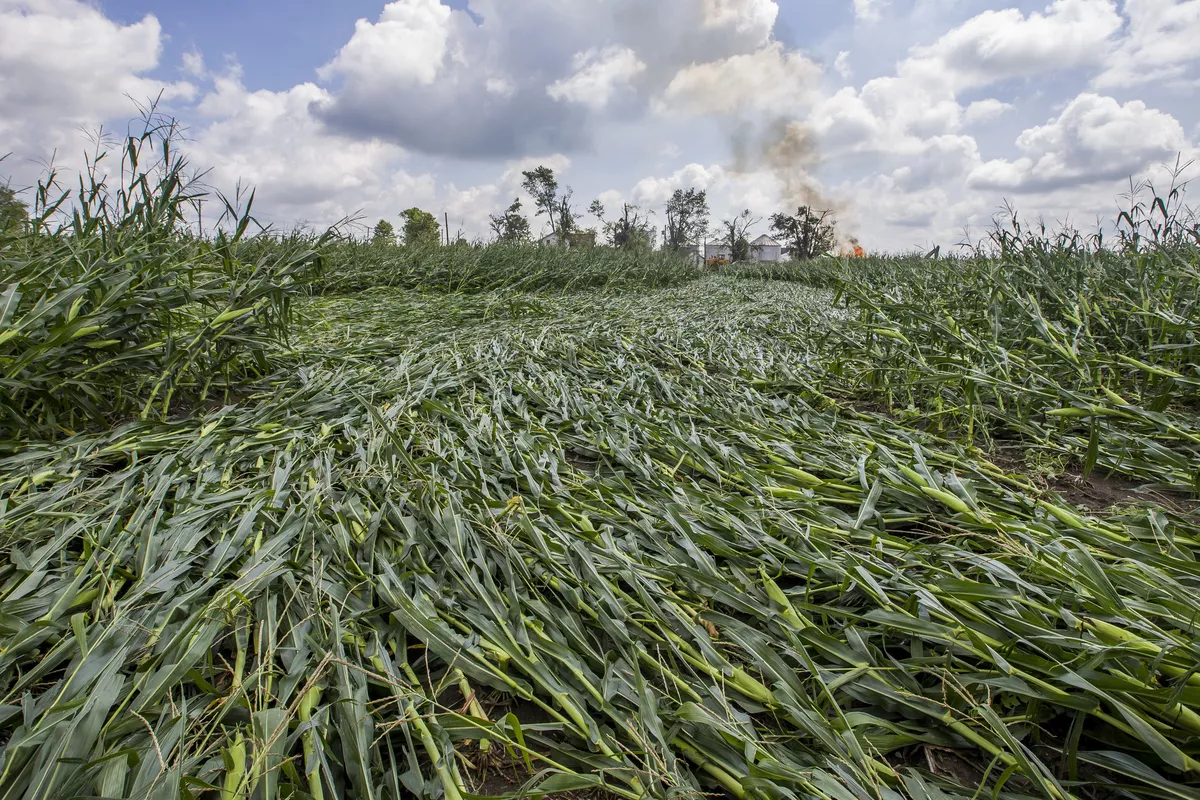
Drought was a double-edged sword for Arkansas growers. On the plus side, drought helped suppress crop diseases and speed harvesting. On the downside, the water-starved Mississippi River dropped to its lowest level ever at Memphis on Oct. 17, to minus 12.04 feet. Recent rains along its length in early December prompted a forecast rise to more than 3 feet by Dec. 18, followed by another drop into the negative numbers.
“We began to see the river levels fall about a week earlier than last year,” said Hunter Biram, extension economist for the University of Arkansas System Division of Agriculture. “On Aug. 29, we saw barge freight rates start to tick up. Last year, the rates began to move Sept. 6. … With river levels falling more quickly, corn basis was walloped in addition to soybean basis, I saw some bids as low as 100 or 125-cents under the harvest futures contract for both corn and soybeans.”
Many farmers learned from the drought in 2022.
“I heard of more farmers taking advantage of on-farm grain storage or at least considering storage as a risk management option to avoid paying lower basis,” Biram said. “Some farmers were able to lock in basis or engage in forward pricing. However, the ones who didn’t engage in any risk management were severely hit on corn and soybean basis.”
FARM BILL
One thing that has not been settled is a new Farm Bill in the U.S. Congress.
“The big question mark was, are we going to get a new Farm Bill?” Biram said. “Farmers want a new Farm Bill.”
In hearings held in 2022 and 2023 by the Senate Agricultural, Nutrition, and Forestry Committee, farmers pleaded for changes in indexed reference prices, margin protection and base acre reallocation. U.S. Sen. John Boozman, R-Ark., is the ranking member of the committee.
“Reference prices are a big deal,” said Ryan Loy, extension economist for the Division of Agriculture. “Another issue people get up in arms about would be crop insurance. So right now, they have ARC and PLC, which are Agricultural Risk and Price Loss Coverage programs.”
“They are going to want to protect ARC and PLC because it is useful,” Loy said. “However, crop insurance is starting to nip at the heels of participation in those two programs, so it’s going to be increasingly important to find some balance since they’re all federally subsidized.”
Crop insurance may protect farmers in the event of market downturns or adverse weather. ARC and PLC help farmers when revenues or prices fall below certain levels.
Congress faced many hurdles while trying to develop a new Farm Bill, including the retirement of U.S. Sen. Debbie Stabenow, D-Mich., chair of the Senate ag committee, and the turbulence surrounding the House speakership.
“Congress members were having to devote their time and their resources to other issues,” Biram said. “The Farm Bill just got put on the back burner.”
The current Farm Bill was reauthorized for another year and Biram said it’s likely there will be déjà vu at the end of 2024.
“With 2024 being an election year, we are probably going to get another reauthorization,” he said.
FOREIGN LAND OWNERSHIP
Foreign ownership of U.S. farmland has been an emerging issue over the last few years, thanks in part to Chinese purchases of agricultural lands near U.S. military bases in Texas and North Dakota.
Alabama, Arkansas, Florida, Idaho, Louisiana, Montana, North Dakota, Ohio, Oklahoma, Tennessee, Utah, and Virginia enacted or amended in 2023 laws restricting certain foreign investments in land in their states. Arkansas became the first state to take action on such a law, telling a Chinese government owned company, Syngenta, that it had to divest itself of land it owned in Craighead County.
“Increasing oversight and restricting foreign investments in U.S. land will continue to be a policy issue considered by both federal and state policymakers in 2024,” said Micah Brown, staff attorney for the National Agricultural Law Center. “Specifically, at least 12 states have proposed or have plans to propose legislation seeking to prohibit certain foreign investments in land located within their state for the upcoming legislative session.”
WOTUS
The National Agricultural Law Center is part of the Division of Agriculture through the Arkansas Agricultural Experiment Station. In May, the U.S. Supreme Court ruled on WOTUS providing clarity in the decades-long struggle to define “waters of the U.S.” By the end of August, the Environmental Protection Agency issued its new WOTUS rule, which deleted scores of waterways from regulation under the Clean Water Act.
“While next year is unlikely to be as active on the WOTUS front as this year has been, with three ongoing lawsuits and lingering questions on how to interpret the current WOTUS definition, we’re expecting to see WOTUS developments continue into 2024,” said Brigit Rollins, staff attorney with the National Agricultural Law Center.
WOTUS suits are still active in federal courts in Texas, North Dakota and Kentucky.
Source - https://talkbusiness.net