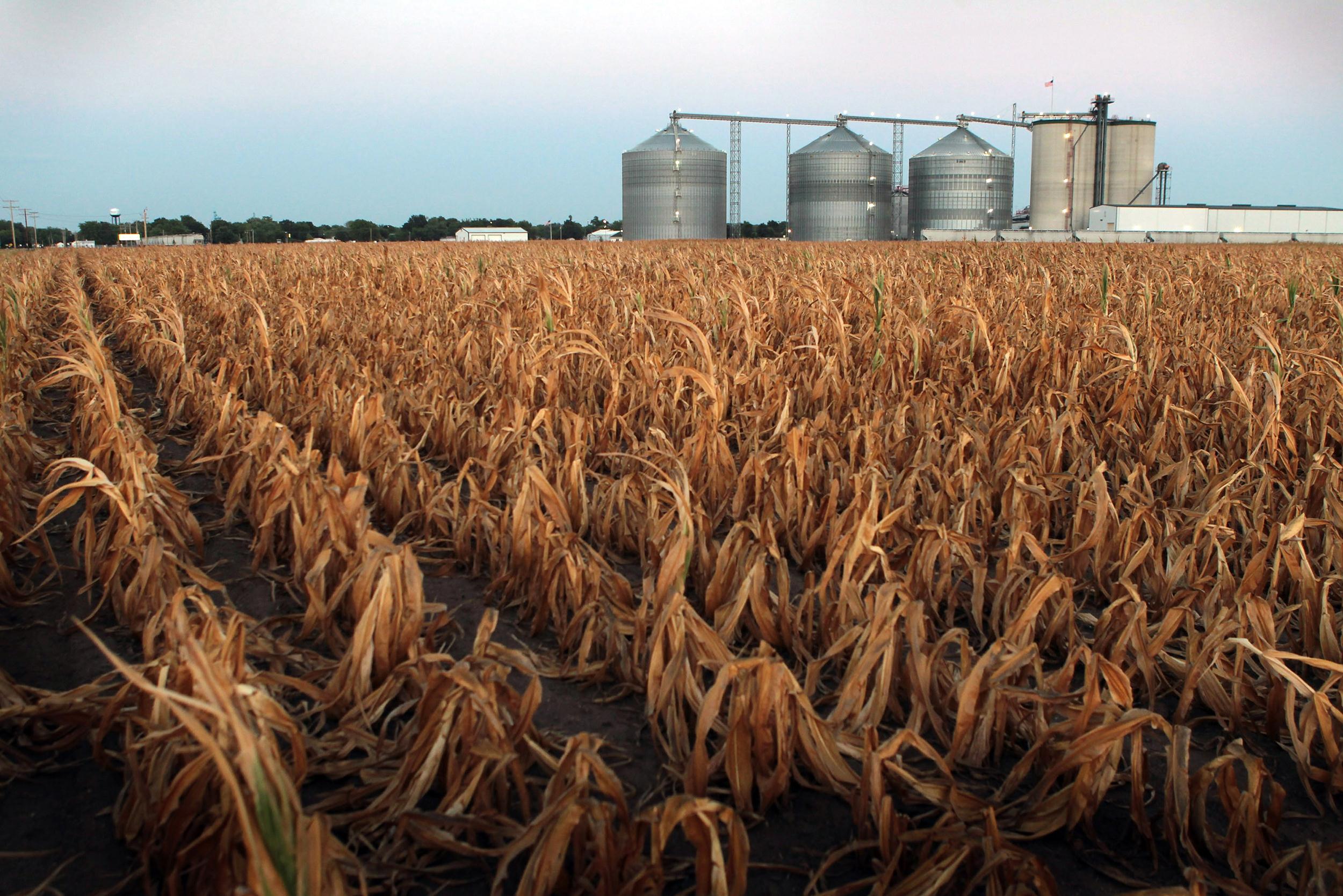
In past years we dreamt of a dry spring. We should be careful what we wish for as we face an early dry spell this season. The OSU College of Food, Agricultural and Environmental Sciences weather stations on the Wooster Campus and Northwest and Western Agricultural Research Stations reported 58-70% less precipitation in May than normal. Dry weather is not only a concern for Ohio now, but several other states are also facing similar or worse conditions, especially those in the central Corn Belt.
Soil surface conditions are the most affected at this point. Moving a little deeper into the soil profile, better moisture is available. The US Department of Agriculture-National Agricultural Statistics Service (USDA-NASS) reported subsoil moisture at 68% adequate and 3% surplus in last week’s report (5/28/23). For topsoil moisture, 7% is very short, and 38% is short. So how will current abnormally dry conditions impact early corn and soybean growth and wheat grain fill?
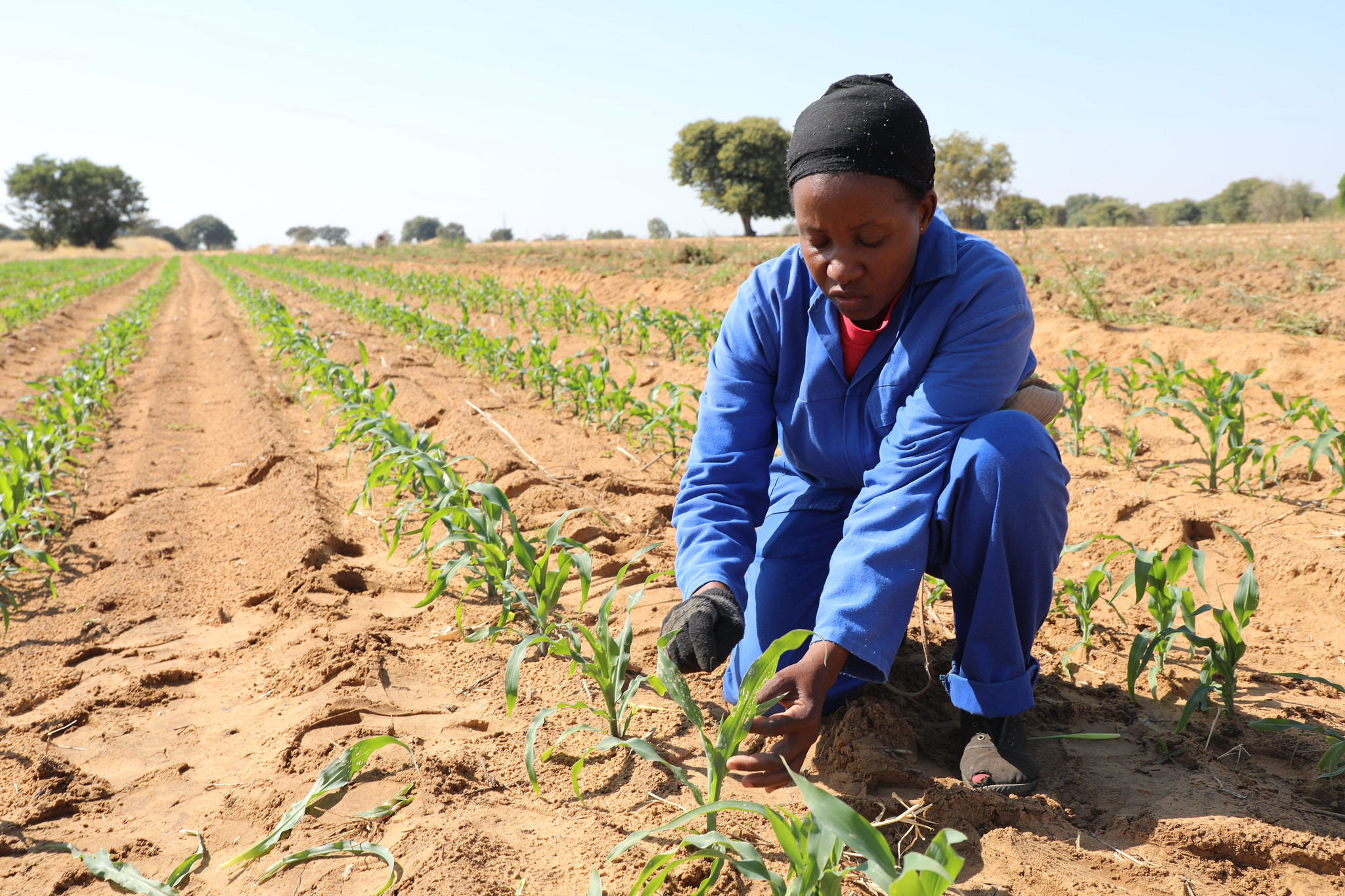
As of May 28, 89 percent of Ohio corn was planted, and 54 percent had emerged (USDA-NASS, Great Lakes Regional Office). Corn planted in mid to late April is between V3 and V5 growth stages. Fortunately, corn is moderately tolerant to dry conditions during early vegetative stages and can rebound if good rainfall conditions occur during silk emergence and pollination. Early season dryness may even encourage deeper initial rooting.
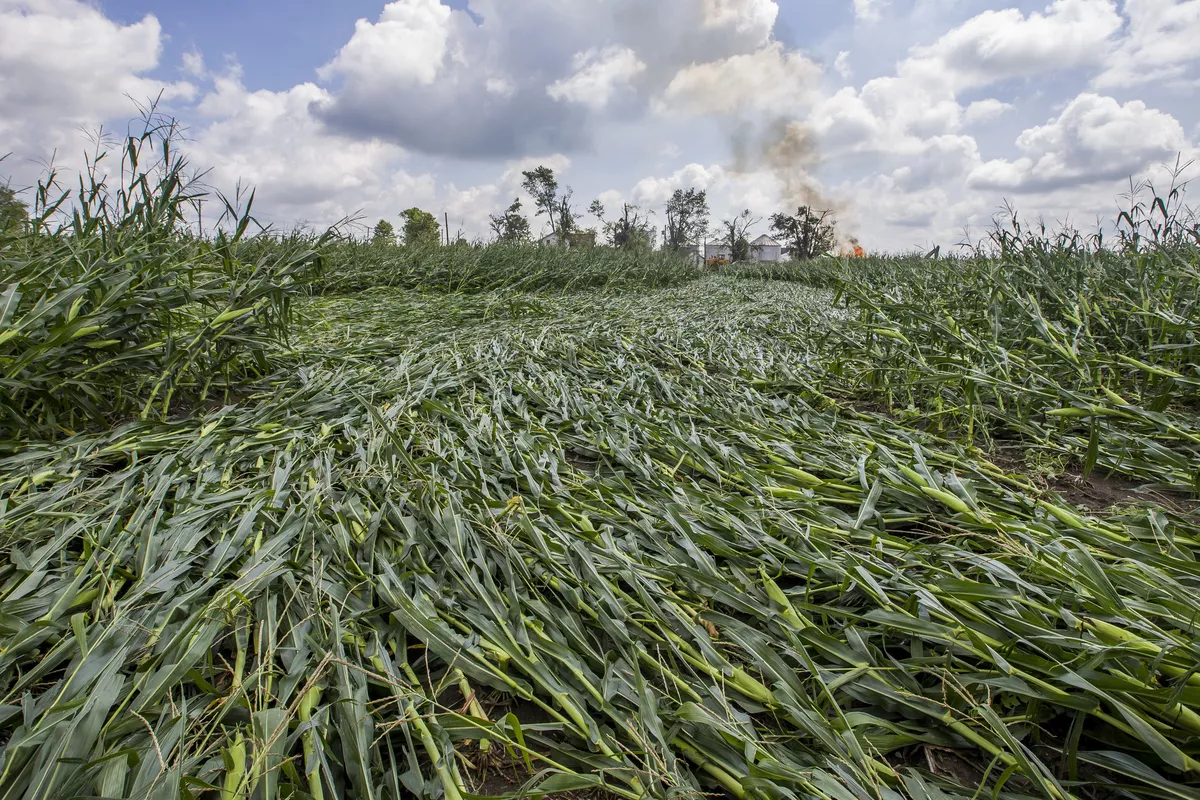
However, if the soil surface is too dry it can negatively affect nodal root system development. The developing roots will desiccate and die if they do not reach adequate soil moisture. Nutrient uptake will suffer, and lodging may occur if the nodal root system is not properly established (i.e., "floppy corn syndrome"). Conventionally tilled fields and ones without residue are more at risk as the soil surface warms and dries more quickly. Corn planted in late May this year and close to the V1 growth stage is more vulnerable than more established plants.
Corn yield components are determined during both vegetative and reproductive stages. Corn requirements vary depending on the development stage, with corn's water use reaching its peak daily need during the pollination period. Shortfalls in water availability can affect the crop this season, however, tasseling and silking is the most critical period when it comes to water use.
Soybean planting also made significant progress in progress the last week of May, with 87 percent planted and 45 percent emerged (USDA-NASS, Great Lakes Regional Office). Soybean seeds must absorb half their weight in water to germinate, so dry soil conditions may delay emergence in the remaining 55 percent. Recently planted fields may experience slowed radicle and hypocotyl elongation. Emergence may not be uniform, but this is not critically important for soybeans.
Soybeans planted in mid to late April reaching the V1 growth stage can expect reduced plant height and smaller leaf size as resources in the plant are reallocated to roots. During dry periods, the plant will prioritize root growth and grow deeper into the soil profile to search for moisture. The crop can then “catch up” and put on compensatory vegetative growth during later periods of rainfall.
Vegetative development takes place over more than half of the soybean growing season, so leaf area that is lost early can often be recovered as growth continues with no loss in yield. This is why short-term, moderate dryness during early growth stages does not generally impact soybean yield.
Significant yield losses occur when drought stress coincides with flowering and pod fill. However, even then, soybean plants are master compensators. Hot, dry conditions may reduce flower and pod numbers, but with late-season rainfall, seed size will increase. We will keep an eye on conditions as soybean fields progress through vegetative to reproductive stages.
Nearly all wheat in Ohio was jointed as of May 28 and 75 percent had headed (USDA-NASS, Great Lakes Regional Office). With recent dry weather, the risk for head scab development remains low (https://www.wheatscab.psu.edu/). Dry, hot weather will shorten the grain-fill period of small grains between Feekes 10.5.4 (kernels watery ripe) and Feekes 11.3 (kernels hard, but dividable with thumbnail). If dry, hot weather persists, winter wheat harvest may be earlier than normal. Keep an eye on wheat maturity. Dry grain that is re-wetted increases the risk of disease, lodging, and seed sprouting, ultimately reducing grain yield and test weight.
Source - https://www.hometownstations.com