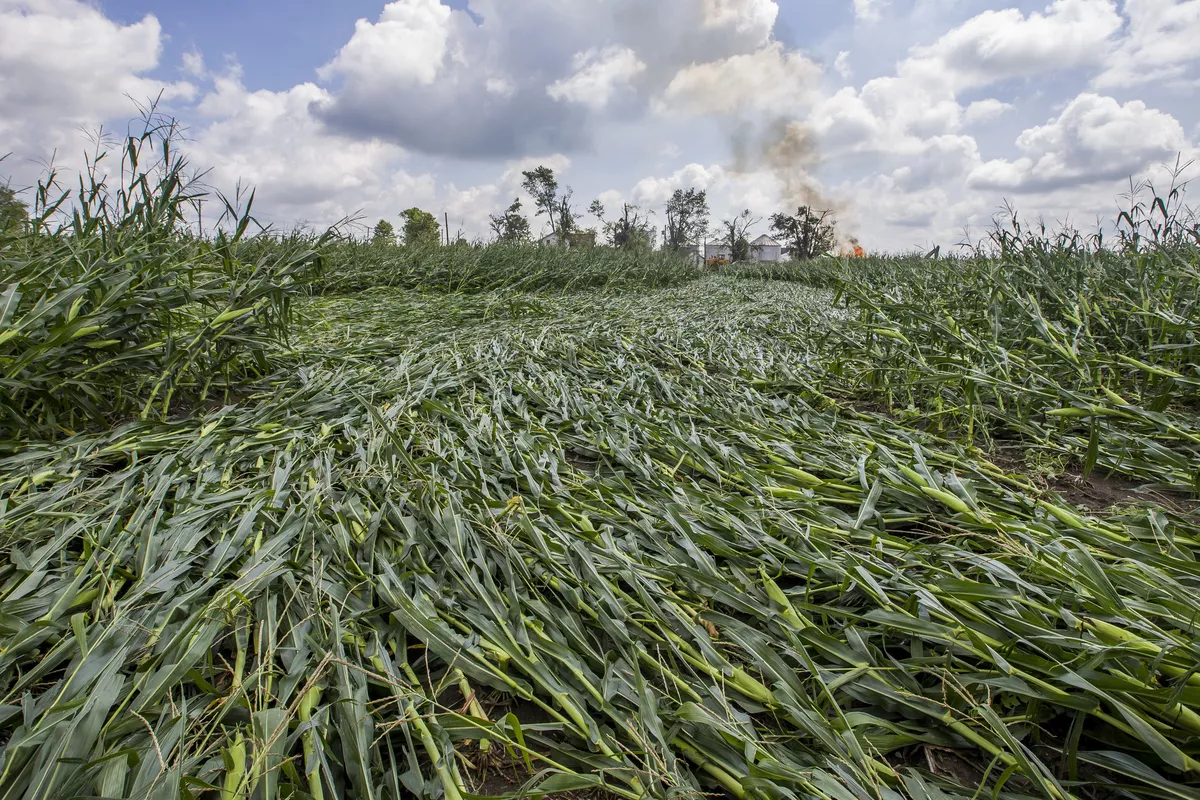
Extreme weather linked to the climate emergency triggered $118.7 billion in crop insurance payouts to U.S. farmers between 2001 and 2022, a new Environmental Working Group investigation has found.
Indemnities paid to farmers for the five most expensive weather-related crop insurance “causes of loss” – drought, excess moisture and precipitation, hail, heat, and freeze – made up 73 percent of total crop insurance payments during the 22 years of Department of Agriculture data EWG analyzed.
EWG’s study, which the organization is releasing along with an update to its Crop Insurance Database, includes an interactive map showing the hot spots for climate-related crop insurance payments – regions where these losses have been especially costly.
“EWG’s new report and hot spot map demonstrate that the climate emergency and crop insurance are inextricably linked,” said EWG Midwest Director Anne Schechinger, an agricultural economist who authored the report. “As extreme weather events become both more common and more catastrophic, farmers will continue to suffer, and taxpayers will continue to foot much of the astronomical bill.”
Weather-related crop insurance indemnities have risen steeply – by more than double for each of the five causes of loss – over the past 22 years. Heat payments have grown by more than 10 times.
Other highlights from EWG’s analysis:
- Drought was the priciest cause of loss, costing $56.6 billion, or 35 percent of total payouts. Almost three-fourths of all drought indemnities – over $41 billion – went to 10 states. In descending order, these were Texas, Kansas, South Dakota, Iowa, Illinois, North Dakota, Nebraska, Missouri, Oklahoma and Minnesota.
- Excess moisture and precipitation indemnities came to $39.8 billion – 25 percent of all payouts. Over half were concentrated in just six states: North Dakota, Minnesota, South Dakota, Iowa, Illinois and Missouri.
- Hail payments cost $9.65 billion, 76 percent of which went to farmers in seven states: Texas, Nebraska, North Dakota, Kansas, Colorado, South Dakota and Montana.
- Heat indemnities totaled $7.98 billion, while freeze payments were $4.74 billion. For both, hot spots included California, Texas, Kansas and Washington.
Some states were in hot spots for multiple weather-related causes of loss.
Texas was in the top 10 states for each of the five, and farmers in the state received over $15.5 billion for all of the categories combined.
Kansas and North Dakota were in hot spots for four of the five weather-related causes of loss, and many other states, including California, Iowa and South Dakota, showed up in hot spots for three.
The hot spots EWG has identified are also the places where farming may be most vulnerable to the climate emergency, as that crisis accelerates and weather becomes more volatile.
The USDA’s Crop Insurance Program does not encourage farmers to adapt to climate change, as EWG outlined in an earlier analysis.
Another recent EWG report found that crop insurance indemnities for all causes of loss – not just those that are weather-related – reached a record $19.13 billion in 2022, a massive increase from the $2.96 billion doled out in 2001.
“As the climate crisis continues to intensify, crop insurance costs for extreme weather will almost certainly continue to increase,” Schechinger said. “The Crop Insurance Program must be reformed so it works better for farmers, taxpayers and the environment.”
Although some crop insurance reforms can be undertaken at any time by the USDA, the 2023 Farm Bill provides an opportunity for lawmakers to make American agriculture more resilient in the face of climate crisis-linked extreme weather and to reduce taxpayers’ increasing costs.
Source - https://www.ewg.org