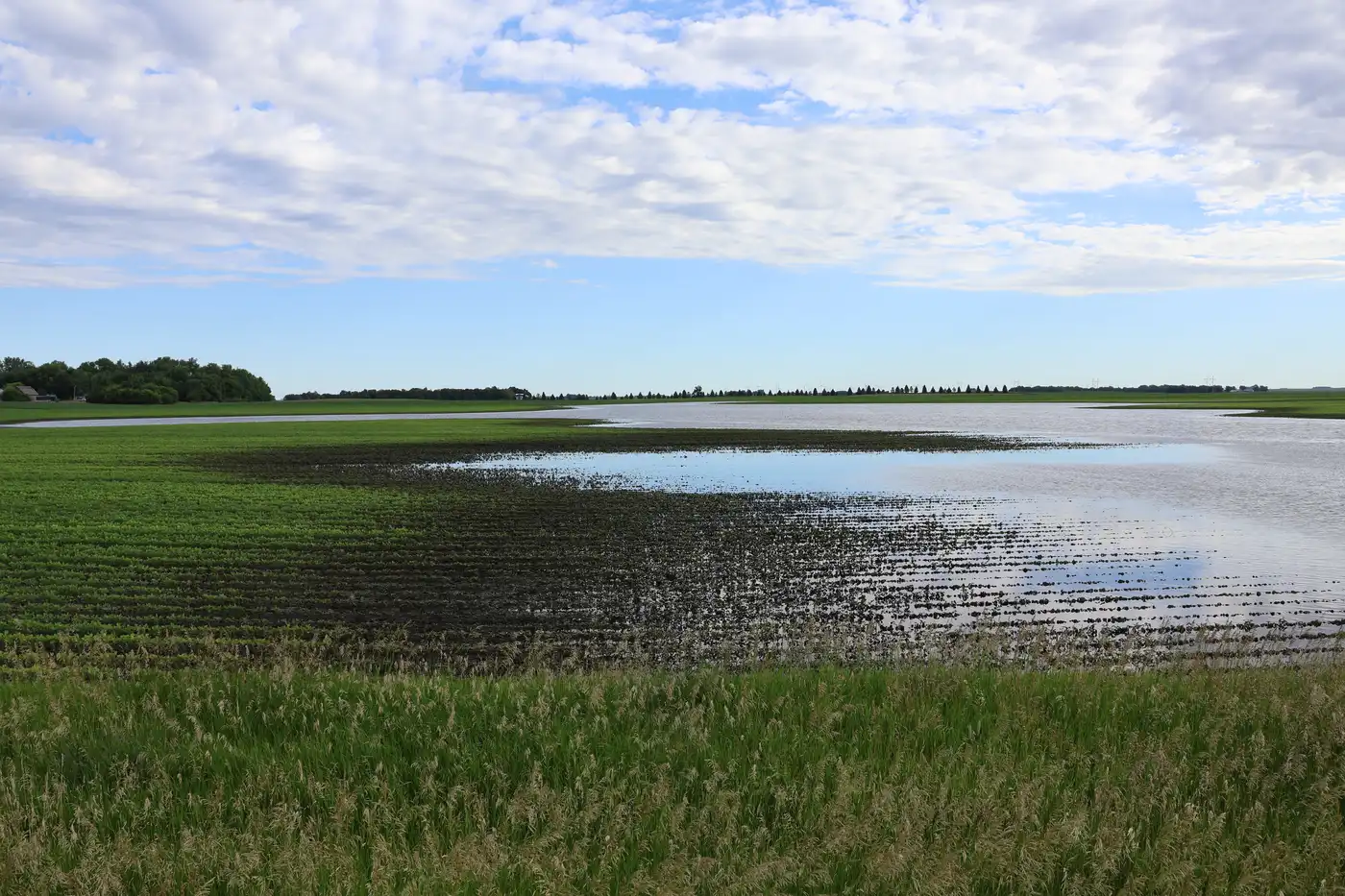
Flood water from the Connecticut River covered over 50 acres of corn, green beans, peppers, squash and other vegetables at Killam & Bassette Farmstead in South Glastonbury.
Farmer Kevin Bessette said it’s more than a quarter-million dollars lost in the ground, not counting labor costs. He also said he’s been short-changed by U.S. Department of Agriculture crop insurance programs in the past, and he doesn’t expect the “farce” of federal aid to help him and the four other families that rely on the farm this time.
“They say they’re gonna do something, and they look good for the public and that’s it,” Bessette said. “And we’re supposed to say, ‘Oh, well that’s government.’ Well that’s not the way government should be.”
Rain across the northeast has caused flooding across the region this week. Runoff from the deluge to the north has flooded the banks of the Connecticut River as makes its way to Long Island Sound, closing parks, marinas and ferries, sending debris and entire docks downstream, and submerging farms.
Bessette said he knew the flood was coming Monday, and it started to show on Tuesday. Now, all but a few acres of tobacco is underwater on their farm, and they don’t know how long it will be before they can even get out to the fields to see the damage – though what’s out there is “done” anyway since it’s been underwater so long.
“We went out [Wednesday] with a tractor and trailer and got what we could, and just barely got out of there with the tractor,” Bessette said. “Not even 30 minutes later, what they were picking was underwater.”
At Hartford, the river has risen from about 7 feet Monday morning, to about 21 feet on Wednesday morning, and forecasts from the National Weather Service project it will remain well above the 16-foot flood stage at least through Monday.
It’s the highest the river has been at the Hartford gauge since Tropical Storm Irene in 2011, when torrential rain across New England raised the river to 24.78 feet at Hartford, according to NWS data.
Joan Nichols, Connecticut Farm Bureau Executive director, said the full extent of crop damage won’t be clear until the river recedes, but they have been hearing reports of flooded fields especially in the meadows along the river south of Hartford.
The damage comes as farmers have already been struggling with a late frost in May that hurt vineyards, Christmas tree growers and orchards – wiping out a large part of the state’s peach crop, she said. It seems like there’s some weather event every few months that’s hurting farms, she said.
“Weather has been either a friend or enemy to farmers as long as we’ve been on this Earth, but it just seems like, despite all the best efforts of farmers to try to mitigate against climate change, it’s becoming unprecedented [impacts],” Nichols said.
Bessette said his farm also flooded in 2011, after already losing three greenhouses to a blizzard over the winter. He said he had elected officials visit his flooded farm then, and was told the USDA would reimburse him for the damage – about $170,000 of crops lost in the ground.
He said he ended up being paid just $1,700 – 10 cents on the dollar. He said the process of applying for reimbursement from the USDA Noninsured Crop Disaster Assistance Program (NAP) would make anyone disgusted with it, and he doesn’t even want to apply now because it’s a “fucking farce.”
After filling out piles of paperwork, Bessette said the USDA argued back and forth over how he staggered his plantings, what he planted, and the fact that he had pulled up some diseased crops. And their reimbursement is based on a five-year average, so if the flood followed a bad year, that would pull down how much the federal government paid, he said.
“Hopefully the government will do something about it, but I’m not going to hold my breath because I’d be dead tomorrow,” Bessette said. “If they really want to help us, they should help us, but don’t say they’re going to do it and then not do it. It’s like feeding an elephant two peanuts when it needs a five gallon pail of peanuts.”
Nichols said Bessette’s complaints are familiar for Connecticut farmers who have tried to navigate the USDA bureaucracy for disaster aid. Federal “crop insurance” isn’t meant to pay farmers their entire loss, but to keep them from going under, she said. But many farmers have said the amount of work it requires from them isn’t worth the pennies on the dollar they are paid out, she said.
There’s a major discussion in Washington, D.C. about making changes to the NAP program to make it work better for “specialty crops” – which includes anything other than row crops like soybeans and corn grown in huge operations in the Midwest and South.
“We’ve been hearing from the farmers that the federal crop insurance program is difficult to manage, and difficult at best to provide paperwork on,” Nichols said. “I know the folks at [USDA] Farm Service Agency do the best they can to help farmers navigate the program, but the program is what it is right now.”
A USDA representative in Connecticut did not immediately return a call on Friday.
Nichols said making the program work for “specialty crops” that dominate agriculture in Connecticut will become more and more important as climate change disrupts seasonal patterns and increases severe, damaging weather events.
“You won’t find a more resilient and innovative group than farmers trying to meet the challenges of Mother Nature. But It’s coming faster and more furious than anticipated, and I don’t know how you prepare for these swings in either direction,” Nichols said. “It seems like we’re either underwater, or we’re in a drought. There’s no middle ground anymore.”
Source - https://ctexaminer.com