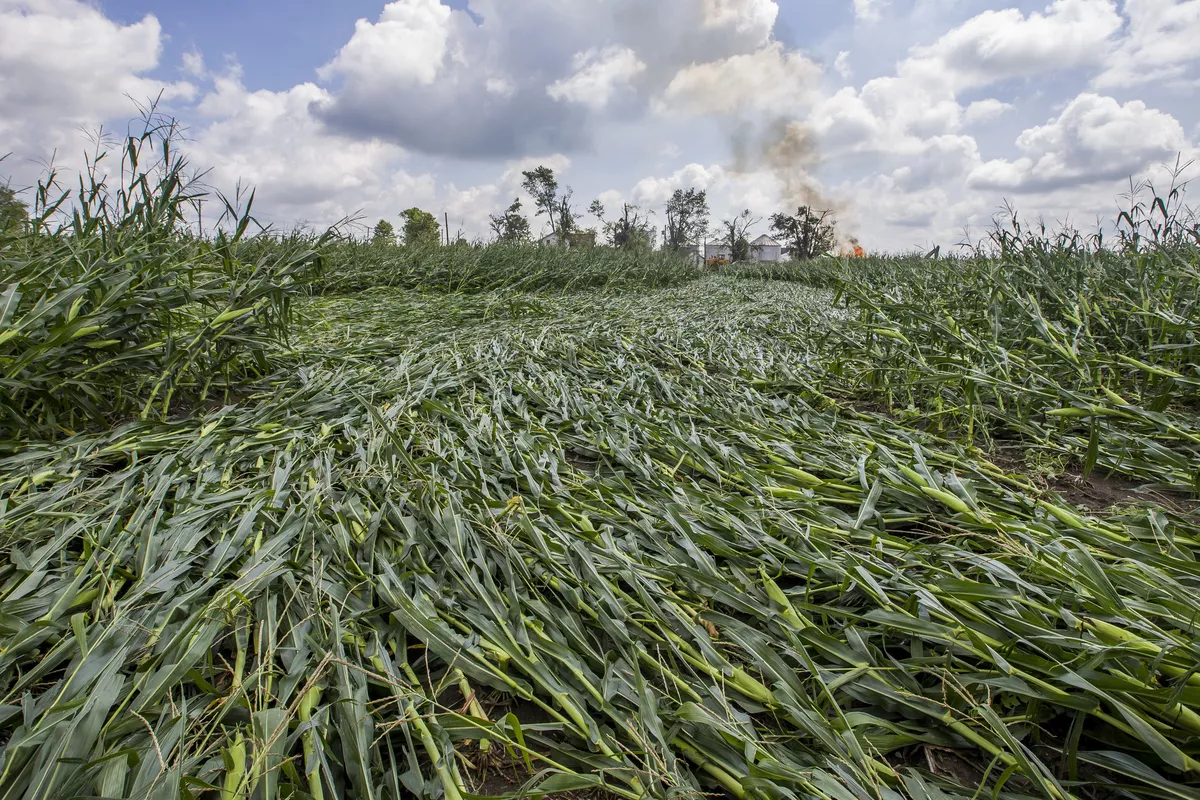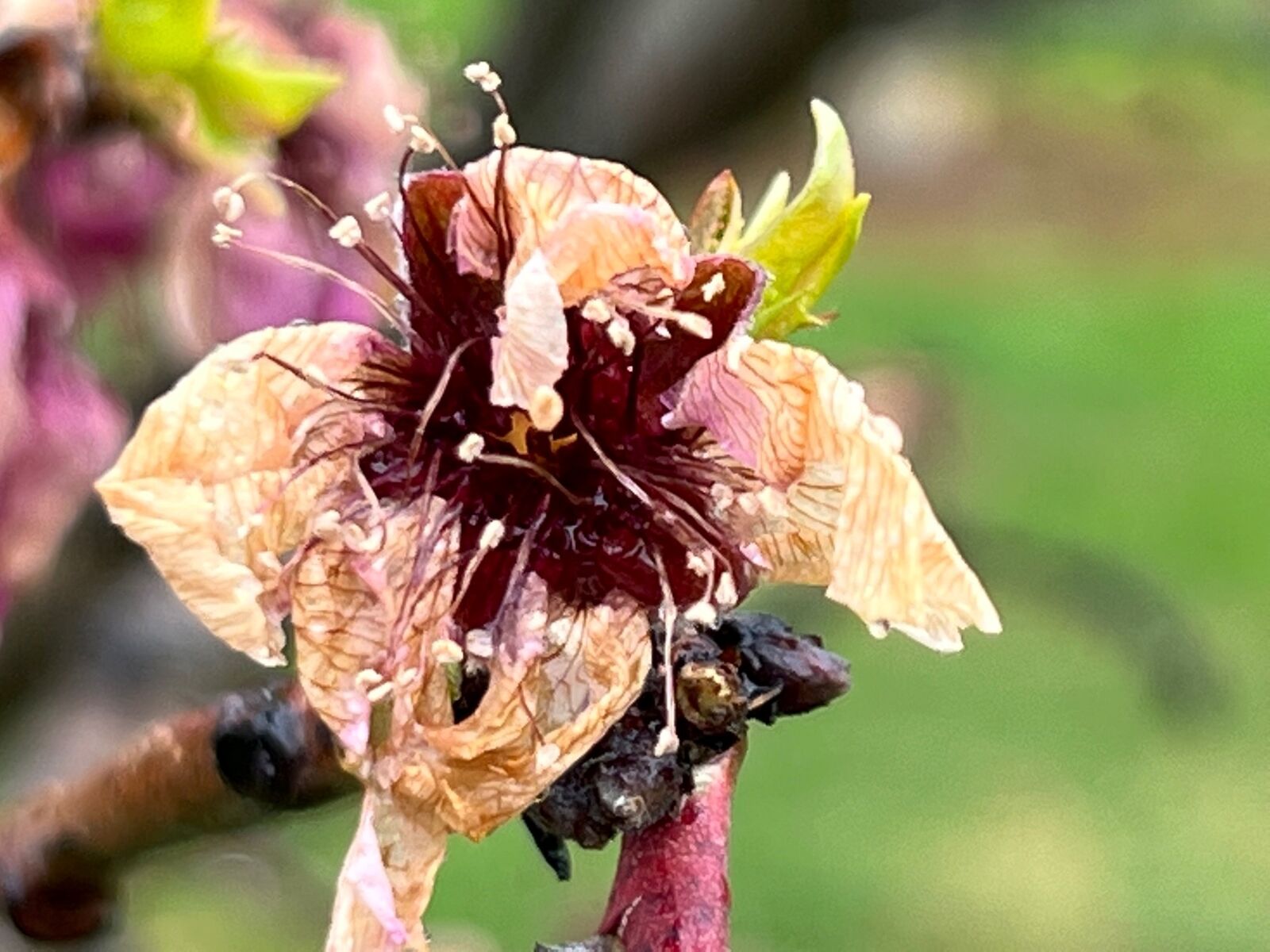
Fruit farmers across the region are assessing damage to their crops in the wake of a hard frost May 18 that has affected many, including grape, apple and blueberry growers.
Ian Modestow, co-owner of Hatfield’s Black Birch Vineyard with his wife, Michelle, estimates that the frost may have cost him 70% of his 18-to-20-acre crop this year.
“We had a hard freeze,” he said, “We had had two light frosts prior to that, and that was fine. We generally see a frost every spring.”
The cold descended early that night, and Modestow said it was already 28 degrees not long after midnight. They lit frost candles and ran fans to circulate the air, and things looked OK until around 5 a.m. when the leaves began to freeze.
“Things got really still,” he said. In some spots it got down to 25.
The damage is almost random, he said, although some varieties are more vulnerable than others.
“You expect everything to die, but some areas were unaffected,” he said.
Black Birch grows pinot noir, cabernet franc, chardonnay, riesling and some hybrid varieties. Modestow said most of the damage was to the marquette, chardonnay and riesling vines. The traminette, on the other hand, got lucky, with a whole acre and a half untouched by frost.
The damage is done to the buds, not the vine, which will still grow. Grapevine has three sets of buds each year, Modestow said, but secondary shoots are less productive or not productive at all.
“It’s like walking through the aftermath of a battle,” he said.
Blueberry devastation
Up the road in Whately, Sobieski’s River Valley Farm reports that it has lost 75 to 80% of its blueberry crop.
In a Facebook post, the farm said it has faced challenges before in its 46-year history, but never anything like this.
Describing the crop loss on its 10,000 blueberry bushes as “devastating,” the farm has set up a GoFundMe campaign, asking for the community’s help.
Jon Clements, the University of Massachusetts Extension tree fruit specialist, said some apple growers have been hit by the freeze.
He expects there will be more damage in low-lying areas with the way cold air sinks. At the UMass orchard in Belchertown, there was more damage at lower elevations.
“A couple of degrees can make a big difference,” Clements said. “The apple tree tops fared better.”
Tim Smith, owner of Apex Orchards in Shelburne, said the freeze took out the orchard’s lower block, consisting of about a third of his crop. Had it been earlier in the season, even during bloom, the fruit might have survived, he said, but fruitlets had already formed and they appear to have been destroyed.
“It’s very unusual in apples,” Smith said. “This is the first time our farm has gotten frozen since 1940.”
While Clements estimates a 30% drop in apple production across the state, with western Massachusetts harder hit, other states may be contending with a more dire situation.
Some Vermont apple growers are saying they’ve lost 100% of their crop, and state officials are sounding the alarm.
“In my 25 years of working with fruit crops in Vermont, I have never seen frost or freeze damage this extensive,” Terence Bradshaw, associate professor at the University of Vermont Extension, fruit program, told the Brattleboro Reformer.
The region’s peach growers, Apex among them, already lost their entire crop, which was destroyed by one frigid night in early February.
“We’ve lost the peach crop twice in the last 10 years,” Clements said. “We’re on the northern edge of the peach-growing region.”
He noted that most fruit growers will have insurance, but it won’t cover all their losses.
Fire remedy
Ed Hamel, owner and manager of Glendale Ride Vineyard in Southampton, took matters into his own hands on the night of May 18 by burning a bunch of hay bales through the night.
Cold May nights are a hazard because plants that are dormant in winter become more sensitive to frost damage as spring progresses, Hamel said.
Vines’ first bud swell is safe down to 20 or 22 degrees, he said. The first leaf can survive down to 28 or 29, the second leaf is OK at 30 or 31, but by the third leaf they freeze at 32.
Rising after midnight, he and helpers Tim Beaudry and Amy Weber broke down the bales, setting 124 fires in rows 9 feet wide across the vineyard’s 5 acres. When the flames died down, they added more hay.
“We really hustled until the sun came up,” Hamel said.
Their efforts paid off. The temperature dropped to around 28, but they were able to save 90 to 95% of the vines, he estimated.
The vineyard’s itasca crop, the earliest to bud, suffered 40% damage, he said, but the acre of cabernet franc suffered the worst damage. The vines were a little more advanced, and the buds were not as high off the ground as some others.
“We love the wine that comes off that acre,” Hamel said.
Source - https://www.gazettenet.com