USA - Gene discovery could guard against soybean cyst nematodes

01.02.2024 504 views

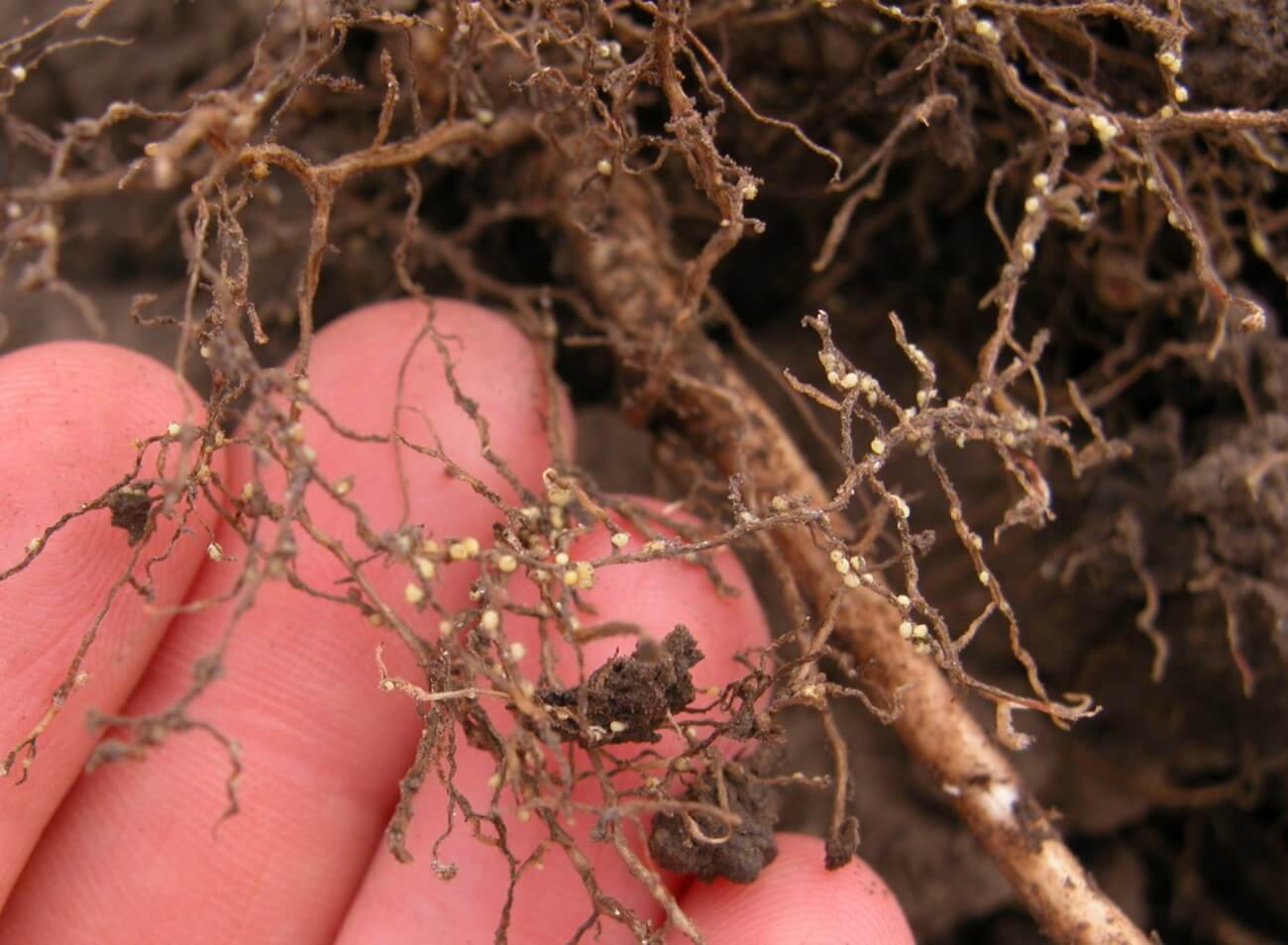
In terms of crop pests, soybean cyst nematodes (SCN) would rank near the top from a loss perspective. Annually, it is estimated U.S. soybean growers lose $1.5 billion in yields and income from these organisms. But now, there is hope on the horizon that someday soon, gene editing could be used to prevent SCN attacks from occurring.

In January, researchers from two different universities announced they had discovered that the loss of function of the GmSNAP02 gene in resistant soybean varieties like PI 90763 and PI 437654 thwarts SCN’s ability to attack the soybean plant.

“Think of it like a lock-and-key model, where SCN is the key and GmSNAP02 is the lock,” explained Melissa Mitchum, Professor in the College of Agricultural & Environmental Sciences at the University of Georgia and a member of the research team that made the discovery, in press release announcing it. “If you get rid of that lock, the nematode can’t access the plant. You make the parasite ineffective.”

“Those three genes are what farmers need today to battle nematodes,” said Andrew Scaboo, Assistant Professor in the Division of Plant Science and Technology at the University of Missouri, who spearheaded the project with Mitchum.

The GmSNAP02 project started with Scaboo and Mitchum and involved four years of interdisciplinary research. It was funded by grower-supplied checkoff dollars by way of the Missouri Soybean Merchandising Council and the United Soybean Board. The National Science Foundation-National Institute of Food and Agriculture provided additional grant funding.

In terms of next steps, Scaboo said CRISPR gene editing could be used to “knock out” the GmSNAP02 gene and create a stacked variety that SCN can’t attack. “CRISPR technology facilitates and speeds along the breeding process for forging this stack,” he said.

Source - https://www.croplife.com

28.04.2026

Philippines seeks 500 million USD for engineered bamboo development

The project is currently at the concept stage, with feasibility studies expected to take five to six months and overall preparation about a year. Implementation could begin in 2027, pending loan approval.

28.04.2026

Insurance compensation of 186,000 manats paid to tobacco farmers in Azerbaijan

To date, 186,000 manats of insurance compensation have been paid to farmers and farms in the tobacco industry in Azerbaijan.

28.04.2026

USA - Climate Disasters Are Straining Hawaii’s Insurance System

Frequent and costly disasters are driving up premiums and leaving many properties uninsured or underinsured. 

28.04.2026

Brazil - São Paulo releases R$400 million in rural credit in a record package for farmers, agricultural insurance, machinery, and land regularization

The package announced at Agrishow in Ribeirão Preto combines rural credit, agricultural insurance, land tenure regularization, mechanization, inclusion of women, innovation, and environmental actions, with R$ 455 million in investments aimed at strengthening São Paulo’s agribusiness.

28.04.2026

When will Moldovan authorities announce a call for applications for subsidizing agrarian insurance?

To date, the MAIA Ministry of Agriculture and Food Industry has not yet announced the start of the next stage of accepting applications for subsidies under agricultural risk insurance contracts concluded in the fall and winter period. While waiting for this announcement, some insurance companies are being "restrained" in the agricultural segment - they insure only livestock farms and perennial crop plantations of their regular customers.

28.04.2026

USA - USDA just doubled disaster payments, and gave farmers until August 12

SDRP disaster payment farmers 2026 just got a major upgrade. Agriculture Secretary Brooke Rollins announced on April 24 in Higginsville, Missouri that USDA is raising the Supplemental Disaster Relief Program payment factor from 35 percent to 70 percent. 

27.04.2026

India - Crop Ruined by Parrots is 'Damage by Wild Animals', says HC; Gives Relief

Holding that citizens cannot be forced to bear losses caused by protected wild animals, the Nagpur Bench of the Bombay High Court has ruled that denying compensation to a farmer merely because parrots were omitted from a government list would breach principles of equality. 

27.04.2026

The World Bank: Agri-risk management in Bulgaria

CAP has steered Bulgarian agriculture toward greater resilience, but the sector continues to suffer from an absence of a comprehensive risk management strategy and limited research on internal and external risks, the report concludes.