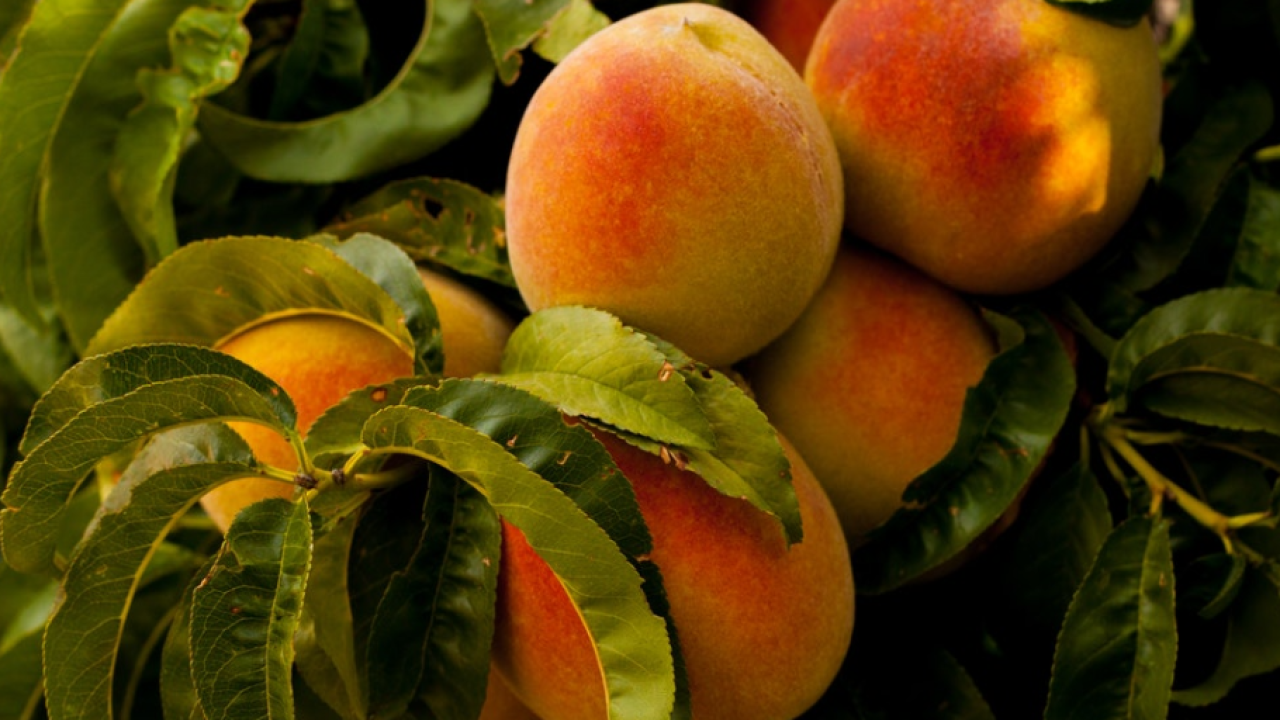
This summer, farmstands in the Peach State are missing a key crop: peaches. That's not because the fleshy fruits have already been scooped up by chefs and home cooks to be made into jams and pies, although they would if they could. Rather, the peaches never got a chance to grow at all.
An abnormally warm winter caused peach trees to bloom earlier than usual this year. That was followed by intense freezes in late March that killed off many of those blooms, which are needed to produce fruit, as well as the fruits that had already begun developing. As a result, more than 90 percent of Georgia's peach crop was wiped out.
It's one of the worst peach harvests the state has seen in the past two decades. The loss was so significant that a natural disaster declaration was issued in 18 different counties, which will allow growers to receive much-needed loans from the U.S. Department of Agriculture (USDA).
But this year's poor peach crop is not an anomaly. In fact, it was only six years ago, in 2017, that Georgia peaches were last affected by harsh weather. That year, peach growers lost a staggering 85 percent of their crop. And Georgia peaches aren't the only regional product being threatened by a climate-related crisis.
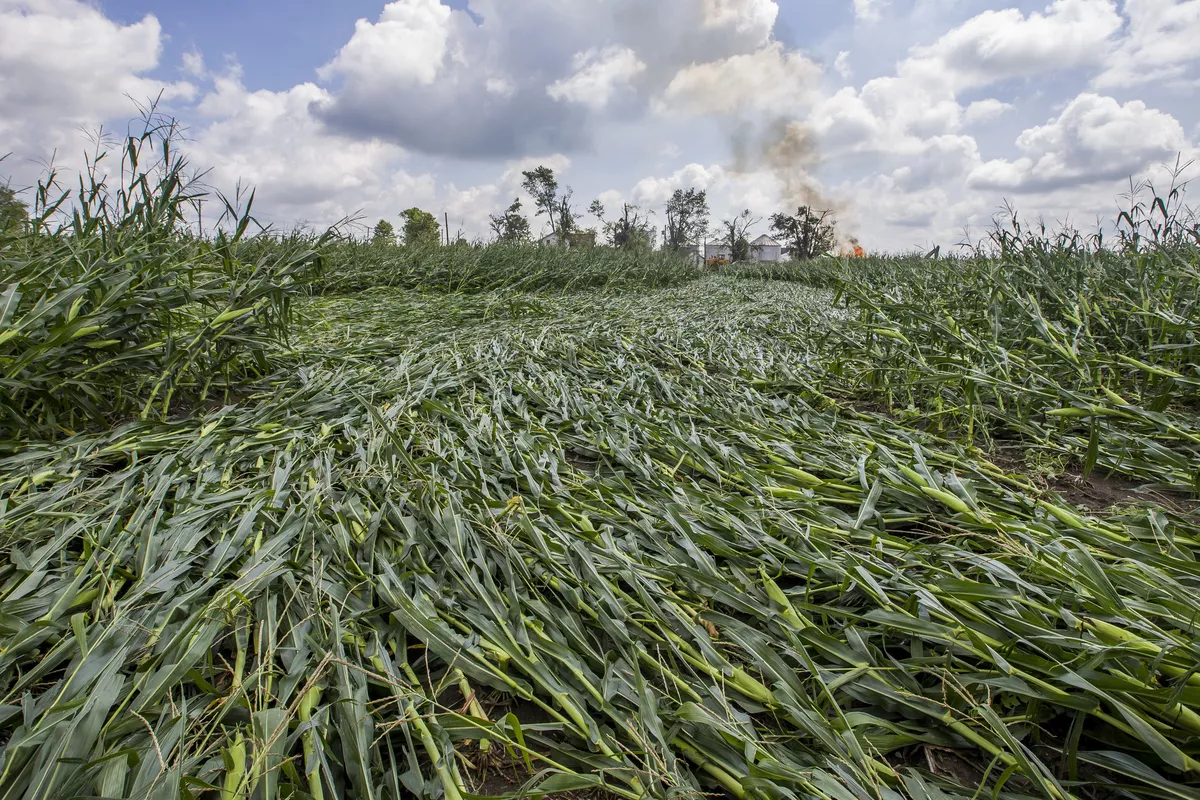
In New Mexico, home of the Hatch green chile, extreme heat is stressing the pepper plants and reducing their yield. Florida's citrus industry, already struggling after years of battling citrus greening disease, suffered another blow this year after Hurricane Ian struck the state, causing a 60 percent decline in production. Warming temperatures in New England are disrupting maple syrup harvests in Maine and Vermont, causing trees to start leaking sap before sugar levels are high enough. And California's $40 billion wine industry is regularly threatened by persistent droughts and destructive wildfires that have wiped out vineyards and entire vintages in some regions.
We've long recognized that certain foods are special when they come from certain places. The wind coming off the sea is particularly cold here, maybe, or the soil particularly rich there — and a regional crop or catch can become part of not only a place's economy, but also its culinary identity and a point of local pride. Whether it be a peach or a pepper, that ingredient often becomes the centerpiece of an emblematic dish, cementing its special place in the culture to which it belongs and to those who prepare it. Of course, good marketing also helps.
"The reputation was made before [the motto]," says William Thomas Okie, professor of history at Kennesaw State University and author of "The Georgia Peach: Culture, Agriculture, and Environment in the American South." Even before the Peach State adopted its official nickname, the Georgia peach brand was strong. "A lot of it has to do with the produce markets in big cities of the North. They were not only the first peaches of the season, but Georgia peaches were the first fresh fruit of the season. They were always the earliest in the market," often beating South Carolina's more abundant, but later, supply.
Peaches also played an important role in helping Georgia rebrand itself after the Civil War. "It happened at a moment when the South was in search of a new identity," says Okie. With the Southern economy in shambles, farmers were desperate to attract Northern customers. Cotton, which remained the state's primary crop, was negatively associated with poverty and slavery. It also required a lot of labor (previously, mostly forced enslaved labor) and after the deadly hostilities, willing workers were in short supply. For many former cotton farmers, planting peach trees opened up new economic opportunities — and a fresh start.
Today, peaches are less important to Georgia's agricultural industry. While the state might be most known for the stone fruit, they are nowhere close to being the top-earning one. In fact, peaches don't even make it into the state's top 10, by value. If Georgia were to be named for its top commodity today, it would be known as the Poultry State; it's the nation's number one broiler (chicken) producer and responsible for a significant portion of the country's egg production.
Yet despite its dwindling importance to the state's agricultural economy, loyalty to the Georgia peach remains — in the Peach State and beyond. "Peaches are not a huge crop in Georgia," says Pam Knox, an agricultural climatologist at the University of Georgia. "But they are iconic."
In recent years, peach growers in Georgia have had no choice but to work to mitigate the effects of climate change, which include increasing humidity levels and milder winters punctuated by unpredictable frosts. "We have been getting warmer winters as time has gone on," says Knox. "In fact, winter is the season that's warming the quickest in Georgia."
And it's those warm winters that are most threatening to the future of Georgia peaches. While they're a summer fruit, peaches require a certain number of "chill hours" — time spent between 32 and 45 degrees Fahrenheit each winter, when the tree goes into dormancy. Without enough chill hours, the trees can experience delayed growth and reduced fruit production. Add an untimely late-spring frost to the mix, as was the case this year and you've got a recipe for disaster.
Some peach growers are responding by planting different varieties that require fewer chill hours. Peach varieties like the Elberta, a juicy peach that's native to Georgia, might have historical importance, but its requirement of 850 chill hours means it might not be tenable for much longer. New varieties such as the Liberty Joy or Crimson Joy, requiring 650 and 700 chill hours, respectively, could play a crucial role in ensuring the future of the Georgia peach.
Knox doesn't expect the industry to shrivel up anytime in the foreseeable future. Another poor year for the crop, however, is unfortunately always a possibility in the ever-changing climate. "It's not spelling the end of peaches in Georgia yet," she says. "Fifty years from now? Yeah, then we might have to think about that."
What happens when a state or region loses its iconic crop? It's a question we'll likely be asking more in this era of climate crisis. There's the economic fallout, of course: If the farms are no longer profitable, farmers may be tempted to sell their land for financial reasons, putting farmworkers out of work and causing a deficit in the food supply chain. For a place like Georgia, it would also mean yet another rebrand. After all, peaches appear everywhere from Georgia's license plates to its Medicaid program for children, known as PeachCare.
But there's also something more conceptual, with the loss of iconic foods a sort of allegory for climate change's impact on intangible things like culture, how it's shaped by our relationship to place. For Okie, who grew up in Georgia and whose father worked as a peach breeder for the USDA, the looming loss of the state's symbolic fruit evokes a sort of weariness. "I can easily imagine Georgia remaining the Peach State decades after it's no longer producing any peaches," he says. "But that would be sad to me, to have lost the referent."
Source - https://www.salon.com