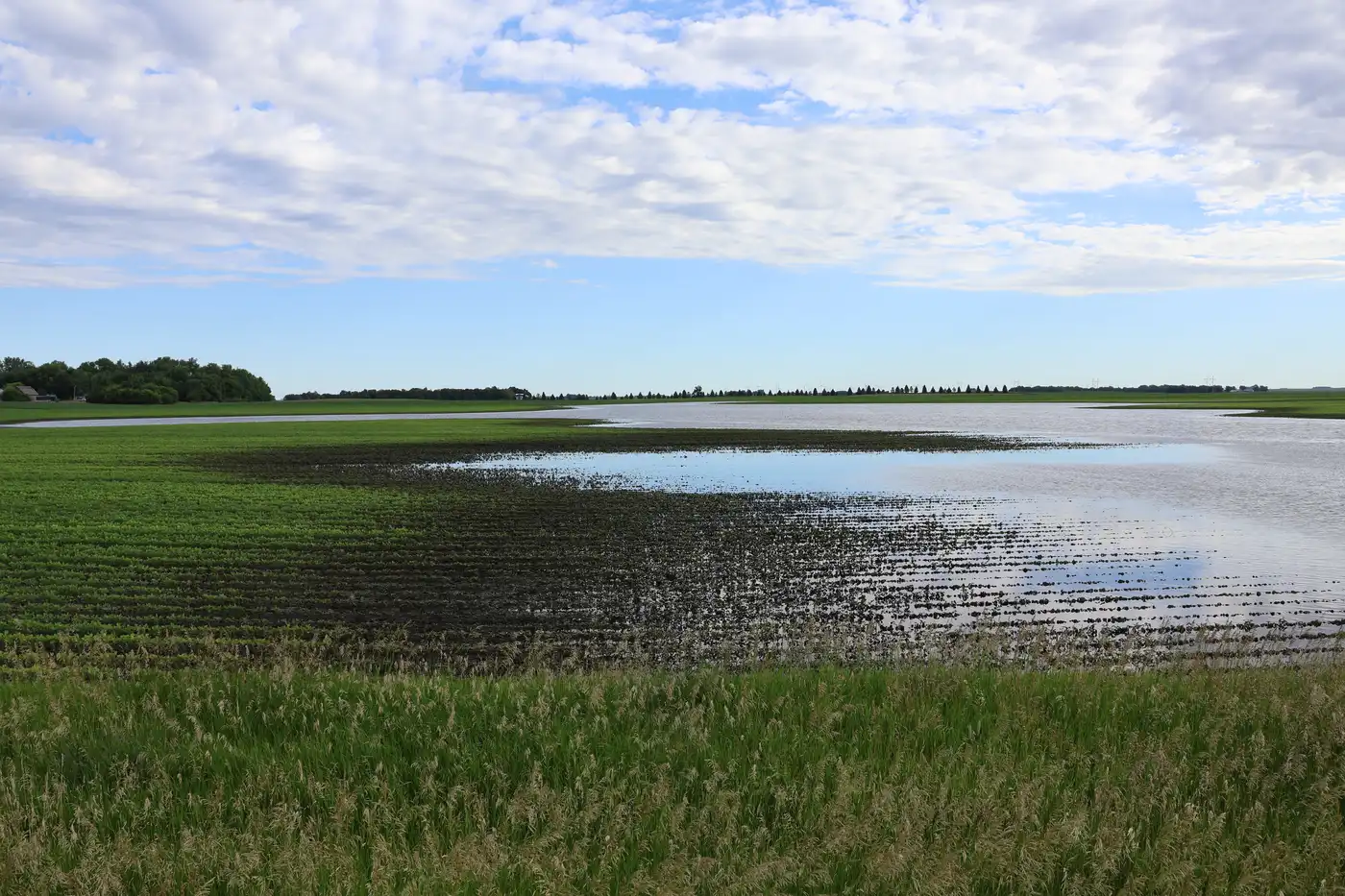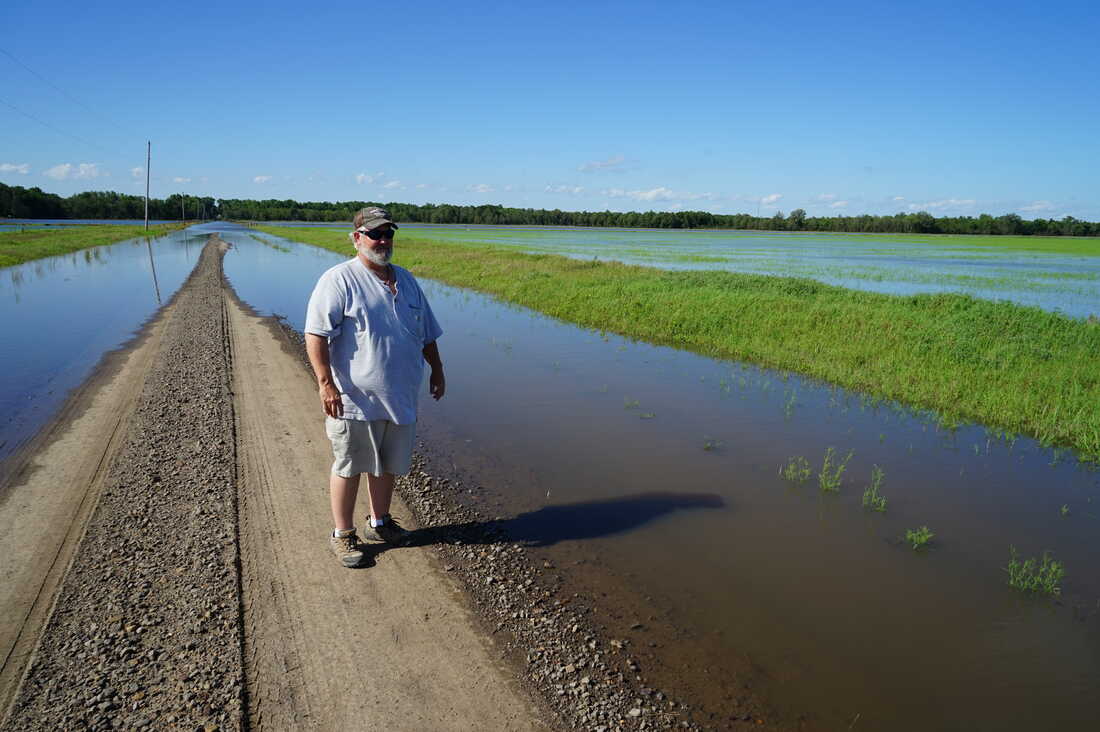
Several heavy rainfall events across Southern Minnesota, as well as some adjoining areas of extreme Northern Iowa, have resulted in major delays to the completion of Spring planting in 2023. A large portion of South Central Minnesota received 6-12 inches of rain from May 5 to May 15. This resulted in flooding of rivers, streams and drainage ditches, as well as a considerable amount of standing water in many fields. Due to drainage systems exceeding capacity, along with soils being totally saturated, it has taken considerable time for many fields to dry out to a point for the initiation of planting again.
By May 15, the University of Minnesota Research and Outreach Center at Waseca had measured 6 inches of precipitation during the month of May; however, many areas of South Central Minnesota had measured 8-12 inches of precipitation during the first half of May. Some locations of the region had isolated storms during the second week of May that resulted in 4-6 inches of rainfall in a 24-to-48-hour period. In portions of the region farmers have not been able to resume corn and soybean planting since the first week of May. In addition, some of the crops that were planted will need to be replanted due to drown-out damage and poor emergence.
Research has shown that corn planted from May 15-25 has a good chance of producing 90-95 percent of optimum yield potential, assuming that there are favorable growing conditions following planting. Beyond that period the decline in corn yield potential gets a bit steeper. There can also be significant loss of soybean yield potential once planting dates extend beyond mid-May. If planting dates extend into later May, some farmers may look to planting earlier maturing corn hybrids and soybean varieties; however, these hybrids and varieties may have less yield potential than the full-season seed choices. Farm operators should consult their agronomists for the best corn hybrid and soybean variety options with later planting dates.
Some farmers may need to consider prevented planting or replant options
As we approach June 1, producers in the affected areas will be evaluating their crop insurance coverage for late planting or prevented planting options, as compared to the yield and profit potential for late planted corn and soybeans. The “Final Planting Date” for corn is May 31 in the southern two-thirds of Minnesota, all of Iowa, and in most of Wisconsin, as well as a few counties in both Southeast South Dakota and North Dakota, in order to receive full crop insurance coverage for 2023. The “Late Planting Period” for corn is 25 days, which would be from June 1-25, with a reduction in the insurance coverage level of one percent for each day that corn planting is delayed past May 31. Following the late planting period, the maximum crop insurance coverage is 55 percent of the insurance guarantee, which is the same as the insurance compensation for “Prevented Planted” crop acres.
For soybeans, the Final Planting Date is June 10 in Minnesota, eastern North and South Dakota, and the northern two-thirds of Wisconsin, with the late planting period extending 25 days until July 5. The final soybean planting date is June 15 in Iowa and the southern one-third of Wisconsin, with the late planting period lasting until July 10. As with corn, there is a reduction of one percent per day in the maximum insurance coverage during the late planting period, with 60 percent maximum insurance coverage after that period.
Once the crop insurance “Final Planting Date” for corn or soybeans has been reached for corn or soybeans, farm operators can opt to take the prevented planting insurance coverage, if they have that coverage option, rather than planting the crop. A large majority of producers in the Upper Midwest carry Revenue Protection (RP) crop insurance with prevented planting coverage on their corn and soybeans. If they choose the prevented planting coverage, they will receive 55 percent of their original crop insurance guarantee for corn and 60 percent for soybeans on a specific farm unit. Every farm situation is different when it comes to making a decision on whether to utilize the prevented planting option, so it is important to make individualized decisions for each farm unit.
Assuming that producers have an eligible Revenue Protection (RP) or Yield Protection (YP) crop insurance policy, they would have the following options with regards to delayed or prevented planting later than the established final planting dates (listed earlier):
- Plant the insured crop during the late planting period, which is typically 25 days following the final planting date for a given crop, such as planting corn after the May 31 final planting date. The maximum crop insurance coverage is reduced by one percent per day for each day after the final planting date that the corn is planted. For example, corn planted on June 10 would have 90% of the original insurance guarantee.
- Plant another crop (second crop) after the final planting date. For example, soybeans could be planted on intended corn acres after May 31. In that case, there would be no prevented planting coverage payment eligibility for the corn acres, and the soybeans would be treated as insurable soybean acres.
- File a Prevented Planting crop insurance claim on the qualifying original unplanted acres after the “Final Planting Date”. The final May 31 for corn and June 10 for soybeans. The producer will receive a prevented planting payment per eligible acre equal to the original revenue guarantee times 55 percent (.55) for corn and 60 percent (.60) for soybeans. The original revenue guarantee is the APH yield times the crop insurance Spring base price ($5.91 per bushel for corn and $13.76 per bushel for soybeans) times the insurance coverage level. Following are examples with 85% RP coverage on corn and soybeans:
- Corn Example --- 200 Bu./A x $5.91/Bu. x .85 = $1,004.70 x .55 = $552.59 (Prev. Planting Payment)
- Soybean Example --- 60 Bu./A x $13.76/Bu. x .85 = $701.76 x .60 = $421.06 (Prev. Planting Payment)
- Replant options --- Farmers with crop insurance coverage that had corn or soybeans planted may qualify for replant coverage if the planted crop was lost to drown-out damage or poor emergence. The maximum replant payment is 8 bushels times the Spring price for corn and 3 bushels times the Spring price for soybeans. The 2023 maximum replant coverage is $47.28 per acre for corn and $41.28 per acre for soybeans.
To qualify for prevented planting crop insurance coverage and payments, as well as for replant insurance coverage, affected areas must be equal or greater than 20 acres, or represent 20 percent of the total eligible insured acreage in a farm unit of less than 100 acres. The maximum acreage eligible for prevented planting coverage is limited to the number of acres in the insurable farm unit.
Producers need to report prevented planted and replant acres need their crop insurance agent. The insurance agents can also be a good resource regarding final planting dates, prevented planting options, and replant considerations. Kent Thiesse, Farm Management Analyst, has prepared an information sheet titled: “Late and Prevented Planting Options for 2023”, which contains details on prevented planting requirements and considerations. To receive a copy of the information sheet, please send an e-mail to: kent.thiesse@minnstarbank.com.
Every producer’s situation is different regarding late and prevented planting options, as a result, the best option will vary considerably from farm-to-farm, depending on differences in yield potential and insurance coverage. The choice that is made could result in a difference of thousands of dollars in the potential insurance coverage.
Source - https://eu.farmforum.net